Cappadocia in winter: what to actually expect in Göreme
What is Cappadocia like in winter?
Cappadocia's winter (December to February) brings low, angled light, daytime highs of roughly 5 to 10 degrees Celsius, nights at or below freezing, the cheapest hotel rates of the year, and thin crowds at the Göreme Open-Air Museum and the underground cities. Balloon flights still operate on clear, calm mornings, but wind cancellations are more frequent than in any other season, so a flight should never be treated as a certainty.
Why winter changes the trip more than the calendar suggests
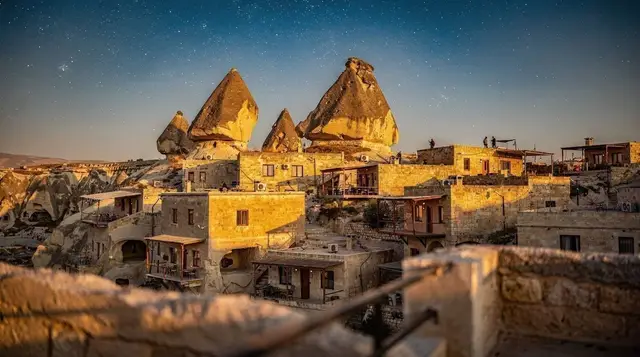
December, January and February turn Cappadocia into a different place to visit, not a worse one. The sun sits low all day, so the light on the fairy chimneys and the Rose Valley walls stays soft and angled for hours instead of flattening out at midday. The tour buses that fill Göreme car parks in July thin out to almost nothing. Rooms in the same cave hotels that are booked solid in August have last-minute availability.
The trade-off is real cold, shorter daylight, and a hot air balloon industry that answers to the wind far more often than it does in spring or summer. This page covers the season itself — temperatures, crowds, prices, transport and what to pack. It doesn’t cover snow settling on the rock formations, which has its own page at Cappadocia in the snow.
What the weather actually does
Cappadocia sits on a high plateau at around 1,000 metres, and that altitude is why winter here bites harder than the map’s latitude suggests. Continental climate means dry air, wide swings between day and night, and cold that arrives early and leaves late compared with the Turkish coast.
| Month | Typical daytime high | Typical night low | What to expect |
|---|---|---|---|
| December | around 8°C | around -1°C | first cold snaps, occasional light snow |
| January | around 5°C | around -4°C | coldest month, snow cover most likely |
| February | around 7°C | around -3°C | still cold, days start lengthening |
None of these numbers are exact forecasts — Cappadocia’s continental climate swings several degrees either side of the average in any given week, and a warm spell in the low teens can sit next to a hard freeze a few days later. What holds across all three months is the pattern: cold, often clear nights, and daytime sun strong enough to make a mid-afternoon walk comfortable in a fleece even when the morning started below zero. For how this compares with the rest of the year, see best time to visit Cappadocia and the fuller Cappadocia month by month breakdown.
The upside: you get the sites to yourself
The single biggest reason to visit in winter is what you don’t have to deal with: queues. The Göreme Open-Air Museum is saturated between 10am and 3pm for most of the year — in winter that congestion mostly disappears, and it’s realistic to walk through several rock-cut churches without waiting behind a tour group. The Karanlık Kilise still needs its own separate ticket, and it’s still the one worth paying for; the difference in winter is that you can actually stand in front of the frescoes for a minute rather than being moved along. Full detail on the museum layout is in the Göreme Open-Air Museum guide.
The underground cities behave the same way. At Derinkuyu and Kaymaklı, the limiting factor is never really depth — it’s how many people are trying to move through the same low, narrow passage at the same time. In winter, with far fewer coach groups, you move through Kaymaklı’s low, wide corridors without the shuffling queue that builds up there in summer, and Derinkuyu’s eight open levels feel roomier too. See the Derinkuyu underground city guide and the Kaymaklı underground city guide for what each site actually involves.
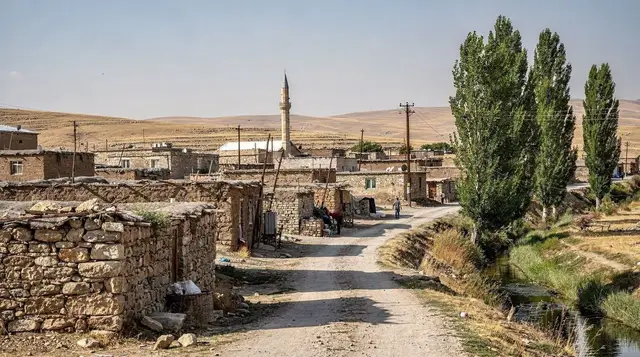
The quieter, less-visited villages benefit even more, because they were never crowded to begin with. Mustafapaşa, the Soğanlı Valley and Uçhisar in the late afternoon light are close to empty in winter, and the honey-coloured stone photographs particularly well under low sun.
Balloon flights: possible, not promised
This is the part of a Cappadocia winter trip that needs managing carefully, and it deserves to be said plainly: winter has the highest rate of wind cancellations of any season here. Flights are grounded by Turkey’s civil aviation authority whenever wind speed or direction makes launch or landing unsafe, and that call is made fresh, and often late, on the morning of the flight itself.
| Season | Relative cancellation risk | Notes |
|---|---|---|
| Winter (Dec–Feb) | Highest | Cold fronts bring the strongest, least predictable wind |
| Spring (Mar–May) | High | Similar unsettled pattern, slightly milder |
| Summer (Jun–Aug) | Lowest | Most stable mornings of the year |
| Autumn (Sep–Nov) | Low to moderate | Generally reliable, occasional fronts |
The only real protection against a wasted morning is time. Book your sunrise balloon flight over Göreme for the earliest possible morning of your stay, not your last one — that way a cancellation still leaves days in hand to try again rather than losing the flight entirely. Pick-up is typically 1 to 1.5 hours before your hotel, timed to the sunrise itself, and flights run 45 minutes to 1.5 hours depending on the operator and package.
For the mechanics of how and why cancellations happen, and how operators handle refunds and rebooking, read balloon flight cancellations and wind; for the full picture on choosing a company and basket size, see the Cappadocia hot air balloon guide.
If your flight is scrubbed, or you’d rather not gamble a winter morning on it at all, you don’t need to be in the air to see the spectacle. On the mornings that do fly, dozens of balloons still lift off into the cold, still air, and watching from a valley rim or a hotel terrace costs nothing and is never cancelled.
Where the savings actually show up
Winter is the cheapest season to sleep in Cappadocia, and the discount is most visible in cave hotels — the category that’s hardest to book in August. Rooms that are sold out weeks ahead in summer routinely have same-week availability from December through February, and properties publish their lowest seasonal rates for this window. Turkish lira prices move often enough that a fixed figure here would be out of date quickly; treat any number you see as a rough guide and check current rates directly.
What’s consistent is the pattern: winter is the low point of the year for accommodation, and mid-range cave rooms that are hard to get in peak season are genuinely accessible. See cave hotels explained for what actually separates a real rock-cut room from a stone-built “cave style” one, and what a Cappadocia trip costs for how accommodation fits into an overall budget.
Restaurants and day tours don’t drop as sharply, since staffing and fuel costs don’t move with the season, but a private guide or driver is often easier to negotiate with directly when demand is thin.
Getting around when it’s cold
Dolmuş minibuses between Göreme, Uçhisar, Ortahisar, Ürgüp and Avanos keep running through winter, though with somewhat reduced frequency in the evening compared with summer — plan your return before dark rather than after. Red and Green Tour minibuses continue to operate daily, picking up from hotels, though the least-visited stops on longer routes, such as Soğanlı on the Blue Tour, can see fewer weekly departures.
Renting a car adds real flexibility for reaching Ihlara Valley or Kayseri on your own schedule, but winter driving here means occasional icy patches on the plateau roads before sunrise and after dark, and reduced visibility during snowfall. If you’re not confident driving on ice, stick to organised transport for early starts. Details on both approaches are in driving in Cappadocia and public transport in Cappadocia.
A half-day jeep safari through the valleys around Göreme is a practical way to cover ground in winter without worrying about ice on unfamiliar back roads, and it reaches viewpoints over Rose Valley and Uçhisar that are a longer walk on foot.
What to actually pack
Layers matter more than a single heavy coat, because Cappadocia’s winter days swing widely: a morning start well below freezing can give way to a comfortable early afternoon in direct sun. A windproof, waterproof outer shell earns its place on any day you’re walking a valley trail, since the wind on an open plateau cuts harder than the thermometer suggests. Bring a hat and gloves for the pre-dawn balloon pick-up regardless of whether you fly. Footwear deserves particular thought: cave hotels have irregular stone steps that turn slick when wet or frosted, and valley paths that are dusty and firm in summer can be muddy or icy in winter. Boots with real grip, not trainers, are the right call.
A realistic winter day, and what it leaves out
A single winter day works well around a slow morning start, since sunrise comes late and pre-dawn cold makes an early departure less appealing than in July. A practical shape: a mid-morning visit to the Göreme Open-Air Museum while it’s quiet, lunch in Göreme or Ürgüp, an afternoon walk through Rose Valley or Uçhisar in the low light, and dinner back in the village. For an evening that doesn’t depend on the weather at all, a night tour of the Göreme Open-Air Museum highlights makes use of hours that would otherwise sit empty once the sun goes down around 5pm in December.
If you have a full day free and want to combine a valley walk with a warm indoor stop, a full-day Cappadocia tour with wine tasting pairs outdoor time with an afternoon in a cellar around Ürgüp, which is a comfortable way to structure a colder day. For a longer winter stay, a full sketch of pacing is in Cappadocia in three days or the season-specific Cappadocia winter 3 days itinerary.
What this page deliberately leaves out is snow on the fairy chimneys themselves — how often it falls, how long it settles, and where to see the formations under snow cover. That’s covered on its own, in full, at Cappadocia in the snow.
Staying warm without giving up the day
Winter here rewards a slower rhythm. Cave rooms hold their temperature well, so the best habit is to treat the hotel as a base camp: out for the bright hours, back inside when the light fades and the air turns sharp. A good breakfast on the terrace or in the dining room, if the hotel keeps one open, sets up the morning, and Turkish breakfast in Cappadocia explains what to expect on the table. Hot tea is the local answer to the cold, and the rituals around it are described in Turkish tea and coffee culture.
Heating is the detail worth checking before you book. Some cave rooms are cosy and others are draughty, depending on how the space has been fitted out, so read recent reviews with that in mind. The comparison in cave hotel versus regular hotel helps decide which suits a cold-weather stay, and cave hotel spas covers the properties where a warm pool or steam room turns a freezing evening into the highlight of the trip. A traditional bath is another way to spend the cold hours, covered in the Turkish bath guide.
When the weather turns and plans fall apart
A winter itinerary needs a second layer. On a day of sleet, hard wind or low cloud, the valley walks lose most of their appeal and the safest choice is to move indoors. The rainy day activities in Cappadocia guide lists what still works, from pottery in Avanos to a cellar visit in Ürgüp. Cooking and craft sessions are also well suited to short days, and cooking classes in Cappadocia is a good place to start.
Hikers should be more cautious than in other seasons. Frost makes steep tuff paths slippery, daylight is short, and fewer people on the trails means less help if something goes wrong. Read hiking safety in the valleys before heading out, tell someone where you are going, and plan to be back well before dusk. For a gentler outing, the Göreme walking guide keeps you close to the village and its cafés.
The evenings are quieter than in summer, but not empty. Göreme after dark describes what stays open once the tour groups have gone, and where to eat in Göreme points to the places that stay warm and welcoming when the streets are cold. Because the sky is often crisp and clear on frozen nights, stargazing in Cappadocia can be a surprise bonus, as long as you wrap up properly.
If you want a day trip that doesn’t hinge on a clear sky, Kayseri and Konya offer indoor museums and covered markets, and Mount Erciyes is the choice for anyone who wants snow on purpose, with the skiing on Mount Erciyes guide explaining how that works from Göreme.
Winter in Cappadocia, questions worth asking before you book
How cold does it get in Cappadocia in winter?
Daytime highs typically run from about 5 to 10 degrees Celsius, with January the coldest month. Nights regularly drop to freezing or a few degrees below, and a cold snap can hold well under zero for several nights in a row.
Do hot air balloons fly in Cappadocia in winter?
Yes, on mornings with clear skies and low wind, but winter has the highest rate of wind cancellations of the four seasons. Book your flight for the first available morning of your stay so a cancellation still leaves you a second or third chance before you leave.
Are Cappadocia hotel prices really lower in winter?
Yes. Cave hotels and guesthouses in Göreme, Ürgüp and Uçhisar publish their lowest rates of the year for December to February, and even well-reviewed properties often have same-week availability that would be booked out in summer.
Is the Göreme Open-Air Museum open in winter?
Yes, it stays open year-round with unchanged opening hours, and the Karanlık Kilise keeps its separate ticket. Winter mornings and early afternoons are the only time of year you can walk through most of the churches without queuing.
Do I need a car to get around Cappadocia in winter?
No, but it helps on the shortest, coldest days. Dolmuş minibuses keep running between Göreme, Uçhisar, Ortahisar, Ürgüp and Avanos, and Red and Green Tour minibuses still operate, though outlying stops such as Soğanlı or Ihlara see fewer daily departures than in summer.
What should I pack for Cappadocia in winter?
Warm layers, a windproof and waterproof outer shell, a hat and gloves, and boots with grip for icy stone steps in cave hotels and on valley paths. Days can warm up enough for a fleece by early afternoon, so layers that come off easily matter more than one heavy coat.
Seasonal experiences on GetYourGuide
Verified deep-linked GetYourGuide tours. Book through these links and we earn a small commission at no cost to you.
GetYourGuide does not provide a product photo for this activity — the image shows the meeting point, photographed by us.