Göreme open-air museum: what it actually includes
What is the Göreme open-air museum and does the ticket cover everything?
It's a cluster of roughly a dozen Byzantine rock-cut churches from the 10th and 11th centuries, packed into one small ravine on the edge of Göreme, and it's a UNESCO World Heritage site. The general entry ticket gets you into most of the churches, but the best-preserved one, the Karanlık Kilise, requires a separate ticket bought on site.
What’s actually inside the fence
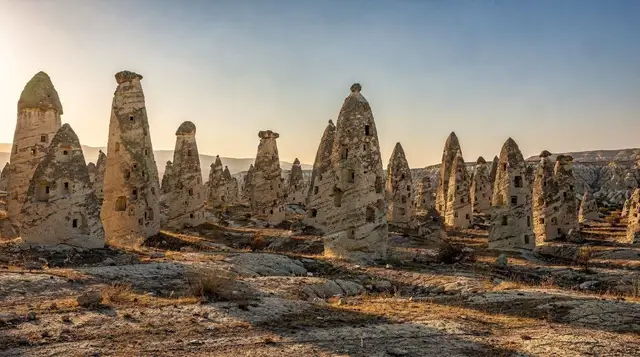
The Göreme open-air museum is a single ravine on the eastern edge of Göreme, packed with roughly a dozen Byzantine rock-cut churches, chapels and monastic buildings dating mostly from the 10th and 11th centuries. It was inscribed as part of the Göreme National Park UNESCO World Heritage listing in 1985, alongside the wider rock-cut landscape of the region. This is not the same outing as walking Göreme village itself, its viewpoints, cafes and back streets; the museum is a fenced, ticketed site you visit separately, even though it’s close enough to reach on foot from the centre.
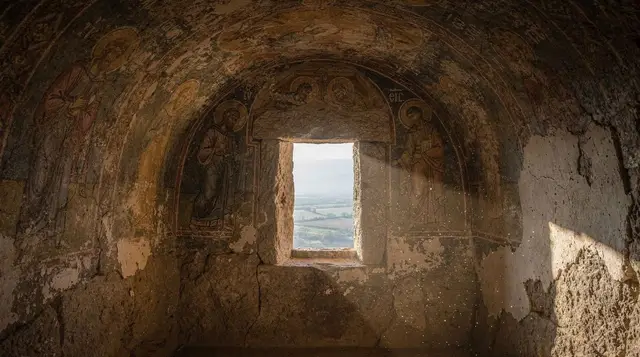
What you’re looking at is monastic architecture carved directly into the tuff, with the churches, refectories and living quarters of Byzantine monks and nuns cut into the rock face rather than built up from the ground. Inside, the draw is the frescoes: painted scenes from the life of Christ, saints and biblical narratives, ranging from simple ochre line drawings to full colour cycles, depending on the church and how much of the paint has survived a thousand years of erosion, smoke damage and, in places, deliberate defacement.
The site is compact. You’re not walking kilometres between churches like you would in the Ihlara valley; it’s a short loop up and around the ravine, with steps, narrow doorways and low ceilings throughout. That compactness is exactly why timing your visit matters more here than almost anywhere else in the region.
The churches worth slowing down for
Not every church in the loop gets equal billing, and a couple are easy to walk past without realising what they are. A few worth knowing before you go:
- Elmalı Kilise (Apple Church) — a cross-in-square church with a relatively complete fresco cycle, reached by a short tunnel and steps.
- Aziz Barbara Şapeli (St Barbara Chapel) — mostly red ochre geometric and symbolic decoration rather than figurative scenes, a different visual style from the painted churches around it.
- Yılanlı Kilise (Snake Church) — named for a fresco of St George battling a dragon-like serpent, plus a rare depiction of Constantine and Helena.
- Karanlık Kilise (Dark Church) — covered separately below, and the one church here that needs its own ticket.
- Çarıklı Kilise (Sandals Church) — named for a footprint mark in the floor near the entrance, with frescoes in reasonable condition.
- Tokalı Kilise — the largest church in the complex, technically just outside the main loop near the entrance, easy to miss if you rush straight past the ticket booth.
None of these are large. You’ll duck through low doorways, climb worn rock steps, and often wait for a small group ahead of you to file back out before you can go in, since most of the interiors only fit a handful of people at once.
The Karanlık Kilise: the one that costs extra
The Karanlık Kilise, literally the dark church, has the best-preserved frescoes in the entire museum, and there’s a direct reason for that: it has almost no windows. Where light reached the other churches over the centuries, it faded and degraded the pigment on the walls. The Karanlık Kilise stayed dark, so its scenes from the life of Christ kept far more of their original colour, detail and gilding.
That quality is exactly why it’s ticketed separately from the general museum entry. Buying entry to the open-air museum does not automatically get you into the Karanlık Kilise; there’s a second, smaller ticket sold at a booth inside the site, and a separate turnstile at the church door. It’s easy to miss this distinction, walk past the booth, and only realise afterwards that the best church in the complex was behind an extra ticket you didn’t buy. If you read only one paragraph of this guide before you go, make it this one.
Is it worth the extra cost? Given that it’s the single best fresco cycle on site, yes. Skipping it to save a small amount of money is the most common regret visitors report after leaving the museum.
When to actually go
This is a small site with narrow churches and single-file queues, and it sits directly on the route of every Red Tour and most independent day visits out of Göreme. The result is a predictable crowd curve: quiet at opening, filling up through mid-morning as tour buses arrive, packed from roughly mid-morning through early afternoon, then thinning out again in the last couple of hours before closing.
The practical advice, from people who’ve actually queued here in July: go at opening, or go in the last two hours of the day. Midday is when you’ll stand behind a tour group waiting to file into a two-metre-wide chapel, and when the heat on the exposed rock paths adds to the discomfort. Neither entrance nor sunset timing needs to be exact — the point is simply to avoid the block of hours in the middle of the day when every coach on the Red Tour circuit stops here at once.
If you’re already doing a wider loop that day, pairing the museum with Çavuşin or Zelve works well either before or after, since both are a short drive away and see noticeably fewer visitors.
Getting there from Göreme
The museum sits on the eastern edge of the village, close enough that walking from central Göreme is realistic for most visitors — it’s an uphill walk out along the main road, not a hike. If you’d rather not walk, dolmuş and shuttle options run between the village centre and the museum entrance through the day, and most organised tours include the transfer as part of the itinerary. There’s no need to arrange a taxi specifically for this; it’s one of the shortest hops in the region.
General ticket vs the Karanlık Kilise add-on
| General museum entry | Karanlık Kilise | |
|---|---|---|
| Covers | The full loop: Elmalı Kilise, St Barbara Chapel, Yılanlı Kilise, Çarıklı Kilise, Tokalı Kilise and the monastic buildings | Just the one church |
| Ticket | Bought at the main entrance | Bought separately, inside the site |
| Condition of frescoes | Faded to well-preserved, depending on the church | The best-preserved cycle on site |
| Skip it? | No — this is the museum | Skippable, but not recommended |
Museum, tour, or private guide
Three realistic ways to see it, and which suits depends on how much context you want alongside the churches themselves.
Self-guided works if you’re content reading the small panels at each entrance and don’t mind not knowing which frescoes were deliberately scratched out or why. It’s also the cheapest option if you’re already in Göreme and just need transport up to the entrance, which an organised tour with transfer from your hotel covers without you needing to arrange a dolmuş yourself.
A guided group visit adds the layer of explanation that turns a row of dim chapels into a coherent story — which emperor, which era, why the iconoclasm-period churches look different from the later ones. A guided walk through the museum typically runs the full loop plus the Dark Church in one go, so you’re not left deciding whether to queue for the extra ticket yourself.
If you’d rather set your own pace, skip a church that doesn’t interest you, or linger at the ones that do, a private guide who lets you move at your own speed is the more flexible option, at a higher price than a fixed-departure group tour.
Combining it with the rest of the day
The museum rarely fills a full day on its own — most visitors are done in under two hours — so it’s usually one stop on a longer itinerary. It’s the anchor of the Red Tour, which typically also covers Üçhisar castle, Paşabağ, Zelve, Devrent valley and Avanos in the same day. A full Red Tour that includes the museum, lunch and a guide is the standard way most visitors without a rental car cover this route.
If you’re only in the region for one day, the museum is a natural first or last stop on a broader one-day Cappadocia itinerary or the more structured one-day plan. If you have more time, it’s worth reading up on the wider cave-church tradition across the region before you go, since the same painting styles and architectural tricks reappear at Çavuşin and Zelve, both far quieter than the main museum and both a short drive from Göreme.
Families should know the steps, low doorways and uneven rock floors make this a hands-on visit for kids rather than a passive one — see visiting Cappadocia with children for what to expect. Anyone travelling with mobility limitations should read getting around Cappadocia with limited mobility before committing to the museum, since there’s no step-free route through the loop.
Practical notes before you go
Wear closed shoes with grip — the rock floors inside the churches are smooth and slightly uneven from centuries of foot traffic, and the paths between them are the same dusty tuff as the rest of the region. There’s limited shade in the queuing areas, so a hat and water matter even for a two-hour visit, particularly in the summer months. Check the best time of year to visit if you’re still deciding when to schedule your trip, since the museum’s crowd pattern shifts with the wider tourist season, not just the time of day.
If you want the fuller regional picture beyond a single tour bus stop, a day combining the open-air museum with one of the underground cities pairs the region’s two signature sites without needing two separate bookings.
Questions about visiting the Göreme open-air museum
Does the general ticket include the Karanlık Kilise?
No. The Karanlık Kilise, the dark church, sits behind its own turnstile with its own ticket, sold at a booth inside the museum. It’s easy to walk past without realising there’s more to see.
Is the Karanlık Kilise worth the extra ticket?
Yes. It’s the reason the church is dark in the first place: almost no light reached the frescoes for centuries, so the colour and detail have survived far better than in the other churches on site. It’s the single best fresco cycle in the museum.
How long does the museum take to visit?
Budget one and a half to two hours to walk the loop, queue for the popular churches, and see the Karanlık Kilise. Add time in July and August, when the queues for the smaller churches back up.
What’s the best time of day to go?
Early, at opening, or in the last couple of hours before closing. The site is small and the churches are narrow, so it fills up fast once the tour buses arrive mid-morning and stays busy through early afternoon.
Is this the same thing as visiting Göreme village?
No. The museum is a fenced UNESCO site on the eastern edge of Göreme, a short walk or shuttle ride from the village centre. Wandering Göreme itself, its viewpoints, cafes and streets, is a separate outing.
Can you take photos inside the churches?
Photography rules have shifted over the years and are enforced unevenly by site staff, so check the signage at each church door rather than assume. Flash is a bad idea regardless of the rule, since it accelerates fading on frescoes that have already lost most of their pigment.
Is the site accessible if you have trouble with stairs?
Not really. The churches are cut into a slope, and getting between them means steps, uneven rock floors and low doorways throughout. There’s no step-free route around the loop.
Do I need a guide, or can I do it alone?
The museum works fine self-guided if you’re happy reading the small information panels at each church, but a guide adds context a panel can’t: which frescoes were deliberately defaced, why certain churches face east, what the pigeon holes in the cliff face were for. Either approach is reasonable.
Museum & art tours on GetYourGuide
Verified deep-linked GetYourGuide tours. Book through these links and we earn a small commission at no cost to you.
GetYourGuide does not provide a product photo for this activity — the image shows the meeting point, photographed by us.