Cappadocia in summer: heat, crowds and what actually works
What is Cappadocia like in summer, from June to August?
Hot, bright and busy. Afternoons regularly climb past 30-35 degrees Celsius with almost no shade in the valleys, the major sites are crowded from mid-morning onward, and hotel prices sit at their highest point of the year. Balloon flights cancel for wind less often than in winter or spring, but not never.
Summer in Cappadocia: the honest picture
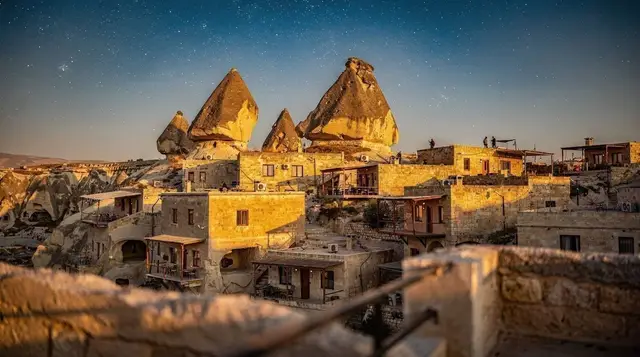
June, July and August are the busiest, brightest and hottest months to visit Göreme and the villages around it. The region sits on a dry Anatolian plateau at roughly 1,000 metres, and in summer that means long, cloudless days, very low humidity, and a temperature swing between a warm morning and a properly hot afternoon. None of this makes summer a bad time to come. It makes it a time that rewards planning your day around the heat rather than ignoring it.
The trade-off is straightforward. Summer gives you the most reliable weather window for a balloon flight, full daylight for exploring, and every trail and site open and accessible. In exchange, you get the highest hotel prices of the year, the thickest crowds at the handful of sites everyone visits, and afternoons where walking a shadeless valley is a genuinely bad idea. Nobody selling a summer trip to Cappadocia tends to lead with that second half. This guide does.
How hot it actually gets
Afternoon highs in July and August routinely reach 30 to 35 degrees Celsius, and a run of days above that is not unusual in a normal year. The dryness makes the heat more bearable than the same number in a humid climate, but it is still real heat, on rock and dust with very little shade. Mornings are a different story: overnight lows drop enough that dawn temperatures are often comfortably cool, which is part of why the balloons launch at first light rather than at noon.
| Time of day | Typical feel in July-August | What it’s good for |
|---|---|---|
| 5-9am | Cool to mild, calm air | Balloon flights, valley walks, quiet photos at viewpoints |
| 9am-12pm | Warming fast, sun already strong | Short outdoor visits, then move indoors |
| 12-4pm | Hottest part of the day, harsh light | Underground cities, museums, wine cellars, lunch, rest |
| 4-6pm | Cooling, softer light | Second valley walk, Uçhisar Castle, viewpoints |
| 6pm onward | Comfortable, warm evening air | Dinner terraces, sunset horse rides, stargazing |
Walking the valleys without overdoing it
This is the one point worth repeating clearly: a valley hike in the middle of a July or August afternoon is not a relaxed stroll, and treating it as one is how people end up dizzy, sunburnt and out of water halfway along the trail. Rose Valley, Red Valley and Love Valley have almost no tree cover along most of their length, the tuf rock reflects heat back up at you, and there is no shop or shade to retreat to once you are in. None of that is a reason to skip these walks in summer. It is a reason to walk them early.
Starting by 8am gets you cool air, soft morning light for photos, and a trail that is close to empty. The same walk starting at 1pm, in the same month, is a different and considerably harder experience. If a morning start is not possible, the two hours before sunset work almost as well, with the added benefit of the low light that makes Red Valley worth its name. For the full mechanics of doing this safely, see the dedicated hiking safety guide; this page is about when, not how.
Where the crowds actually are
Cappadocia in summer is not uniformly crowded. The crush concentrates in a fairly predictable window, roughly 10am to 3pm, at a fairly short list of places: the Göreme Open-Air Museum, the viewpoint car parks above Uçhisar, the busiest trailheads into Rose Valley and Red Valley, and whichever pottery workshop in Avanos the coach tours are stopping at that hour. Outside that window, and away from that short list, summer Cappadocia is much quieter than its reputation suggests.
The practical version of this is the same advice as the heat advice, because they point the same direction: do the popular, exposed things early or late, and use the hot middle of the day for something that does not care about crowds or sun. That is exactly where the underground cities earn their keep in summer.
The underground cities are the summer trump card
Derinkuyu and Kaymaklı sit well below the surface and hold a steady, cool temperature no matter what the thermometer is doing outside. In winter that same steadiness reads as chilly; in a July afternoon it reads as the most comfortable hour of the day. Booking an underground city visit for roughly 12 to 3pm, when the valleys above are at their hottest and the light is at its flattest for photography anyway, is one of the simplest scheduling wins available to a summer itinerary.
Balloon flights in summer
The physics that ground balloons — wind, mainly — do not disappear in summer, but summer mornings are on average calmer than the shoulder seasons or winter, so cancellation rates run lower at this time of year. Lower is not zero. A stretch of windy mornings can still cancel flights in July or August, and the only real hedge against it is the one that works in every season: book your flight for the first morning of your stay, so a cancellation leaves you a second or third chance before you leave.
a sunrise balloon flight over the valleys is worth booking as early in your trip as your schedule allows, for exactly this reason.
Prices move around from year to year and season to season; treat any figure as a rough guide rather than a quote. A standard shared-basket flight tends to run somewhere in the 150 to 250 EUR range, with a smaller, reduced-capacity basket costing noticeably more for the extra space and shorter wait. Meet times are set from the hotel roughly 1 to 1.5 hours before sunrise, and the flight itself lasts anywhere from 45 minutes to 1.5 hours depending on the package.
What to do in the heat of the day
Rather than fighting the afternoon, plan around it. A full-day guided circuit handles this reasonably well on its own, since it mixes outdoor stops with shaded or underground ones and someone else is doing the driving in the hottest hours.
a guided Red Tour with lunch included covers the Göreme Open-Air Museum, Paşabağ and Avanos with a lunch stop built into the middle of the day, which is a reasonable answer to the midday heat problem without any extra planning on your part.
For a more active version of the same idea, a jeep safari through the valleys moves between viewpoints in an air-conditioned vehicle rather than on foot, which suits an August afternoon far better than a walking tour does. And once the heat breaks in the evening, Göreme has options that only really work after dark.
an evening tour of the Göreme Open-Air Museum highlights uses the cooler night air and thinner crowds to good effect; for more on the after-dark options generally, see Göreme after dark.
Accommodation prices at their highest
Summer is the most expensive stretch of the year to book a room in Göreme or Ürgüp, cave hotels very much included. The genuinely rock-cut rooms with the best reputations sell out weeks or even months ahead for July and August, leaving later bookers with the maçonnerie “cave-style” rooms rather than the real thing.
If a true cave room matters to you, book it as early as you can; if it does not, you will still pay the seasonal premium for a comfortable modern room in the same village. For the difference between the two kinds of “cave hotel,” see cave hotels explained, and for the wider lodging picture, where to stay in Cappadocia.
A realistic summer day
One way to put all of the above together, using early light, a cool midday break and a cooler evening:
| Time | Activity |
|---|---|
| 5-6am | Balloon flight over the valleys, weather permitting |
| 8-10am | Walk part of Rose Valley or Red Valley while it’s still cool |
| 10.30am-12pm | Göreme Open-Air Museum, ideally before the coach groups peak |
| 12.30-3pm | Lunch, then Derinkuyu or Kaymaklı underground city |
| 4-6pm | Uçhisar Castle and the viewpoint, softer light and thinner crowds |
| Evening | Dinner terrace, then an evening museum tour or a quiet walk |
This is one version, not a script. A three-day itinerary or a two-day guide will spread the same logic — outdoor and exposed things early or late, cool and covered things in the middle — across more days and more places, including a day trip further afield if your schedule allows it.
How summer compares to the rest of the year
Every season in Cappadocia is a trade-off between weather, crowds and price, and summer sits at one end of that spectrum: the most reliable flying weather and the fullest daylight, against the highest prices and thickest crowds. Spring and autumn trade a little weather certainty for noticeably thinner crowds and lower rates, while winter goes further still, with snow on the fairy chimneys, rock-bottom prices and the highest chance of a cancelled flight. None of the four is objectively best; a full comparison across the year sits in the best time to visit guide.
Frequently asked questions about visiting Cappadocia in summer
How hot does Cappadocia actually get in summer?
Afternoons in July and August routinely reach 30-35 degrees Celsius, sometimes higher, under a dry, cloudless sky. Nights cool down noticeably, often into the mid-teens, which is why the balloons still fly at dawn and why mornings feel far more comfortable than the middle of the day.
Is it too hot to walk the valleys in summer?
Not if you time it. The trails through Rose Valley, Red Valley and Love Valley have almost no tree cover, and walking them at midday in July or August is genuinely uncomfortable and mildly risky for heat exhaustion. Starting by 8am, or waiting until after 5pm, makes the same walk pleasant.
Do balloon flights cancel for wind in summer?
Less often than in winter or spring, but cancellations still happen. Summer mornings tend to be calmer, yet a windy stretch of a few days can still ground flights in July or August. Booking your flight for the first available morning of your trip remains the only real protection.
Are hotel prices higher in summer?
Yes, this is the most expensive stretch of the year for accommodation in Göreme and Ürgüp, cave hotels included. Rooms that go for a moderate rate in November or February can cost noticeably more in July and August, and the best cave rooms sell out weeks ahead.
How crowded are the main sites in summer?
Very, at least between roughly 10am and 3pm. The Göreme Open-Air Museum, Uçhisar Castle and the busiest turnouts along the Rose and Red Valley trails fill with coach groups and rental cars during the middle of the day. Early morning and early evening are noticeably quieter at the same spots.
What is the best time of day to sightsee in summer?
Early morning, roughly from sunrise to 9 or 10am, then again from around 5pm to sunset. That leaves the hot, crowded middle of the day for underground cities, museums, wine cellars, a long lunch, or simply resting at the hotel.
Is summer a good time to visit the underground cities?
Yes, and it is one of the better uses of the hot middle of the day. Derinkuyu and Kaymaklı stay cool year-round since they sit well below the surface, which makes them a comfortable option precisely when the valleys above are at their least comfortable.
Should I avoid Cappadocia in summer because of the crowds?
Not necessarily. Summer brings the most reliable weather for balloon flights and full daylight for exploring, and the crowding is concentrated in a few hours and a handful of sites. Anyone who can start early and treat midday as downtime gets most of the benefits without most of the drawbacks.
Seasonal experiences on GetYourGuide
Verified deep-linked GetYourGuide tours. Book through these links and we earn a small commission at no cost to you.
GetYourGuide does not provide a product photo for this activity — the image shows the meeting point, photographed by us.