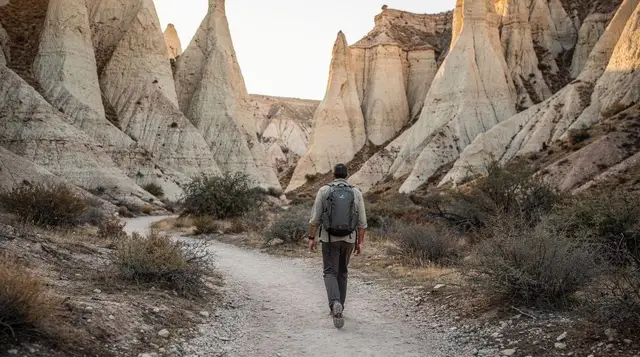
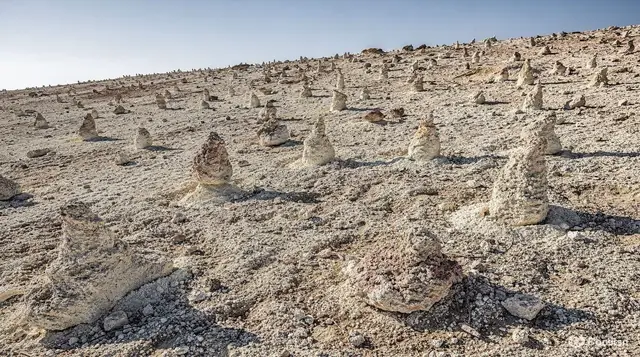
Güllüdere: the valley behind the postcards
Most of the photographs people bring back from Cappadocia’s valleys were taken in Red Valley, a short walk from a car park with a café at the top. Rose Valley, known locally as Güllüdere, runs alongside it and is a different kind of outing. It is longer, it has no café at either end, and its main draw is not a sunset panorama but a string of rock-cut churches tucked into side ravines that most visitors never see. The name comes from the pink and cream banding in the tuf, which is at its most obvious in low, angled light — early morning or the last hour before dusk.
Rose Valley is not a secret. Guided groups walk it every day, and the trail junction where it meets Red Valley gets a steady trickle of people cutting between the two. But it is genuinely quieter than the Göreme Open-Air Museum or Red Valley’s viewpoint end, simply because it takes longer to walk and rewards people who came to walk, not to park and photograph.
Where the trail starts, and why that matters
There is no single official trailhead. Most people start from one of two places, and which one you pick changes the walk more than guidebooks usually admit.
The Çavuşin side is the more common start. From the main road near the old village, a path climbs into the valley and follows it roughly south towards Red Valley. This approach passes closest to the cluster of rock-cut churches that make Rose Valley worth the detour, and it is the route used by most organised hikes.
The Ortahisar side approaches from the opposite end, closer to where Rose Valley and Red Valley converge, and suits people who want a shorter loop or who are combining the walk with a visit to Ortahisar’s castle rock and its old fruit-storage caves. Coming from this direction, you reach the shared section with Red Valley quickly and then have the choice of pushing further into Rose Valley or turning back.
Neither trailhead has much signage, and neither has parking built for large numbers of cars. If you are driving yourself, expect to leave the car on the verge near Çavuşin or Ortahisar and start walking from there — this is normal here, not a sign you have gone wrong.
Rose Valley versus Red Valley: which one to choose
Both valleys are carved from the same tuf, both have fairy-chimney formations, and both eventually meet at a shared junction, which is exactly why people get the two confused when planning. The honest answer is that they suit different priorities, and plenty of visitors end up doing a stretch of both in one outing.
| Rose Valley | Red Valley | |
|---|---|---|
| Length | Longer than Red Valley | Shorter |
| Terrain | Rougher, some steep and loose sections | Generally easier underfoot |
| Shade | Very little for most of the route | Patchy, slightly more near the top |
| Main draw | Rock-cut churches and frescoes, solitude | Sunset colour, easy access |
| Crowds | Light to moderate | Can be busy at sunset |
| Best for | A proper walk, history, photography without a crowd | A short, accessible sunset outing |
If your priority is a sunset you can reach without much walking, Red Valley’s upper viewpoints do that job better — you can read more in the Red Valley at sunset guide. If you want the longer walk, the churches, and a better chance of having a section of trail to yourself, Rose Valley is the better call. A lot of visitors split the difference: start in Rose Valley from Çavuşin, walk through to the junction, then finish in Red Valley for the last light. That combined route is covered in the half-day guided hike that pairs both valleys.
The terrain: tuf, dust, and very little shade
Rose Valley is walked on compacted volcanic tuf, the same soft rock that has been carved into fairy chimneys and cave dwellings across the region. Dry, it is firm but dusty, with a fine grit that works its way into open shoes within minutes — closed, sturdy footwear is not optional here. After rain, the same surface turns slick and can be genuinely hazardous on the steeper drops between sections of the trail; if it has rained in the last day or two, treat the path with more caution than the distance alone would suggest, and consider postponing the more exposed stretches.
There is very little shade for most of the route. A handful of overhangs and the mouths of the rock-cut churches offer brief relief, but the bulk of the walk is in the open. In summer this means starting early is not a nicety but close to essential — carry at least two litres of water per person, more if you are walking through midday, and expect the heat to be noticeably worse by late morning. In winter the same lack of cover means exposure to wind and cold rather than sun, and snow or ice on the steeper sections can make parts of the route impassable.
Signposting is sparse compared with a marked hiking trail in the Alps or the UK — there are painted waymarks in places, faded in others, and several points where informal paths branch off towards side ravines and dead-end. It is easy to end up on the wrong branch, not dangerously so, but enough to add time. A downloaded offline map or a guide who knows the current state of the trail markings removes most of this uncertainty; mobile signal drops out for stretches once you are properly inside the valley walls.
For a broader look at what this kind of walking demands across the region’s valleys, see hiking safety in the valleys and the general best hikes in Cappadocia overview, which places Rose Valley alongside Love Valley and the others.
The churches and frescoes along the way
The reason Rose Valley rewards the extra effort is what is cut into its walls. Along the route, mostly reached via short side paths that branch off the main trail, are a number of rock-cut churches dating to the Byzantine period, several with surviving fresco fragments on their ceilings and apses. They are not maintained or lit the way the churches inside the Göreme Open-Air Museum are, and several have no gate, no ticket booth, and no one else inside when you arrive.
That absence of infrastructure is the trade-off. There is no interpretive signage explaining what you are looking at, the frescoes are often faded, smoke-blackened, or partially lost to erosion and past vandalism, and finding some of the smaller chapels means recognising a carved doorway in a rock face rather than following an obvious path. A guided walk earns its cost here more than almost anywhere else in the region, because a guide who knows the valley can find churches that a first-time visitor would walk straight past. The background on cave-church art generally, including how to read what survives, is covered in the guide to cave churches and frescoes.
Treat every church interior gently: no flash photography near fresco fragments, no touching painted plaster, and no climbing on the rock above collapsed sections, which is often less stable than it looks.
Where Rose Valley meets Red Valley
The two valleys converge at a junction roughly in the middle of the combined system, marked by a clear widening of the path and, usually, a small trampled crossroads where several informal trails meet. From here, turning towards Red Valley’s northern end brings you out near its café and the viewpoint used for sunset; continuing south in Rose Valley keeps you in the quieter, church-dotted section for longer.
This junction is the natural decision point for anyone who started in Rose Valley and is now weighing whether to push on or cut across to Red Valley for the easier finish. If you started early and still have energy and daylight, continuing deeper into Rose Valley is the better use of the time — that is where the least-visited churches sit. If you are walking later in the day, cutting across to Red Valley for sunset is the more comfortable option, since Rose Valley’s lack of shade and rougher footing are worse to deal with as light fades.
Walking it yourself or joining a guided hike
Rose Valley can be walked independently, and plenty of visitors do — the terrain does not require technical skill, just decent fitness, proper shoes, and enough water. The case for going self-guided is cost and flexibility: you set the pace, linger where you like, and pay nothing beyond transport to the trailhead.
The case for a guided hike is mainly the churches. A guide who walks this valley regularly knows which side paths lead to which chapels, can point out fresco details you would otherwise miss, and can read the trail junctions that trip up independent walkers.
Guided options range from focused walking tours to a sunrise hike timed to watch the hot-air balloons rise over the valley from below, which adds an early start but delivers a very different view of the balloon launch than watching from a hotel terrace. For a more straightforward daytime option, a dedicated Rose Valley walking tour covers the churches and the main viewpoints at a steadier pace.
If you want both valleys in one outing without planning the route yourself, a combined half-day walk through Red and Rose valleys covers the route described above, including the junction, in a single guided session. For a slower, different way to see the same ground, a sunset horseback ride through Rose Valley covers similar terrain from the saddle rather than on foot — worth considering if a long walk in the heat is not appealing but you still want to see the valley properly.
None of this requires booking anything: dolmuş services from Göreme run to both Çavuşin and Ortahisar through the day, and the trail is open and free to walk at any time. See getting to Cappadocia’s valleys without a tour if you are planning to skip organised excursions entirely.
Rose Valley at a glance
| Detail | Rose Valley |
|---|---|
| Main trailheads | Çavuşin (north) or Ortahisar (south) |
| Rock type | Volcanic tuf, soft and dusty when dry, slick when wet |
| Shade | Minimal for most of the route |
| Key sights | Rock-cut Byzantine churches with fresco fragments |
| Connects to | Red Valley, at a marked junction roughly midway |
| Signposting | Sparse and inconsistent; offline maps or a guide recommended |
| Mobile signal | Unreliable once inside the valley walls |
| Suggested footwear | Closed, sturdy shoes with grip |
| Water | At least 2 litres per person in warmer months |
When to go
April to June and September to October give the most comfortable walking temperatures and the clearest light for photographing the fresco details and the valley’s pink-and-cream rock banding. Midsummer is workable if you start at or before sunrise and are finished before the early-afternoon heat sets in; the lack of shade makes a midday walk in July or August genuinely uncomfortable. Winter closes off the steeper, exposed sections whenever there is snow or ice, though the lower stretches near Çavuşin often remain walkable — check conditions locally rather than assuming.
Morning starts also give the best chance of overlapping with the sunrise balloon flights lifting off from the surrounding valleys, visible from several open stretches of the Rose Valley trail without needing to fly yourself.
Rose Valley hiking: frequently asked questions
How long does the Rose Valley walk take?
There is no single fixed duration — it depends on which trailhead you start from, how far into the valley you go, and how many of the side paths to the churches you follow. It is consistently longer than the equivalent walk through Red Valley, and a half day is a realistic block of time to set aside if you want to see the main churches without rushing.
Is Rose Valley harder to walk than Red Valley?
Yes, generally. The path includes looser tuf, a few steeper sections, and far less shade than Red Valley, and the signposting is thinner. It does not require technical hiking skill, but it asks more of your fitness and preparation than Red Valley’s more accessible route.
Can I walk Rose Valley without a guide?
Yes, it is open and free to walk independently. The trade-off is that many of the rock-cut churches sit down unmarked side paths that are easy to miss without local knowledge, so a self-guided walk will likely show you less than a guided one, even over the same distance.
Where does Rose Valley connect to Red Valley?
The two valleys meet at a junction roughly midway along the combined trail system, where the path widens and several informal routes cross. From there you can continue deeper into Rose Valley or cut across towards Red Valley’s viewpoint and café end.
Should I do Rose Valley or Red Valley if I only have time for one?
Choose Red Valley for a short, accessible outing built around sunset. Choose Rose Valley if you want a longer walk, more solitude, and the rock-cut churches, and are comfortable with rougher terrain and no shade.
What should I bring for the Rose Valley hike?
Closed shoes with grip, at least two litres of water per person, sun protection, and a downloaded offline map, since mobile signal is unreliable inside the valley and official signposting is limited.
Is Rose Valley safe to walk after rain?
The tuf surface becomes slick after rain, and the steeper sections of the trail are noticeably more hazardous. If it has rained recently, either delay the walk or stick to the flatter stretches near the trailheads rather than the full route.
Are the churches in Rose Valley always accessible?
Most are unlocked and unguarded, which means access varies with the season and with erosion — a path or entrance that was open on one visit is not guaranteed to stay that way. Treat any fresco fragments you find with care, since there is no on-site protection.