A walled cluster of cave churches, not the whole of Göreme
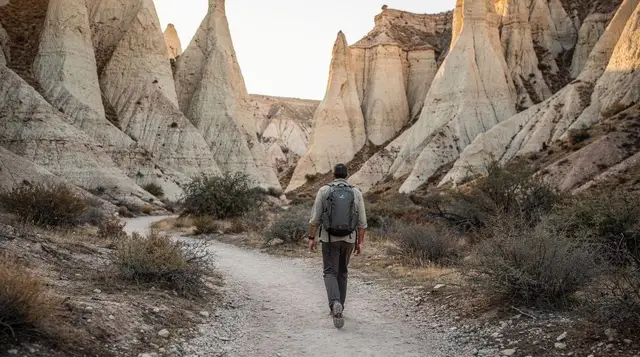
The Göreme Open-Air Museum is a single ticketed site: a cirque of rock-cut Byzantine churches, chapels, and monastic rooms carved into the tuff on the edge of Göreme, inscribed by UNESCO in 1985 together with the wider Cappadocia region. It is easy to conflate with Göreme itself, or with the Göreme National Park that surrounds the village, but the museum is neither of those things — it is a walled, gated cluster of roughly a dozen churches from the 10th and 11th centuries, most of them a short walk apart, some connected by stairs cut straight into the rock.
What makes the site worth the entrance fee is concentration. Cappadocia has cave churches scattered across dozens of valleys, but nowhere else puts this many fresco-decorated interiors within a single, signposted loop. If your time in the region is short, this is the one place to see Byzantine religious painting up close rather than glimpsed through a doorway on a longer hike.
Getting there and buying tickets
The museum sits about a ten-minute walk uphill from central Göreme, on the road towards Uçhisar, or five minutes by taxi. It is also the standard first or last stop on the Red Tour, the northern day-tour circuit sold by every agency in the village — see our breakdown of how that fits against the Red, Green, and Blue Tours if you are deciding whether to join an organised trip or walk up on your own.
Entry to the main site runs in the region of €20–25, paid at the gate; prices in Turkey move with the lira, so treat this as a working estimate rather than a fixed number, and check the current rate before you go. Museum passes covering multiple sites are sometimes sold nearby — ask at the ticket booth rather than from a street tout.
The separate ticket almost everyone misses
The single detail that trips up more visitors than anything else at this site: the Karanlık Kilise, the “Dark Church,” is not covered by the general admission ticket. It has its own ticket booth just inside its entrance, with its own fee, typically another €5–10 on top of the main ticket. Visitors who arrive having budgeted only for the general entrance sometimes skip it rather than queue and pay again — which is a mistake, because it is also the one church in the complex that most rewards the extra stop.
The reason the Karanlık Kilise survived so well is the same reason it needed its own admission line: for centuries it had almost no window to let daylight in, which meant almost no light exposure to fade its pigments. The result is the most vivid and complete fresco cycle on the site — reds, blues, and ochres that have mostly vanished from the sun-exposed churches nearby. If you only have time or budget for one paid extra at the museum, this is it. Read more in our dedicated guide to the Karanlık Kilise.
Which churches to prioritise
The museum groups roughly a dozen churches and chapels along one path, and not all of them are equally worth lingering in. A rough guide to what you are looking at:
| Church | What to look for | Extra ticket? |
|---|---|---|
| Karanlık Kilise (Dark Church) | Best-preserved fresco colour on site | Yes, separate |
| Elmalı Kilise (Apple Church) | Compact, well-lit fresco cycle | No |
| Çarıklı Kilise (Sandal Church) | Footprint impressions in the floor, said to mark Christ’s ascension | No |
| Yılanlı Kilise (Snake Church) | A dragon-slaying fresco, simpler style | No |
| Tokalı Kilise | The largest church at the site, just outside the main gate on the road | No, but separate small ticket |
| Rahibeler Manastırı (Nuns’ Convent) | Multi-storey rock-cut monastic quarters | No |
Note that the Tokalı Kilise sits a short walk down the road from the main gate rather than inside the walled loop, and is often missed by visitors who assume the museum ends at the ticket barrier. It is worth the short detour if you have come this far.
Dark, low-ceilinged, and no flash
Set expectations before you go in: these are 1,000-year-old rock-cut interiors, not a modern museum with even lighting. Most churches are dim, some doorways require ducking, and several interior chambers have genuinely low ceilings where taller visitors will want to watch their heads. Paths between churches involve stone steps, some steep, with handrails that are not always present.
Flash photography is prohibited throughout the site, and this is enforced, because repeated flash exposure accelerates fading in pigments that have already survived a millennium in low light. Photos without flash are generally tolerated, but given how dark most interiors are, that usually means a slow shutter speed and a fair amount of noise rather than a crisp shot — plan for that rather than being surprised by it. If fresco photography is a priority for you, our guide to the cave churches and their frescoes covers which interiors photograph best in available light.
Timing your visit around the Red Tour
The single biggest factor in how much you enjoy this site is not the churches themselves but how many other people are standing in the doorway with you. The Göreme Open-Air Museum is the standard opening stop on the Red Tour, and the tour minibuses from Göreme, Ürgüp, and Avanos converge on the gate within an hour or so of opening. From roughly 10:00 to 15:00, the narrow paths and stairways between churches can back up, and small interiors like the Karanlık Kilise limit how many people are let in at once.
Two windows work noticeably better:
- At opening, around 08:00. You arrive ahead of the organised tour buses and can move through the smaller churches without a queue at every doorway.
- After 16:00. Most day tours have wrapped up by mid-afternoon and moved on to their next stop, and the site noticeably empties out in the last couple of hours before closing.
If you are travelling with an organised tour rather than independently, you will not control this timing yourself — one more reason some visitors prefer to visit the museum on their own, outside a tour itinerary, and book other activities separately. For a private, self-paced option, a private guide who lets you set the pace can also help you dodge the worst of the crowd by starting earlier or later than the standard tour buses.
a private guide for the open-air museum who works to your own timing rather than a fixed tour schedule is one way to get an early or late slot without joining a group bus.
How long to actually budget
Ten or fifteen minutes is not a visit to this site — it is a walk past the entrance. To see the main churches properly, including the queue and short walk between each one and a stop at the Karanlık Kilise, budget one to one and a half hours. Add another 20–30 minutes if you also want to see the Tokalı Kilise down the road, or if you are visiting with children who will want to explore the stairs and rock-cut rooms at a slower pace — see our notes on visiting the underground and rock-cut sites with kids for similar timing considerations.
Visitors combining this stop with a full Red Tour day should expect the museum itself to take up the first hour or two of a longer day that also covers Paşabağ, Zelve, Devrent Valley, and Avanos — see our full breakdown of what a Red Tour with lunch and a guide typically covers.
a guided Red Tour that starts at the open-air museum and continues on to Paşabağ, Zelve, and Devrent Valley with lunch included bundles the museum into a fuller day if you would rather not manage transport between stops yourself.
What’s nearby if you have more time
Once you are out of the main gate, a handful of related sites sit within a few minutes’ walk or a short drive:
- Tokalı Kilise, just down the road from the exit, easy to combine with the same visit.
- Çavuşin, about five minutes away, with its own early church and an abandoned cliffside village — see our Çavuşin church and old village guide.
- Zelve Open-Air Museum, roughly ten minutes further on, a genuinely inhabited troglodyte village until 1952 rather than a church complex — covered in our Zelve guide.
- Paşabağ (Monks Valley), another ten minutes on, known for its double- and triple-capped fairy chimneys.
Anyone comparing the Göreme museum to the underground cities further south, which are a completely different kind of site — descending storeys rather than a walled cirque — should read how the underground cities worked before deciding whether to add Derinkuyu or Kaymaklı to the same day. Combining the open-air museum with an underground city on one guided outing is also an option:
a private tour pairing the Göreme Open-Air Museum with one of the underground cities covers both without needing separate transport arrangements.
Building it into a wider itinerary
For a first Cappadocia visit, the museum works well as a morning anchor, either before or after the sunrise balloon flights that leave from launch fields nearby — see balloon sunrise timing by season if you are trying to fit both into one early start. Our one-day Cappadocia itinerary and two-day itinerary both use the open-air museum as a fixed morning stop, building the rest of the day’s valleys and viewpoints around it.
Travellers with a full day free and an interest in wine as well as history sometimes pair the museum with an afternoon at one of the region’s cellars:
a full-day Cappadocia tour that combines the open-air museum with an afternoon wine tasting is a way to close out the day somewhere other than another rock-cut interior.
Practical checklist
- Wear closed shoes; the stone stairs and paths inside the site are uneven and can be slippery after rain.
- Bring water, especially in summer — there is limited shade once you are inside the walled cirque.
- Budget the Karanlık Kilise ticket separately, and check current prices at the gate rather than relying on an old figure.
- No flash photography anywhere on site; expect low light in most interiors.
- Arrive at opening or after 16:00 if avoiding the Red Tour crowd matters to you.
- Watch your head at several low doorways, and mind the steps between churches, which are not all railed.
For a wider view of how this site fits against the rest of the Göreme valleys region, and for help deciding the best season to travel, see our best time to visit tool, which accounts for both crowd levels and the winter closures that affect some outdoor stops nearby.
Questions about visiting the Göreme Open-Air Museum
Is the Karanlık Kilise ticket included in the main entrance fee?
No. The main entrance ticket to the Göreme Open-Air Museum covers most of the churches, but the Karanlık Kilise (Dark Church) requires a separate ticket bought at its own booth inside the site, usually an extra €5–10. It is easy to miss if you only budget for the general entrance.
Why is the Karanlık Kilise worth the extra ticket?
Because it received very little natural light for centuries, its frescoes kept far more of their original colour and detail than the other churches on the site. It is generally considered the best-preserved fresco cycle in the museum, which is why it is priced and ticketed separately.
How long does the Göreme Open-Air Museum actually take?
Plan on one to one and a half hours to see the main churches without rushing, including queuing at the narrow doorways and stairs. Ten or fifteen minutes is only enough to glance at one or two churches, not to see the site.
What time should I visit to avoid crowds?
Arrive at opening, around 08:00, before the Red Tour minibuses reach the site mid-morning, or come back after 16:00 once most organised tours have moved on. Midday, especially 10:00 to 15:00, is consistently the busiest window.
Can I take photos inside the churches?
Photography without flash is generally tolerated in most churches, but flash photography is prohibited throughout the site to protect the fresco pigments from light damage. Interiors are dark, so a flash-free photo often means a very low-light shot.
Is the Göreme Open-Air Museum the same as Göreme National Park?
No. The Göreme Open-Air Museum is one ticketed, walled site containing a cluster of rock-cut churches. Göreme National Park is the much larger UNESCO-listed area of valleys and fairy chimneys surrounding it, most of which is free to walk and has no ticket gate.
Is the site accessible for visitors with limited mobility?
Not easily. The churches are reached by stone stairs, steep ramps, and low, narrow doorways cut into the rock, and several interiors require ducking. Anyone with mobility restrictions should expect to see only the churches at ground level.
Do I need a guide, or can I visit independently?
The museum is easy to visit independently with a paper map or the panels at each church, and most visitors do exactly that. A guide adds historical context on the frescoes and monastic life that the on-site panels do not cover in depth.