Stories from Cappadocia
Long-form writing on Göreme and the region beyond it — balloon mornings, cave-hotel life, valley walks and the practicalities of travel in central Turkey.
More stories

Cappadocia crowds, hour by hour

What sleeping in a Cappadocia cave hotel is actually like

The real cost of a day in Cappadocia

Eating well in Cappadocia without spending much

How the tour touts of Göreme work

Mustafapaşa: the Cappadocia town that used to be Sinasos

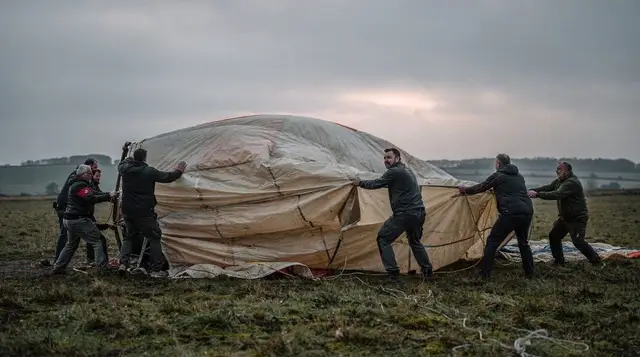
The morning the flight was cancelled

The Cappadocia valleys nobody walks

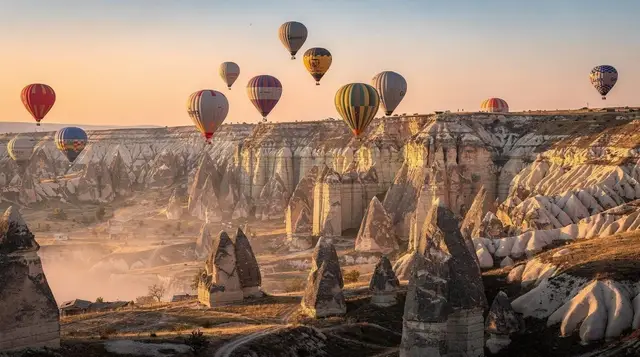
What nobody tells you about the Cappadocia balloon flight

When the weather turns in Cappadocia

Why the fairy chimneys are crumbling
Good to know about the Cappadocia blog
The blog is where Cappadocia Escape steps back from strict planning logistics and covers the questions that shape how a trip actually feels, written with the same honest, no-fluff approach as the rest of the site. It opens with orientation pieces — what to know before visiting Göreme for the first time, and a direct look at whether a Cappadocia balloon flight is really worth the early start and the wind-cancellation risk, which stays qualitative rather than inventing precise figures: for most visitors who build in a spare morning, it is, while a one-night stay with no buffer day carries a real chance of missing it altogether.
A Göreme versus Ürgüp comparison helps travellers deciding between two well-known bases weigh up the practical differences in atmosphere, walking access to the valleys and evening quiet rather than relying on vague impressions. History and culture get their own space: a piece on the 1923 population exchange explains why Mustafapaşa still carries Greek-era churches and houses despite being a Turkish village today, and a piece on the underground cities' origins covers what's actually known about who dug them and when, rather than repeating unsourced legend as fact.
Food and craft pieces make up a solid share of the blog: a Cappadocia food guide covering local wine from the Ürgüp cellars and what a realistic meal costs, a piece on Avanos's pottery tradition and the Kızılırmak's red clay, and a guide to the region's cave-hotel rooms — which ones are genuinely carved into rock versus built to look that way, and what that trade-off means for light, temperature and price. A best-time-to-visit piece pulls together the seasonal picture in one place: April-June and September-October as the strongest windows for reliable balloon flights, July-August's midday heat, and winter's snow-dusted fairy chimneys traded against a much higher share of grounded flights.
A safety and etiquette piece covers ordinary caution around the valley trails' loose tuff edges and drop-offs, plus practical notes on mosque visits and market bargaining. None of the blog content replaces the destination or guide pages — it's meant to be read for context and reassurance before or during a trip, answering the softer questions a strict itinerary or logistics guide doesn't cover.
Frequently asked questions about the Cappadocia blog
Is a Cappadocia balloon flight worth the early start?
For most visitors who build in a spare morning as a buffer, yes — the view over the valleys at first light is the reason many people book the trip. A one-night stay with no buffer day carries a real risk of a wind cancellation costing the flight entirely.
Should I stay in Göreme or Ürgüp?
It depends on priorities: Göreme sits inside the valleys with the shortest walk to the open-air museum and the balloon launch fields, while Ürgüp offers a quieter evening base with easy access to wine cellars and a short drive to everything else. The blog's Göreme versus Ürgüp piece compares both directly.
Why did Mustafapaşa's population change in 1923?
Mustafapaşa was the Greek village of Sinasos until the 1923 population exchange between Greece and Turkey moved its Greek Orthodox residents out and Muslim families in from Greece, which is why the village still carries Greek-era churches and mansions today.
Are the cave-hotel rooms in Cappadocia really carved into rock?
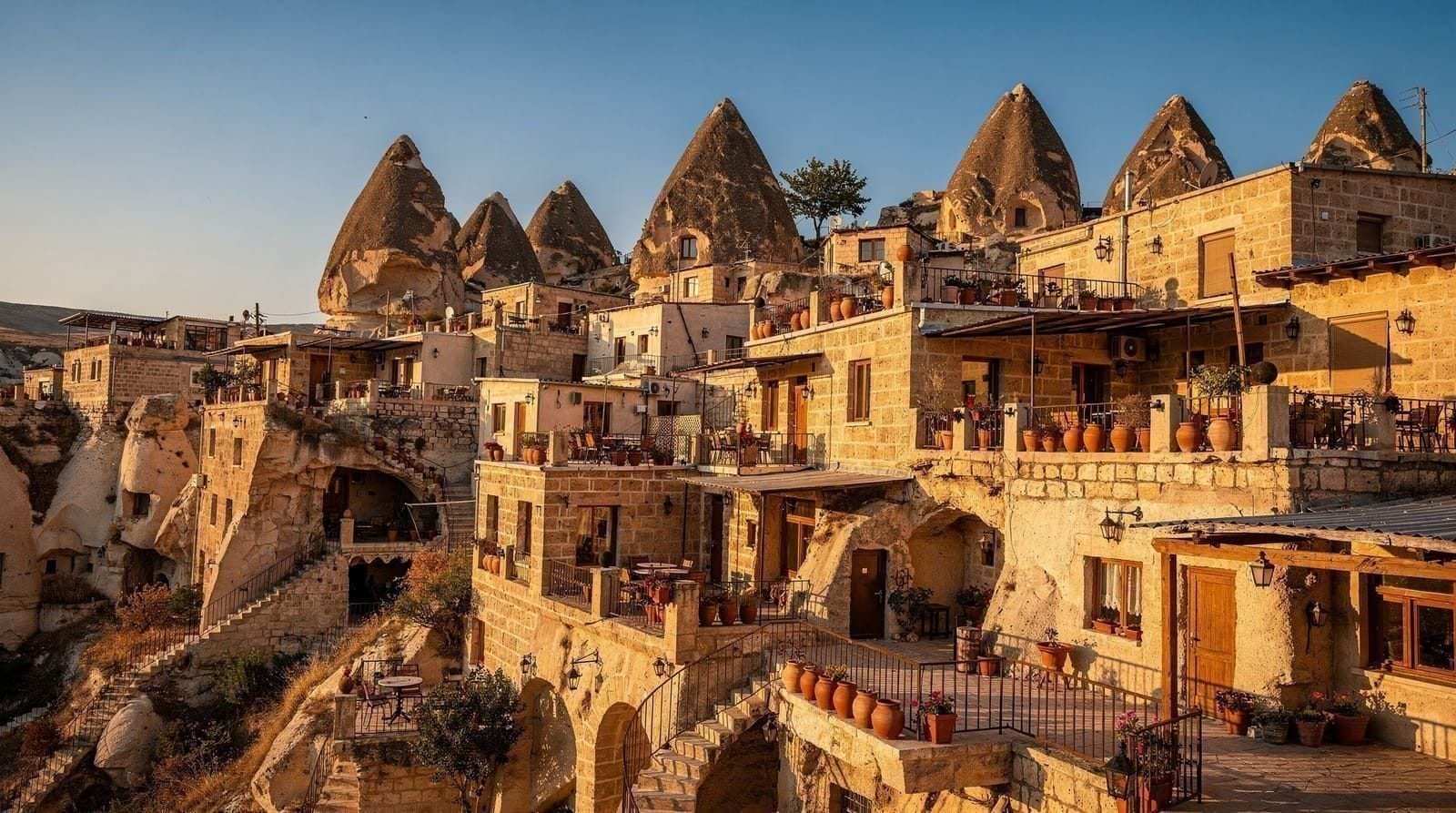
Many are, especially in older properties in Göreme and Uçhisar, which stay naturally cool in summer and dark year-round; others are built from stone to resemble the style without being carved. The blog's guide explains how to tell the difference before booking.
When is the best time to visit Cappadocia for a balloon flight?
April-June and September-October offer the most reliable flying weather with fewer wind cancellations than winter, while still avoiding July-August's midday heat. Winter brings snow-dusted valleys and the lowest prices, but a notably higher chance of a grounded flight.
Hot-air balloon flights on GetYourGuide
Verified deep-linked GetYourGuide tours. Book through these links and we earn a small commission at no cost to you.
GetYourGuide does not provide a product photo for this activity — the image shows the meeting point, photographed by us.