Avanos clay and the red river
I only meant to watch for a minute. Someone had set a lump of wet clay on a wheel outside a doorway in Avanos, the motor gave a low hum, and the lump climbed itself into a jar in about the time it takes to read this sentence. Then it wobbled, and a thumb pressed it back into a cone, and it climbed again. I stood there for twenty.
The gesture that doesn’t look like much
Throwing on a wheel is centring, then opening, then pulling the walls up thin and even, over and over until the shape holds. Centring is the part nobody warns you about — get the clay a millimetre off-axis and the whole piece fights you for its whole life. Experienced hands in Avanos do it without seeming to check, weight low, elbows braced against the hips for a steadier line than wrists alone can hold. It looks almost bored. It isn’t. A jar that comes out lopsided gets balled up and started again, no ceremony about it.
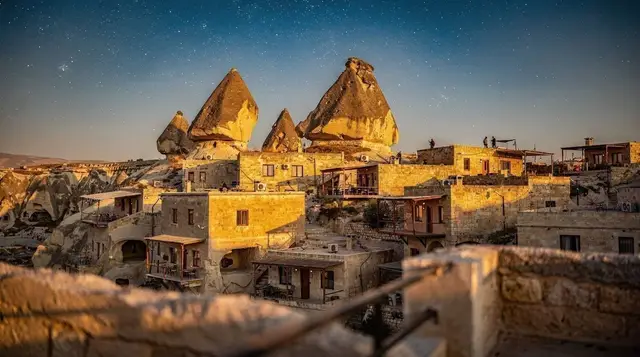
What they’re working is clay pulled from the bed of the Kızılırmak — Turkey’s longest river, roughly 1,355 kilometres from source to the Black Sea, and the reason for the town’s name: kızıl, red, and ırmak, river. The colour comes from iron oxide in the silt the river carries down off the volcanic soils upstream, the same geology that built the fairy chimneys a few kilometres away. Fired, that iron content is what turns the finished pot that deep red-brown you see stacked in doorways all along the main street.
Why this clay behaves differently
Potters who’ve worked both will tell you the Kızılırmak clay is more forgiving than a lot of commercial clay bodies. It’s fine-grained, without the coarse grit that tears at your fingers and cracks a wall as it dries. That matters more than it sounds: grit-heavy clay needs careful wedging to work the air pockets and lumps out before it ever touches the wheel, and it still fails more often in the kiln. The river clay throws smoother and dries more evenly, which is a practical reason a wheel-based trade could take root here rather than somewhere with a harder, sandier local clay.
None of that is exotic on its own — river clay has built pottery towns in plenty of places. What’s specific to Avanos is that the raw material and the skill stayed in the same hands for generations rather than the trade drifting elsewhere once roads and rail made other materials easy to bring in. Sons and daughters learned the wheel from a parent who’d learned it from theirs, in the same workshops, working the same riverbed. That kind of continuity is harder to manufacture than the clay is to source — it’s the accumulated correction of thousands of centring mistakes, passed down rather than relearned from scratch each generation.
Two things being sold, and how to tell them apart
Walk the main street today and you’ll see two different trades side by side, and it’s worth being able to tell which is which rather than assuming one is better. Some pieces are still thrown individually on a wheel, in the back rooms behind the shopfronts — you can usually hear the motor if you listen for it. Those pieces show it: faint asymmetry, visible spiral throwing lines on the inside wall, a base that isn’t perfectly flat, glazes that pool unevenly where mineral oxides reacted differently across the surface.
The other trade is mould-cast production aimed squarely at visitors passing through for an afternoon — uniform shapes, often painted rather than fired-in glaze, priced for volume rather than for the hours a thrown piece actually takes. Neither is a trick exactly; the cast pieces are honest about what they are if you look closely, and plenty of people just want a small, cheap souvenir that packs well. But it’s worth knowing which one you’re holding before you decide what it’s worth to you, and asking directly where a piece was made is a fair question, not a rude one.
If you want to see the process rather than guess at it from a shelf, an guided walk along the Kızılırmak in Avanos threads past working studios and the riverbank itself, which is more than most day-trip stops manage in the twenty minutes they usually allot the town.
The river people forget to look at
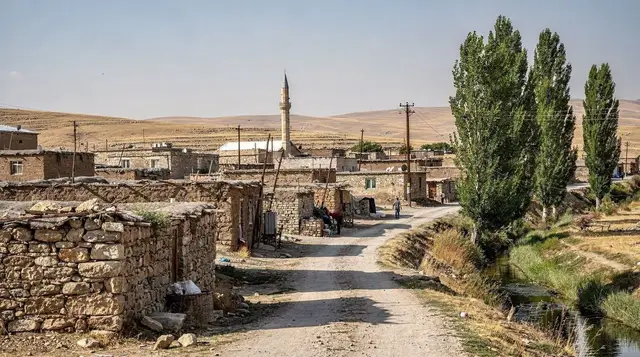
Most visitors come to Avanos for the pottery and leave having barely registered the water it’s named after. The Kızılırmak here is unremarkable to look at — slow, grey-brown, lined with willows rather than anything dramatic — which is probably exactly why it gets ignored. But it’s the reason any of this exists at all: without this particular bend of river depositing this particular clay, there’s no reason a pottery trade concentrates in this one town rather than the next village over.
Stand on one of the footbridges for five minutes before you go into a workshop, not after. It reframes the shelves of jars as what they actually are — a few thousand years of people noticing what a river left behind and learning, generation after generation, exactly what to do with it.
Avanos sits about 15 minutes from Göreme by road, and pairs easily with a look at Çavuşin or a morning watching balloons drift over Love Valley before the day warms up — worth booking early, since an early Göreme sunrise balloon flight gives you a second morning in hand if the first gets cancelled for wind.
If you’d rather cover Avanos alongside the northern valleys in one guided day, a Göreme and Paşabağ valley day tour usually swings through, though you’ll get more unhurried time at a wheel on foot than from a coach seat.
For planning the rest of the visit, our Avanos walking guide covers the layout of the old town, and the Avanos pottery workshops piece goes further into what to expect if you want to try the wheel yourself. If souvenirs are on your mind more broadly, what’s worth buying and the local markets by day guide both help separate the trip-worthy from the packable filler.
Curious travellers sometimes detour to the Avanos hair museum too, a strange footnote tucked beneath one of the workshops. For the wider picture of how a day here fits into a Cappadocia trip, our one-day itinerary and three-day itinerary both give Avanos a slot without over-scheduling it, and what a day in Cappadocia costs is a useful reality check before you start shopping.
Frequently asked questions about Avanos pottery and the Kızılırmak
Why is Avanos known for pottery?
Avanos sits on the Kızılırmak, Turkey’s longest river, whose bed yields a fine red clay that has been worked here since Hittite times. The river gave the material, and generations of local families kept the wheel-throwing skill alive, which is why the trade concentrated in this one town rather than spreading evenly across Cappadocia.
What makes Kızılırmak clay different from ordinary clay?
It is fine-grained silt carried down from volcanic soils upstream, low in the coarse grit that makes clay crack under the fingers. Potters describe it as forgiving on the wheel and quick to take a deep red-brown colour once fired, without the additives some commercial clays need.
Is the pottery in Avanos handmade?
Some of it is, some of it isn’t. Genuine wheel-thrown pieces show slight asymmetry, visible throwing lines on the inside, and a weight that varies piece to piece. Standardised souvenir stock is usually mould-cast, perfectly uniform, and often painted rather than glazed with mineral oxides.
Can visitors try the potter’s wheel in Avanos?
Yes, most workshops that welcome visitors let you sit at a wheel for a few minutes under guidance, usually as part of a longer visit rather than a standalone lesson. It gives a fair sense of how hard the balance is to hold, even for a few seconds.
How long has pottery been made in Avanos?
The craft is generally traced back to the Hittite period, more than three thousand years ago, making it one of the older continuously practised trades in central Anatolia. The river and the clay bed haven’t moved, which is the simplest explanation for the continuity.
Is Kızılırmak the same river as the Red River?
Yes, Kızılırmak translates roughly as red river, a name that refers to the reddish silt it carries rather than the water itself, which runs a normal grey-brown. It’s Turkey’s longest river at around 1,355 kilometres, though the stretch through Avanos is a modest, slow-moving one.
Should I buy pottery directly from a workshop in Avanos?
Buying where a piece is actually thrown is a reasonable way to support the individual maker rather than a resale chain, though price alone won’t tell you whether a piece is handmade. Look at the base and the inside wall for the small irregularities a wheel leaves and a mould doesn’t.
tours.Crafts
Verified deep-linked GetYourGuide tours. Book through these links and we earn a small commission at no cost to you.
GetYourGuide does not provide a product photo for this activity — the image shows the meeting point, photographed by us.