Souvenirs worth buying in Cappadocia
What souvenirs are actually worth buying in Cappadocia?
Avanos pottery, hand-woven textiles and dried spices from local markets are the most authentic buys. Onyx trinkets, mass-produced evil-eye keyrings and carpets sold hard on organised tours need more scrutiny, and the region has dedicated guides covering carpets and onyx in detail.
Most visitors leave Cappadocia with at least one bag of souvenirs, and most of those bags contain a mix of things worth keeping and things that could have come from any airport gift shop in the eastern Mediterranean. This page is a shorter overview of what actually distinguishes a local, regionally specific purchase from a generic import, and where to look for the former. It does not go into the mechanics of negotiating a carpet purchase or the finer points of judging onyx quality — those are covered in their own dedicated pages, linked below, and worth reading in full before you commit to either.
Local versus generic: the basic test
The simplest question to ask in any shop is whether the object in front of you could plausibly have been made in this region, or whether it is identical to something you would find in Istanbul, Antalya, or a tourist strip in another country entirely. A row of printed magnets, keyrings and mugs bearing hot air balloon graphics is not specific to Göreme — the same designs, often the same physical products, are printed and shipped in bulk for tourist regions worldwide. A hand-thrown ceramic bowl made from red clay dug out of the Kızılırmak river bed, by contrast, genuinely could not have been made anywhere else.
That test does not mean every generic item is worthless or every local item is automatically good value — it simply narrows down where to spend your attention. Three categories pass the test reliably in this region: pottery, textiles, and dried food products such as spices, herbs and dried fruit.
Avanos pottery: the regional signature
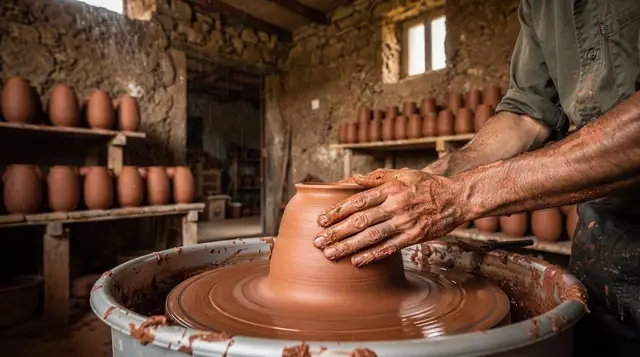
Avanos sits directly on the Kızılırmak, Turkey’s longest river at roughly 1,355 kilometres, and its potters have worked the red clay from its banks since Hittite times. This continuity is the reason pottery is treated as Cappadocia’s defining craft rather than just another item on a souvenir shelf. Workshops range from large operations set up for tour groups, with a demonstration on a foot-powered wheel followed by a showroom, to small family ateliers where a single potter still throws and fires everything sold.
Both settings can produce genuine, well-made pieces, but the difference in atmosphere and price is real. A large group workshop moves visitors through quickly and prices goods for a captive audience; a smaller atelier in the back streets of Avanos, away from the main tour parking, tends to price more reasonably and is more likely to let you watch actual production rather than a rehearsed demo. The Avanos pottery workshops guide covers this distinction, along with what separates hand-thrown pieces from moulded ones, in far more depth than is useful to repeat here.
For a hands-on version of this rather than a purely observational one, workshops that let you sit at the wheel yourself are widely available and popular with families and first-time visitors:
a pottery-making and ceramic-painting workshop in Avanos pairs a short wheel session with painting a piece to take home, which suits people who want a souvenir they made themselves rather than one they bought off a shelf. A similar option, a pottery workshop with a full clay-making experience, goes further into how the clay itself is prepared before it reaches the wheel.
If pottery is the only reason you are heading to Avanos, it is worth combining the workshop with a guided walking tour along the Kızılırmak river, which puts the workshops in the context of the river that has supplied the clay for centuries — a useful bit of background before deciding which piece is worth the extra suitcase weight.
Textiles beyond the carpet
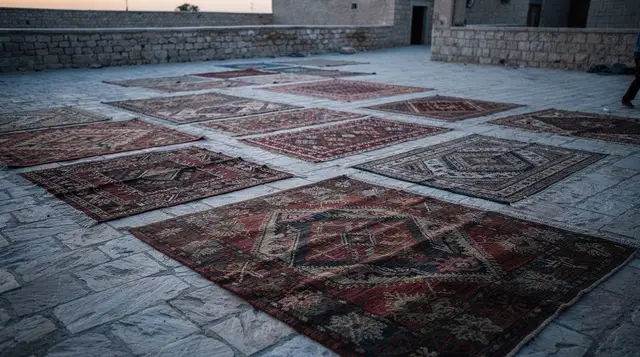
Carpets and kilims get most of the attention, and deservedly have their own page, but the region also produces smaller, lower-commitment textiles worth a look: block-printed scarves, woven table runners, and cotton or linen pieces sold by the metre in market stalls rather than in carpet showrooms. These sit at a fraction of the price and complexity of a full carpet, and unlike a carpet, buying one badly does not carry much financial risk.
If a shop offers a carpet or kilim demonstration as part of a stop on an organised itinerary, treat it as informative rather than obligatory:
a carpet and kilim information and demonstration session explains knotting technique and dye without any pressure to buy on the spot, which is a reasonable way to learn the basics before reading the full buying a carpet in Cappadocia guide and deciding, at your own pace, whether a purchase is worth making later in the trip.
Spices, dried fruit and other food souvenirs
Dried apricots, mulberries, and a wide range of spice blends are sold throughout the region, and these travel well, are genuinely useful once home, and are priced far more sensibly in markets than in shops geared toward one-off tourist purchases. Turkish delight (lokum) and pekmez, a thick grape or mulberry molasses used in local cooking, are also common and pack reasonably well if wrapped carefully. None of these require any special judgement about authenticity in the way pottery or carpets do — the main variable is freshness, which is easier to judge in a market stall with visible turnover than in a shop stocked for tourists year-round.
Where markets beat shops
For pottery seconds, textiles, spices and everyday ceramics, the weekly markets held across the region are consistently a better source than either tour-circuit shops or fixed boutiques. Stallholders at these markets are selling primarily to local households doing their weekly shopping, not exclusively to visitors, which keeps prices closer to what residents actually pay. The trade-off is that markets run on a fixed weekly schedule by town, so timing matters — the full rundown of which town’s market runs on which day is covered separately in local markets day by day, and is worth checking against your itinerary before you assume a market will be running when you pass through.
What to be more cautious about
Onyx carvings and jewellery are mined and worked regionally, which gives them a genuine local claim, but quality varies enormously between pieces and shops, and pricing is not always transparent to a first-time buyer. This is worked through properly in onyx and jewellery: what to know, and is worth reading before, not during, a workshop stop that includes an onyx showroom.
Evil-eye (nazar) charms are sold everywhere in Turkey and carry genuine cultural meaning, but the vast majority sold in tourist shops are mass-produced glass items imported in bulk rather than hand-blown locally, so treat them as a cheap, widely available souvenir rather than a regionally distinctive one. The same applies to printed textiles, generic leather goods, and factory ceramics with painted-on rather than hand-applied glaze patterns — all turn up repeatedly in shop windows along the main tourist streets of Göreme and Ürgüp, and none of them are specific to this region.
A note on where you buy, not just what
Where a purchase happens affects both price and authenticity more than most visitors expect. Shops built into an organised tour stop generally pay commission to the guide or driver who brought the group in, and that commission is priced into what you pay. A workshop or shop you find independently, particularly in Avanos itself or at a village market, tends to price more directly and gives a clearer sense of who actually made what you are buying.
For visitors who would rather have someone else do the searching, guided shopping trips built around this exact aim exist:
a private shopping tour of Cappadocia is aimed at people who want a local guide to point them toward workshops and markets worth the detour, rather than the standard tour-circuit shops. It suits a shorter visit where there is no time to work out independently which parts of Avanos or Ürgüp are worth a look.
Families or groups who want the pottery experience itself as the main activity, with a souvenir as the natural result rather than the goal, are also well served: a pottery experience in Cappadocia and a paint-your-own ceramic souvenir session both work as an activity for a slower day, discussed further in a slow day in Cappadocia, and produce something to take home regardless of how the rest of the visit goes.
Comparing the main categories
| Category | Regionally specific? | Best source | Price risk |
|---|---|---|---|
| Avanos pottery | Yes | Small ateliers in Avanos, workshops | Low to moderate |
| Carpets and kilims | Yes, but variable quality | See dedicated carpet guide | High if bought without research |
| Onyx jewellery and carvings | Yes, but variable quality | See dedicated onyx guide | Moderate to high |
| Textiles (non-carpet) | Yes | Weekly markets | Low |
| Spices, dried fruit, lokum | Yes | Weekly markets | Low |
| Evil-eye charms, printed magnets | Mostly no | Any shop, price varies little | Low, but low value too |
Prices for all of the above move with the lira, which has been volatile in recent years, so this page deliberately does not quote figures — expect a wide range between a village market and a tour-affiliated boutique for the same category of item, and use that range itself as a signal of which end of the market you are in.
Packing what you buy
Pottery is the item most likely to cause problems on the way home. Ask the workshop or shop to wrap pieces properly, and carry anything fragile in hand luggage rather than checked bags where possible — cave hotel rooms and long bus transfers both give plenty of opportunity for a poorly wrapped bowl to arrive in pieces. Textiles and dried food carry with essentially no special handling.
If you are travelling on to Konya or Ankara as part of a longer trip, as covered in the Konya day trip and Ankara day trip guides, it is worth doing your main souvenir shopping before that leg rather than after, since Avanos and the regional markets will no longer be within easy reach.
Frequently asked questions about Cappadocia souvenirs
What is the most authentic souvenir to buy in Cappadocia?
Hand-thrown or hand-painted pottery from Avanos is the item most specific to this region, made from local Kızılırmak river clay in workshops that have worked it since Hittite times. A piece bought directly from a working atelier, rather than a roadside gift shop, is the closest thing to a regional signature object.
Are the souvenirs sold on organised tours authentic?
Some are, but tour buses are routed to specific shops that pay commission to guides and drivers, which pushes up prices and narrows the choice to whatever that shop stocks. The same categories of goods, and often better quality, turn up in Avanos workshops and at weekly village markets away from the tour circuit.
Is it better to buy souvenirs at a market or a shop?
Weekly markets, covered in a separate guide to local markets by day, generally beat both tour-circuit shops and fixed-price boutiques for spices, dried fruit, textiles and everyday ceramics, because stallholders are selling to local households, not just visitors, and prices reflect that.
How do I know if a carpet or kilim is genuinely handmade?
This is covered in full in a dedicated guide to buying a carpet in Cappadocia, which walks through knot density, natural versus synthetic dye, and how the sales process typically works. Read that before any carpet demonstration, not during one.
Is Cappadocia onyx real and worth buying?
Onyx is mined regionally and worked in local workshops, but quality and pricing vary enormously between pieces, and this is addressed on its own page about onyx and jewellery. Treat any onyx purchase as a considered decision, not an impulse buy at the end of a tour stop.
What souvenirs should I avoid?
Anything identical across every shop window in Göreme and Ürgüp is very likely mass-produced and imported rather than made locally, whatever the shopkeeper says. Generic evil-eye keyrings, printed magnets, factory ceramics and carpets with no clear origin story fall into this category, and none of them are specific to Cappadocia.
Can I bargain over souvenir prices?
In markets and smaller family-run shops, a modest amount of negotiation is normal and expected, particularly for textiles and pottery bought in quantity. In fixed-price boutiques and larger tour-affiliated stores, prices are usually set and bargaining gets little movement.
Do I need to declare souvenirs at customs when leaving Turkey?
Ordinary souvenir purchases such as pottery, textiles and spices do not require any special paperwork for personal use. Items that could be mistaken for antiquities, including old-looking coins, fragments or carvings, are a different matter and are best avoided entirely rather than risking a dispute at the airport.
Shopping & market tours on GetYourGuide
Verified deep-linked GetYourGuide tours. Book through these links and we earn a small commission at no cost to you.
GetYourGuide does not provide a product photo for this activity — the image shows the meeting point, photographed by us.