The Cappadocia hamam: what actually happens in a Turkish bath
What actually happens during a Turkish bath in Cappadocia?
A hamam session moves through a heated stone room, a vigorous kese-glove scrub to remove dead skin, a wash in black soap foam, and a rest period, wearing a cotton paréo the venue provides. It's a body-care ritual rather than a relaxing massage, and the scrub is part of the standard package, not an optional add-on.
What a hamam session in Göreme actually involves
The word “Turkish bath” gets used loosely, and it sets the wrong expectation for a lot of visitors. A traditional hamam is not a spa treatment in the Western sense of dim lighting, whale music and a slow-handed massage. It’s a body-care ritual with a fixed structure, built around heat, water and a specific kind of physical scrubbing, and it has looked roughly the same for centuries. If you go in expecting a gentle soak, the middle section will catch you off guard.
A standard visit runs in four stages, in this order, and none of the first three are skippable extras — they’re the service itself.
- The hot room. You sit or lie on a heated marble or stone platform, usually circular, in a domed chamber that’s kept warm and humid rather than saturated with steam like a Western steam room. This stage softens the skin and opens the pores, and it typically runs 15 to 20 minutes before the attendant begins the scrub.
- The kese scrub. An attendant works over your arms, legs, back and torso with a coarse mitt (the kese), removing dead skin in visible grey rolls. This is the part that surprises people — see below.
- The soap wash. After the scrub, the attendant works up a thick foam from a bar of olive-oil-based black soap, usually whipped up in a cloth bag rather than a bottle, and washes it over your whole body by hand, then rinses with bowls of warm water.
- The rest. You’re wrapped in a dry towel or paréo and left to cool down and drink tea, often for 15 to 20 minutes. This is the only genuinely relaxing stage of the four.
An oil massage, if offered, comes after this sequence as a paid extra, not as part of it. A full session, hot room through to rest, generally takes 45 minutes to an hour without the massage add-on.
The kese scrub: the part nobody warns you about
This is the stage that catches most first-time visitors by surprise, and it’s worth being honest about it in advance. The kese mitt is genuinely abrasive, and the attendant isn’t being gentle by accident — the whole point is to remove a visible layer of dead skin, and that requires real pressure. Expect firm, sometimes brisk strokes over your limbs and back that can feel closer to a vigorous exfoliation than a caress. It isn’t painful in a sharp sense, but it is a workout for the skin, and on ticklish or sensitive areas it can feel intense for a few seconds at a time.
Two things make this easier to plan around. First, it’s short: the scrub itself typically takes 10 to 15 minutes, not the whole session. Second, it’s normal — this is exactly what a hamam scrub is meant to feel like, not a sign that something’s gone wrong or that you’ve picked a rough attendant. If you’ve only ever had a spa exfoliation with a soft mitt, recalibrate your expectations before you go in, not during.
For anyone travelling with older relatives, sunburnt skin, or recent injuries, it’s worth mentioning this to the attendant before the scrub starts — pressure can usually be adjusted, but only if you ask up front rather than partway through.
What you wear, and what’s included versus what costs extra
Most Göreme and Ürgüp hamams provide a cotton wrap known locally as a peştemal, or simply a paréo, and this is what you wear for the hot-room, scrub and wash stages. It’s a plain woven cloth, not swimwear, and the venue supplies it as part of the booking. Bringing your own swimwear to wear underneath is common practice and generally accepted, though it isn’t a requirement of the ritual itself — the paréo alone is standard.
What’s included in a base hamam package, at a traditional venue, is the hot room, the kese scrub, and the soap-foam wash. These aren’t optional upgrades you can decline to save money; they’re the core of what you’re paying for. What typically costs extra is anything beyond that sequence:
| Stage | Usually included | Usually an extra |
|---|---|---|
| Hot room / heated platform | Yes | — |
| Kese scrub (exfoliation) | Yes | — |
| Black soap foam wash | Yes | — |
| Rest period with tea | Yes | — |
| Oil massage | — | Yes |
| Facial or face mask | — | Yes |
| Private (non-shared) session | — | Yes, at most venues |
Prices vary by venue and by season, and it’s not useful to quote a single figure — ask what’s included when you book, and confirm whether a massage is bundled in or charged on top. If you’d rather not negotiate this on arrival, a pre-booked package removes the guesswork: a private Turkish bath spa experience sets out exactly what’s included before you turn up, and a traditional hamam session in Cappadocia covers the standard shared-session format at a lower cost.
Traditional hamam versus cave hotel spa: not the same thing
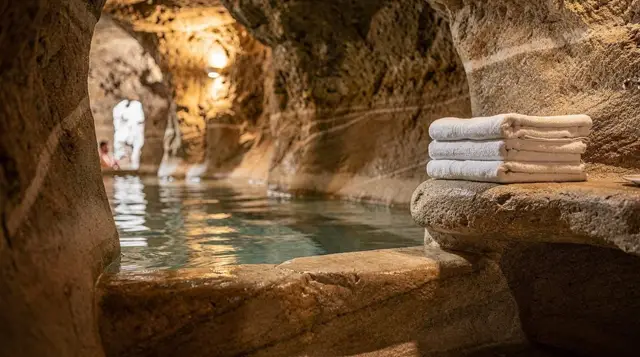
This is a genuine source of confusion in Göreme, because both get marketed under the word “spa,” and the experiences are quite different. A cave hotel spa is generally built around Western wellness conventions: a pool or jacuzzi, softer lighting, longer massages with oils, sometimes a sauna alongside a steam room, and a slower, quieter pace throughout. It’s a pleasant, low-intensity way to spend an afternoon, and it suits people who want warmth and quiet without the physical scrub.
A traditional hamam, by contrast, is a working ritual with a set structure and a functional pace — attendants move through several guests in a session, the scrub is brisk rather than gentle, and the emphasis is on the body-care process itself rather than ambience. Neither is better; they’re aimed at different things. If what you actually want is a quiet soak and a long oil massage, book a hotel spa treatment directly — see our notes on cave hotel spas for what to expect there. If you want the real ritual, book a dedicated hamam.
It’s also worth separating a hamam from the region’s actual thermal water — Ziga hot springs, outside Ihlara, is a mineral-water bathing site, not a hamam, and the two don’t overlap.
Where to do it: Göreme, Ürgüp or as part of a tour day
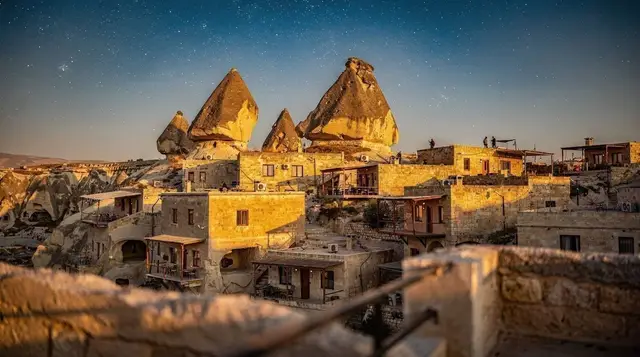
There are dedicated hamams in Göreme itself, within easy walking distance of most guesthouses, and larger, older hamam buildings in Ürgüp with more capacity for groups. Cave hotels with their own spa wing sometimes run a hamam-style treatment in-house, but check whether it follows the traditional sequence above or a shortened, Westernised version — the two get blurred in hotel marketing more often than you’d expect.
Some day tours bundle a hamam visit into a longer itinerary, which suits travellers who’d rather not arrange it separately. A Red Tour itinerary with a Turkish bath stop combines the north-of-Göreme sightseeing circuit — see our Red Tour, Green Tour, Blue Tour breakdown for what that day covers — with a hamam session at the end, which works well if you’re short on time and don’t want to plan the two separately.
Booking it into a longer stay
A hamam session sits comfortably as a single half-day slot rather than something to build a whole day around. It pairs well with a quieter, low-key day — after a morning hot air balloon flight, for instance, or on a day you’ve deliberately kept light; see our notes on a slow day in Cappadocia for how that can look. For travellers building out a longer trip, our five-day slow itinerary has room for exactly this kind of afternoon.
Where you stay affects how easy this is to arrange. Guesthouses in central Göreme are generally within walking distance of at least one hamam, which matters if you’d rather not book transport for a same-day appointment — see where to stay in Cappadocia and cave hotels explained for how location trades off against quiet and price.
A practical note on timing: book for the late afternoon or early evening if you can, after the day’s outdoor activity is done, since you’ll want a shower-and-rest routine afterwards rather than heading straight back out into the heat or dust of the valleys.
Evenings in Göreme also give you an easy follow-on — a plate of mantı or testi kebab, or a browse of where to eat in Göreme, fits naturally after a hamam session, and if you want a fuller evening out afterwards, Göreme after dark and whether the whirling dervish ceremony is worth it cover the other common evening options. Some visitors also stack a hamam with a full-day tour with wine tasting earlier in the day, treating the bath as the wind-down at the end.
What to bring, and what to skip
You don’t need to bring much. Most venues supply the paréo, towels and slippers, and provide the soap and scrub as part of the service. It’s worth bringing your own hair shampoo if you’re particular about it, and flip-flops for the walk between rooms if the venue doesn’t provide them. Contact lens wearers sometimes find the humid hot room uncomfortable; glasses or a lens case are worth having to hand.
Skip heavy jewellery and watches — the wet, soapy environment isn’t kind to either — and leave valuables at your accommodation rather than carrying them in. If you’re at all unsure about the intensity of the scrub because of a skin condition, sunburn, or a recent procedure, mention it when you book rather than when the attendant is already halfway through. For general trip preparation, our Cappadocia packing list covers this alongside the rest of what to bring, and what a Cappadocia trip costs sets hamam pricing in context against the rest of a typical daily budget.
Etiquette inside the bathhouse
A hamam runs on a few unwritten habits, and knowing them makes the session smoother. Keep your voice low in the hot room; the domed ceiling carries sound, and the atmosphere is closer to a quiet shared space than to a social one. Follow the attendant’s cues about when to lie down, turn over or move to the washing area, since the sequence is fixed and they have done it many times. Drink water before and afterwards, because the warm, humid air dries you out more than it feels like it does.
Tipping is customary in many bathhouses, and a small amount for the attendant is generally appreciated, but there is no rule you need to memorise. If you are unsure, ask the front desk how it is usually handled at that venue, and read safety and scams in Cappadocia for how to keep any money conversation straightforward.
Choosing between a private and a shared session
A shared session is the traditional format: several guests move through the stages in the same building, each with their own attendant or taking turns. It keeps the cost down and gives you the real atmosphere of a working bathhouse. A private session gives you the room to yourself or your group, which suits couples, anyone nervous about the paréo-only dress code, and travellers who want to ask the attendant to slow down or ease the pressure without an audience.
Neither choice changes the structure of the ritual. What changes is the pace and the privacy, so decide on that basis rather than on the idea that one is more authentic. If you are travelling as a group of friends, a private slot also lets you share the experience and laugh through the scrub together, which many people find makes it easier.
A hamam for different kinds of traveller
Couples and honeymooners. A private booking is the natural fit, and it works well as a quiet counterweight to a sunrise outing. See balloon flight with kids and fear of heights only if someone in the group is anxious about the early start; otherwise a hamam afternoon is a gentle way to recover.
Families. Check with the venue before bringing children, since policies vary and the heat and the scrub are not for everyone. Our Cappadocia with kids guide covers what suits younger travellers better.
Solo travellers. A hamam is an easy thing to do alone: there is no conversation to maintain and the attendant guides you throughout. Solo travel in Cappadocia has more on structuring days when you are on your own.
Hikers. After a day on the trails, the heat loosens tired legs, and the rest stage with tea is a welcome break. Pair it with the routes in best hikes in Cappadocia and keep the bath for the evening, once the walking is finished.
Fitting a hamam around the weather and the seasons
The hot room is pleasant whatever the weather outside, but the contrast changes the feel of the visit. In winter, stepping from a cold street into a warm domed room is part of the appeal; read Cappadocia in winter and Cappadocia in the snow for how the cold season shapes a trip. In summer, the same heat can feel heavy after a hot day, so choose the cooler end of the afternoon. On a wet or windy day when the balloons stay grounded or outdoor plans fall through, a hamam is among the most sensible fallbacks, and rainy day activities in Cappadocia lists other options alongside it.
After the session, give yourself a slow hour. Skin that has just been scrubbed is sensitive to sun and wind, so a stroll in the open valleys straight afterwards is not the best idea. A cup of tea and a seat in a quiet spot is the better follow-up, and Turkish tea and coffee culture explains the drink you will probably be offered during the rest stage.
The bottom line
A Cappadocia hamam is a genuine, centuries-old ritual, not a rebranded spa treatment, and the scrub is meant to be firm — that’s not a flaw in the experience, it’s the point of it. Go in expecting a structured sequence rather than a soft massage, and the surprise factor mostly disappears. If what you actually want is quiet, oils and a long soak, a cave hotel spa will suit you better; if you want the real thing, a dedicated hamam in Göreme or Ürgüp, booked either on its own or folded into a tour day, delivers it properly.
Wellness & spa experiences on GetYourGuide
Verified deep-linked GetYourGuide tours. Book through these links and we earn a small commission at no cost to you.
GetYourGuide does not provide a product photo for this activity — the image shows the meeting point, photographed by us.