Turkish night shows: are they worth it?
Is a Turkish night show in Cappadocia worth booking?
It's worth it if you want an easy, sociable evening with dinner, drinks and a condensed sampler of belly dance and folk dance, not a deep or intimate cultural experience. It's a standardised, group-oriented format, and quality varies a lot between organisers.
Every evening in Göreme and the surrounding villages, minibuses collect visitors from their hotels and drop them at cave-style venues for a set-menu dinner followed by a stage show. It’s one of the most heavily marketed evening activities in the region, and one of the most misunderstood: it isn’t a local custom you’re being let in on, it’s a purpose-built tourism product, and it’s worth knowing exactly what that means before you book.
What a Turkish night show actually is
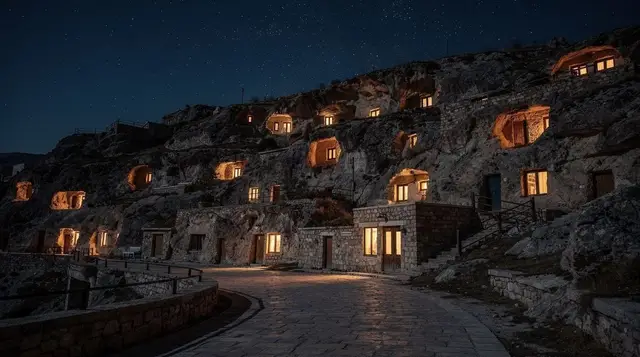
A Turkish night show is a commercial dinner-and-entertainment package, almost always held in a converted cave or stone hall designed to seat large groups at long tables. The format is consistent across Göreme and nearby Ürgüp: guests arrive by shuttle in the early evening, are seated together, served a set menu or given access to an unlimited drinks package, and then watch a rotating stage programme that usually mixes belly dancing, regional folk dances and live or recorded music, sometimes with audience participation slots built in.
It’s not a private or spontaneous evening out. Sittings run on a schedule, tables are arranged for volume, and the same show plays out night after night for whichever coach parties and independent bookings have filled the room. That’s not a criticism in itself — plenty of well-run group entertainment works exactly this way — but it’s the frame to book with, rather than expecting something intimate.
Dinner, drinks and the running order
Most operators build the evening around one of two structures: a fixed set meal with the show included, or an unlimited drinks package where food is a lighter buffet or optional add-on. Neither is inherently better; they suit different appetites and different drinking habits, so it’s worth reading exactly what’s included before you compare prices.
a Turkish night show that bundles dinner with unlimited drinks is the most common all-in format, aimed at people who’d rather not think about extras once they’ve sat down. For travellers who care more about the drinks package than a full meal, a version with unlimited drinks and an optional meal keeps the food spend separate. And for a lighter commitment, an admission ticket in Göreme that still includes dinner and drinks is worth checking if you want to compare what a simpler ticket covers against the fuller packages.
A typical evening runs three to four hours: doors and seating first, then dinner served in courses or laid out buffet-style, then the stage programme, which usually opens with folk dances representing different regions of Turkey before building to a longer belly dance segment, often with a costume change and an invitation for guests to join in near the end. None of this is spontaneous — it’s a rehearsed running order repeated nightly — which is worth knowing so you don’t mistake the choreography for something improvised.
Belly dancing, folk dance and where the traditions come from
It’s worth being clear about what you’re actually watching, because the marketing around these evenings tends to blur it. Belly dancing isn’t a Cappadocian tradition specifically; it’s a performance style with roots across Turkey and the wider Middle East, long established as theatrical entertainment rather than a regional folk custom. The folk dances that share the programme — often drawing on Anatolian regional styles with costume and rhythm differences — are closer to genuine local tradition, but they too are staged and shortened for a touring audience rather than performed as they would be at an actual village celebration.
The honest way to think about a Turkish night show is as a sampler: a condensed, staged introduction to several performance traditions in one sitting, packaged for visitors who won’t otherwise see any of them. That has real value if you’ve never encountered these dance forms before. It’s not, however, a window into how Cappadocian communities actually spend an evening, and no operator running this format is claiming otherwise if you read past the brochure language.
How this differs from the whirling dervish ceremony
This is the distinction most worth getting right before you book anything, because the two evenings are frequently confused and occasionally cross-sold as if they’re variations on the same thing. They aren’t. The whirling dervish ceremony — the sema — is a Sufi religious rite, performed in near silence with a specific liturgical structure, and it’s treated in the region as a devotional practice rather than entertainment. A Turkish night show is secular, loud, social and built around food, drink and dancing.
Some evening itineraries do combine elements from both, and a handful of operators run the sema as a standalone ceremony in a separate, more contemplative setting. If what you actually want is the dervish ceremony, look for it specifically rather than assuming a Turkish night show ticket includes it — in most cases it doesn’t, and turning up expecting a religious ceremony at a dinner-and-dancing venue will leave you disappointed either way.
Who this is for — and who should skip it
A Turkish night show suits travellers who want an easy, organised evening with no planning required: dinner sorted, transport sorted, entertainment sorted, and a sociable atmosphere with other visitors. It works well as one evening within a short two-day or one-day Cappadocia visit, slotted in after a full day of sightseeing when you don’t want to research restaurants or plan anything further.
It’s a weaker fit if you’re after an intimate or quiet evening, if you dislike large-group settings and set meal times, or if you’re specifically hunting for cultural authenticity rather than polished entertainment. If any of that describes you, a sit-down dinner at a restaurant you choose yourself, paired with the dervish ceremony if you want something more reflective, will suit you better than the group-show format. Neither choice is wrong; they’re just different evenings.
Fitting the evening into your trip
The best slot for a night show is an evening when nothing else is competing for your energy. If you have an early start the next morning, for example a sunrise balloon flight, think twice: a long sitting with drinks and a late return to the hotel is a poor preparation for a pre-dawn alarm. Many travellers do better placing the show on the night after the balloon, when the early start is behind them and the tiredness of a big day is something to relax into rather than fight.
It also pairs naturally with a day spent seeing the sights, such as the Göreme Open-Air Museum or a walk through Rose Valley, since you arrive at the venue with an appetite and no wish to organise anything further. If you are building a longer stay, the three-day itinerary and the guide to how many days to allow show where an easy evening fits without squeezing out the things you came for.
Getting the most out of the night
A few small habits make a noticeable difference to how the evening feels:
- Ask for a table near the stage when you book or on arrival, but don’t expect a guarantee; seating is usually arranged by the staff to fill long tables.
- Pace the drinks, particularly with an unlimited package. The show runs for hours, and the people who enjoy it most are rarely the ones who front-loaded the evening.
- Tell the venue about dietary needs when you book rather than at the table, since set menus are prepared in advance for the whole room.
- Treat the audience-participation slot as optional. Nobody is judged for staying in their seat, and watching can be just as enjoyable as joining in.
- Keep your hotel name and pickup details handy for the return shuttle, as drop-offs are done in a loop and the order depends on where everyone is staying.
A night-time alternative with sightseeing
If your main interest is seeing something rather than sitting through a stage show, there are evening options that put the emphasis on place. a night tour built around the highlights of the Göreme Open-Air Museum gives a different feel to a site you may already have seen by day, and it suits travellers who would rather be moving through the landscape than seated at a long table. It is a quieter choice, so it works best for people who find the show format too loud or too staged. For more ideas on how the region changes once the light fades, Göreme after dark and the notes on stargazing in Cappadocia are good companions.
What varies between operators
Quality and atmosphere differ noticeably from one organiser to another, and this is where most of the disappointment or delight actually comes from — not from the format itself, but from execution. Venue size, how crowded a given sitting is, the standard of the food, how professional the dancers are, and how much the evening feels rushed versus properly paced can all vary considerably. A smaller, better-run evening can feel genuinely enjoyable; a packed, rushed one can feel like being processed through a tourist conveyor belt.
There’s no reliable shortcut to spotting the difference in advance beyond reading recent reviews for the specific listing you’re considering, checking whether the package is genuinely all-inclusive or has add-ons sprung on you at the venue, and being realistic that a rock-bottom price usually means a bigger room and a tighter schedule. Don’t expect any single operator to be representative of the format as a whole — this is one of those categories where the difference between a good night and a mediocre one comes down entirely to who’s running it.
Night show formats compared
| Format | What’s typically included | Best suited to |
|---|---|---|
| Admission ticket with dinner and drinks | Entry, set meal, drinks, show | Travellers wanting a straightforward all-in evening |
| Unlimited drinks, optional meal | Drinks package, food available separately | Groups who want flexibility on food spend |
| Combined with a daytime tour | Full-day sightseeing plus evening show and transfer | Visitors packing one day tightly, sightseeing to evening |
| Dervish ceremony (separate booking) | Religious sema performance only, no meal | Travellers wanting a contemplative experience, not a party |
For a version that folds the evening into a fuller day out, a combined Green Tour that includes Derinkuyu underground city by day and a Turkish night show in the evening is worth considering if you’d rather not organise sightseeing and dinner separately. It pairs a proper daytime itinerary with the entertainment rather than treating the show as a bolt-on.
Practical logistics — pickup, timing, dress
Hotel pickup is standard practice for most bookings, since venues cluster outside the main village centres and are built around shuttle traffic rather than passing footfall. Confirm your pickup time and location when you book, since minibuses run tight loops across Göreme, Ürgüp and the surrounding villages and won’t wait long if you’re not at the agreed point.
Evenings start after dark and typically run three to four hours, so plan the rest of your day around a mid-evening start rather than expecting an early finish. Cave venues hold the day’s heat reasonably well but can cool once the show is underway and doors open for ventilation, so bring a light layer even in summer. There’s no formal dress code — smart-casual is standard, and nobody will turn you away for arriving straight from a day of walking the valleys.
If you’d rather build your own evening around dinner first, where to eat in Göreme and where to eat in Ürgüp both cover options outside the show-and-dinner package format, and the region’s wider food guide and notes on testi kebab and Turkish tea and coffee culture are worth reading regardless of which evening you choose.
Alternatives if a big group show isn’t your thing
If the group-dinner format doesn’t appeal, Göreme and Ürgüp both have a quieter evening scene worth exploring on your own terms — see Göreme after dark for what that actually looks like outside the organised shows. A restaurant meal booked yourself, taken at your own pace, will almost always feel more personal than a scheduled sitting for forty or fifty guests, even if it costs about the same.
For genuine ritual rather than staged entertainment, the whirling dervish ceremony is the right choice, not a substitute booked by accident. And if you’re weighing up how to spend a single evening within a tight schedule, it’s worth reading how the Red, Green and Blue tour circuits are structured, since some evening shows are marketed as add-ons to a daytime circuit and understanding the base tour helps you judge whether the bundle is worth it.
It’s also worth reading up generally on safety and common scams in Cappadocia and how the tour touts around Göreme tend to operate before booking anything through a street agency rather than a listing you’ve checked yourself — the night show market is a common target for repackaged or padded bookings, and knowing the going structure protects you regardless of season. If you’re planning around the best time of year to visit, note that venues run year-round, though outdoor seating sections, where offered, are naturally a warm-season feature only.
A Cappadocian Turkish night out, honestly
None of this is a case against booking a Turkish night show. Taken for what it is — an easy, sociable, well-organised evening with a condensed introduction to several performance traditions — it does exactly what it sets out to do, and plenty of visitors have a genuinely good time. The mistake is going in expecting something it was never built to be: an intimate, purely authentic cultural encounter. Get the framing right, pick an operator with recent good reviews rather than the cheapest listing, and it’s a reasonable way to spend one evening of a Cappadocia trip.
Cappadocia nightlife on GetYourGuide
Verified deep-linked GetYourGuide tours. Book through these links and we earn a small commission at no cost to you.
GetYourGuide does not provide a product photo for this activity — the image shows the meeting point, photographed by us.