Cappadocian food: what to eat across the region
What is Cappadocian food known for?
Cappadocian cooking centres on slow-cooked, clay-pot dishes such as testi kebab, hearty Turkish breakfast spreads, and a wine tradition going back millennia. Göreme's restaurants lean touristy, while Ürgüp keeps a steadier, more local pace.
A plateau cuisine, not just a Turkish one
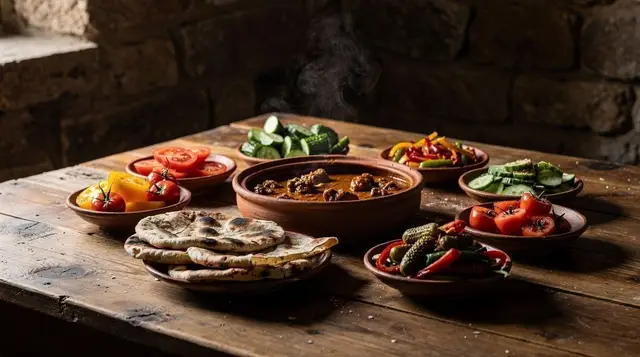
Cappadocia sits on a dry, volcanic plateau at around 1,000 metres, and the food follows the land. Fresh produce has always had to be preserved or cooked slowly to stretch through long winters, which is why so much of the region’s traditional cooking happens in a clay oven or under a sealed lid rather than over an open flame. Vegetables — aubergine, pepper, tomato, dried bean — go into a pot with meat and stay there for hours, not minutes. Clay itself is part of the story too: the red soil along the Kızılırmak river at Avanos has been thrown into pots and jars since Hittite times, and it is the same clay tradition that put the testi in testi kebab.
This is not a separate cuisine from the rest of Turkey. Manti, gözleme and pide are eaten from the Aegean to the eastern border. What sets the plateau apart is emphasis: more clay-pot cooking, more slow-simmered vegetable stews, a stronger wine tradition than most of inland Turkey, and, in Kayseri, a cured-meat culture that stands on its own. This page gives the overview. Several dishes and habits below have their own dedicated guides, linked as they come up, and it is worth reading those before you plan a specific meal — this page is meant to orient you, not to replace them.
The dishes that define the region
A handful of dishes turn up on almost every Cappadocian menu, from simple village restaurants to hotel terraces.
| Dish | What it is |
|---|---|
| Testi kebab | Meat and vegetables sealed in a clay pot and slow-cooked, cracked open at the table |
| Mantı | Small dumplings, usually served with yoghurt and a paprika butter |
| Gözleme | Thin flatbread folded around cheese, spinach or potato, cooked on a griddle |
| Pide | Turkish flatbread with toppings, often called “Turkish pizza” |
| Kuru fasulye | Dried white beans stewed slowly, usually with a little meat |
| Saç tava | Meat and vegetables sautéed together on a flat metal griddle |
Testi kebab is the dish most visitors come looking for, and it deserves a page of its own — the full guide to testi kebab covers what is genuinely in the pot, how the theatrical breaking of the clay works, and where it is worth paying more for. For a version you cook yourself rather than order, a cooking class in Cappadocia usually walks through dough-based dishes like mantı or gözleme alongside a clay-pot stew.
a cooking class in Kings Valley near Uçhisar runs sessions that cover several of these dishes in one sitting, from dough work through to the pot going into the oven, which is a reasonable way to understand the cooking method rather than just eat the result.
Turkish breakfast, Cappadocia-style
A Turkish breakfast — a spread of cheeses, olives, tomato, cucumber, honey, jam, eggs and bread, eaten slowly rather than rushed — is not unique to this region, but Cappadocia has built an entire minor industry around where you eat it. Tables get carried out into Rose Valley and Love Valley, or set up on cave-hotel terraces looking straight at a cluster of fairy chimneys, sometimes timed to coincide with the morning’s balloon launch.
The food itself does not change much from one setting to the next; what you are paying for is the view and the setting, not a different menu. The dedicated breakfast guide covers what is typically included in a paid valley breakfast experience and where the setting earns the extra cost.
a breakfast experience set up in Göreme Valley is one way to try this without organising a table and transport yourself, though it is worth going in with realistic expectations about the food — the setting is the reason to book, not an unusual menu.
Kayseri’s contribution: pastırma and sucuk
Kayseri, the city on the eastern edge of the region under Mount Erciyes, has its own food identity that is worth knowing about even on a short Cappadocia trip. It is the source of pastırma, air-dried, pressed beef coated in a spice paste built around fenugreek, and sucuk, a garlicky, cumin-heavy dried sausage. Both turn up on breakfast tables and in sandwiches across the wider region, but they are made and eaten more seriously in Kayseri itself, where the tradition is older and the quality more consistent. If a day trip to Kayseri is on the itinerary, trying both there rather than settling for the version sold in a Göreme café is the better version of the experience.
Wine on volcanic soil
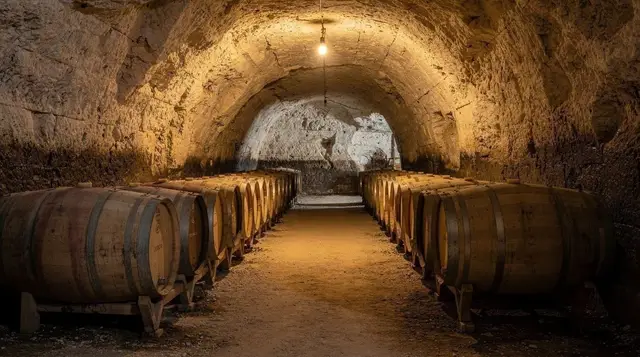
Cappadocia is one of Turkey’s oldest wine regions, and the volcanic soil left behind by Erciyes and Hasan Dağı is a large part of why. Local grape varieties include Emir, a white grown widely around Nevşehir, and reds such as Kalecik Karası, Öküzgözü and Boğazkere. Ürgüp has the highest concentration of wineries and cave cellars open to visitors, many of them built into the same rock the region is known for. A dedicated wine guide and a page on Ürgüp’s wine cellars go into grapes, cellar visits and tastings in more detail than makes sense here.
For a single outing that combines sightseeing with a tasting, a full-day Cappadocia tour that includes a wine tasting folds a cellar stop into a wider day rather than requiring a separate trip to Ürgüp.
Where the mood changes: Göreme versus Ürgüp
The food itself does not change much between towns — the same core dishes appear on menus everywhere — but the atmosphere around eating it does. Göreme is the region’s tourist centre, and its restaurant strip reflects that: convenient, used to foreign visitors, and priced accordingly, with menus that lean towards what sells rather than what a local family would cook at home. Ürgüp, fifteen minutes away, has a steadier local rhythm, a proper town square, and restaurants that see more residents than passing tour groups.
Neither is the “correct” choice, and this page will not push you towards one — separate guides to where to eat in Göreme and where to eat in Ürgüp cover the practical detail, and the Göreme walking guide and Ürgüp walking guide are useful if you are deciding where to base yourself for reasons beyond food. If you want a fuller day out around Göreme that includes a meal, a Red Tour itinerary that includes lunch covers several of the north’s sights with a stop built in, so you are not hunting for a restaurant mid-afternoon.
Tea, coffee, and viewpoint cafés
Çay — black tea served in small tulip-shaped glasses — is the region’s default drink, offered on arrival almost everywhere from carpet shops to car rental offices, and it costs very little wherever you buy it. Turkish coffee, thicker and unfiltered, is more of an after-meal order than an all-day habit. Göreme in particular has built a small industry of cafés positioned on ridges and rooftops purely for the view over the valleys and, at the right hour, the balloons overhead; a guide to Göreme’s viewpoint cafés and a page on Turkish tea and coffee culture cover both in more depth. Expect to pay more for a table with a view than for the drink itself.
Eating like you are in no hurry
The rhythm of a meal in Cappadocia is slower than most visitors expect. Dishes arrive when they are ready, a pot that has been in the oven for hours cannot be hurried, and nobody will bring the bill until you ask for it. Treat a long lunch as part of the day rather than a gap between sights, and the region makes more sense. It also helps with the heat in summer, when the middle of the day is better spent at a shaded table than walking an exposed valley, a point the guide to Cappadocia in summer makes from the sightseeing side.
Some dishes, testi kebab above all, are often prepared to order or in set batches, so it is common for a restaurant to ask whether you would like it before you have finished reading the menu. If you have set your heart on it, say so early. For everything else, the easiest way to eat well is to order a few things to share: a plate of cooked vegetables, something from the clay pot, a bread-based dish and a salad. That way you taste more of the range, and nobody is stuck with a single heavy plate.
Eating well on a small budget
A good meal here does not have to be a set-piece. Gözleme from a griddle, a pide at a plain town restaurant and a bowl of kuru fasulye with bread are the dishes locals actually eat, and they are filling enough to carry you through an afternoon on foot. The blog piece on eating well on a small budget walks through how to do it without feeling you have missed out, and what a Cappadocia trip costs puts food in the context of the rest of your spending. Save the clay-pot dinner or the valley breakfast for the one or two meals where the setting is the point, and keep the others simple.
Building meals into your days
Food works best when it is planned around what you are already doing, not added on top. A few ways to fit it in:
- Valley mornings: if you are up early for the balloons, a slow breakfast afterwards is the natural next step. The guide to watching the balloons without flying shows how that morning tends to unfold.
- Village afternoons: the lanes of Mustafapaşa and Avanos suit a simple lunch between a wander and a workshop, and the pottery workshops guide pairs well with the clay-pot story told above.
- Evenings: once the light drops, Göreme after dark covers what is open and how the town changes, which helps when you are choosing between a restaurant dinner and something lighter.
- Day trips: the Kayseri day trip is the obvious moment to try pastırma and sucuk where they are made, and the Konya day trip lets you compare how the cooking shifts a little further west.
If you would rather hand the logistics to someone else, a guided day with a meal built in removes the question of where to stop, while a hands-on session such as a cooking class that ends with a shared meal gives you something to take home besides photographs. The same applies to the cave hotels many visitors stay in, where the terrace breakfast is often the best meal of the day and worth factoring into where you book.
Practical notes
A few things are worth knowing before you sit down anywhere in the region. Card payment is accepted at most restaurants in Göreme and Ürgüp, and at the larger operators generally, but cash still helps in villages, at small local places, and around the local markets that rotate through towns on set days. Prices are in Turkish lira, and given how much the currency has moved in recent years, treat any specific figure — including anything printed in an older guidebook — as a rough guide rather than a fixed number.
Vegetarian travellers are reasonably well served: gözleme, mantı with a meat-free filling on request, and kuru fasulye without the meat are all realistic orders, and mezze plates of cooked vegetables, yoghurt and dips are standard starters almost everywhere. Vegan options are less consistent and worth checking dish by dish, since butter and yoghurt appear in many otherwise plant-based recipes.
Tap water is not recommended for drinking anywhere in the region; bottled water is cheap and sold at every restaurant, shop and market stall, so this rarely causes a problem in practice. For a broader look at what food and drink actually cost across a trip, the region’s things-to-do food and drink category links out to more specific guides, including the ones on testi kebab, breakfast, wine and cafés referenced throughout this page.
Cappadocian food FAQ
What makes Cappadocian food different from the rest of Turkey?
The plateau’s dry climate and volcanic geology shaped a cuisine built around slow cooking in clay and stone: pots sealed and baked for hours, vegetables simmered rather than grilled, and a wine tradition that predates most of the country’s other wine regions. It shares its base with central Anatolian cooking generally, but the clay-pot and cave-cellar traditions are stronger here than almost anywhere else in Turkey.
What is testi kebab?
A meat and vegetable stew sealed inside a small clay pot and cooked slowly, then cracked open at the table, usually with some theatre involved. It is the region’s signature dish and the subject of its own guide, which covers what is actually in the pot and where the ritual is worth paying for.
Is Turkish breakfast in Cappadocia different from elsewhere?
The components are the same as a Turkish breakfast anywhere in the country, but Cappadocia has turned the meal into an experience, with tables set up in valleys and on cave-hotel terraces facing the fairy chimneys. A separate guide covers what is included and where the view is worth the extra cost.
Is Cappadocia known for wine?
Yes. Vines have grown on the plateau for centuries, using local grapes such as Emir, Kalecik Karası, Öküzgözü and Boğazkere, and Ürgüp in particular has a concentration of cave cellars open for tastings. A dedicated wine guide covers grapes, cellars and what to expect from a tasting.
Where should I eat, Göreme or Ürgüp?
Göreme has more restaurants within walking distance of most hotels but feels distinctly geared towards passing tourists. Ürgüp has a calmer, more local dining scene a short drive away. Neither is objectively better; separate guides to eating in each town go into the detail needed to choose.
Do I need to book restaurants in advance?
For an ordinary meal, no. For a valley breakfast experience, a cave-hotel wine dinner, or a cooking class, booking ahead matters more in the busiest months, since these run on fixed sittings rather than walk-in tables.
Is tap water safe to drink with meals?
Tap water across the region is not recommended for drinking. Bottled water is inexpensive and sold everywhere, including at restaurants, so this is rarely an inconvenience.
Cappadocia food & drink tours on GetYourGuide
Verified deep-linked GetYourGuide tours. Book through these links and we earn a small commission at no cost to you.
GetYourGuide does not provide a product photo for this activity — the image shows the meeting point, photographed by us.