Ürgüp's wine cellars: what a cave-cellar visit actually involves
What is a wine cellar visit in Ürgüp actually like?
It means walking into rooms cut directly into the volcanic rock beneath and around the town, where wine is stored away from sunlight and temperature swings. Most cellars sit within walking distance of Ürgüp's centre, so a visit can be done on foot rather than needing a car or organised transfer.
Ürgüp is a wine town, and it has been one for long enough that the storage space came before the tasting room. Underneath and around the old streets of Ürgüp, the same soft volcanic rock that was carved into churches and cave houses elsewhere in Cappadocia was carved into cellars, and a good number of them are still doing the job they were dug for. This page is about visiting those cellars specifically, as a place and an experience, not about the wine itself. Grape varieties, producers and where to buy a bottle to take home belong in the separate Cappadocia wine guide; this one stays underground.
The cellars, not the wine list
It is a fine distinction, but it matters for planning. A cellar visit is about the rock-cut space: low chambers, curved ceilings, a temperature and light level that has nothing to do with the weather outside. A wine list, a tasting flight, or a conversation about Emir versus Kalecik Karası is a different kind of stop, and often happens in the same building, but it is not the reason the cellar exists. If you are short on time and have to choose one wine-related stop in Ürgüp, understanding what you are actually walking into helps you decide whether you want the cellar experience, a tasting, or both.
Ürgüp’s old town is built on and into a slope of tuf, the same compressed volcanic ash that forms the fairy chimneys across the region. Where a hillside house needed a cool, dark room for storage, the household dug one straight into the rock behind or below it. Multiply that by generations of households and, later, by commercial wine producers who needed more space than a household cellar, and the result is a town with a working relationship to underground storage that goes back well before wine tourism existed as a category.
Why the rock works for storage
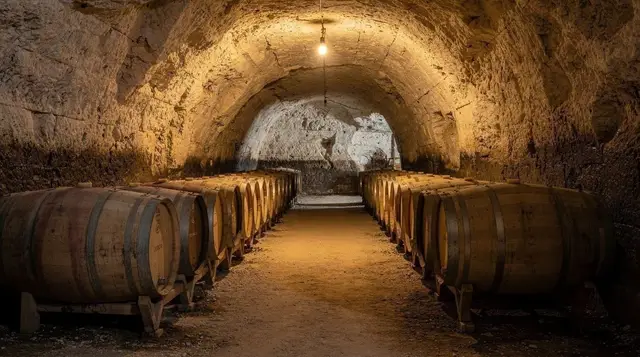
Volcanic tuf has two properties that matter here: it holds a stable temperature better than a room exposed to outside air, and it blocks light completely once a chamber is more than a few metres in. Both of those are exactly what wine storage wants. Sunlight degrades wine over time, and temperature swings between day and night, or between seasons, stress it in ways a cellar avoids simply by being buried. This is the same logic behind the region’s cave hotels, which stay noticeably cooler in summer and less cold in winter than a built structure above ground, covered in the cave hotels guide.
What this page will not do is hand you a specific number for how cold a given cellar runs, because that varies by depth, by ventilation, by how deep into the hillside the chamber goes, and by which cellar you happen to be standing in. Some are shallow rooms a few steps below street level; others go much further into the rock. The honest version is: noticeably cooler and darker than outside, consistently, which is the point, rather than a single verified figure that would not hold across every cellar in town anyway.
Walking distance, not a drive
This is the detail that sets a cellar visit apart from most of the region’s wine experiences. Tasting a glass over a valley sunset, or touring a working vineyard outside town, both require getting somewhere, usually by organised transport or a rented car, covered in driving in Cappadocia and car rental in Cappadocia. Ürgüp’s cellar cluster is different: several sit within the old town itself or on its immediate edges, close enough to the centre that a walk between two or three of them, combined with a look around the streets, fills a morning or afternoon on foot.
That walkability is worth building an itinerary around if you are staying without a car, or if you have already used your day’s driving on something further out. Pair it with a stroll past Ürgüp Castle Rock and the Three Beauties formation, both an easy walk from the centre, and the whole outing stays on foot from start to finish. The Ürgüp walking guide lays out a fuller route through the old town if you want to fold the cellars into a longer walk rather than a standalone stop.
What a visit actually involves
Walk in from a street door or a gate set into the hillside, and the transition is immediate: the light drops, the air cools, and street noise falls away within a few steps. Most cellars open into one or more chambers, sometimes with rows of barrels or racked bottles, sometimes with older stone-lined storage areas that predate the current operation. Ceiling height varies; some chambers are comfortable to stand in throughout, others narrow or lower toward the back where the rock was cut less generously.
A self-guided stop might be brief: a look at the space, a sense of how the storage works, and back out into the street. A hosted visit, whether through a cellar that welcomes walk-ins or a booked tasting, usually adds context on how the space is used today, and typically leads into a tasting if that is on offer. Either way, comfortable, closed shoes and a light layer help, since the drop in temperature is real even on a hot Cappadocia afternoon, and cellar floors are uneven stone rather than level flooring.
Cellar visit or organised tasting tour
Both are valid ways to spend time on Ürgüp’s wine side, and they suit different trips.
| Format | Time needed | Transport | Best for |
|---|---|---|---|
| Self-guided cellar walk | 30–90 minutes | On foot from Ürgüp centre | Travellers without a car, or filling a spare hour between other stops |
| Private vineyard and tasting tour | Half a day | Arranged transport | A structured tasting with commentary, often combined with a vineyard outside town |
| Cellar-adjacent tasting in town | 1–2 hours | On foot | A tasting without leaving Ürgüp, paired with a walk around the old town |
| Wine with a valley or castle view | An evening | Arranged transport or short taxi | Scenery over depth of tasting, best saved for a clear sunset |
For a guided version with a set itinerary, a private half-day tour through vineyards and cellars with tastings included covers ground a self-guided walk cannot, including stops outside Ürgüp’s immediate centre. For a tasting with a view rather than a cellar underfoot, a wine tasting overlooking Ortahisar Castle trades the underground setting for an above-ground panorama a short distance from Ürgüp.
Combining the cellars with the rest of Ürgüp
Because the cellar visit is short and walkable, it slots easily into a fuller day rather than needing its own dedicated outing. A common pattern: a morning cellar stop or two, lunch in town using the where to eat in Ürgüp guide, an afternoon walk up to Castle Rock for the view, and an evening either back in the old town or out toward a valley for the sunset.
If you would rather build the tasting into a museum visit than a cellar walk, a private tour combining the Göreme Open-Air Museum with a wine tasting pairs the region’s best-known historical site with a glass afterward, though note that stop is in Göreme rather than Ürgüp itself.
Tea and coffee culture sits alongside the wine scene rather than competing with it; if you want the fuller picture of what is on offer to drink in the region beyond the cellars, the Turkish tea and coffee culture guide covers the other half of that. And if the appeal is less about wine specifically and more about a gentler pace after days of valley walks and early balloon mornings, the cellar circuit fits naturally into a slow day in Cappadocia.
For an evening version with more atmosphere than a standard tasting room, watching the sunset over Red Valley with a glass of wine is worth knowing about, though it is a valley experience rather than a cellar one, and needs transport out of Ürgüp to reach the viewpoint.
When to go and how much time to allow
Ürgüp’s old town, cellars included, has no strong seasonal closure the way some outdoor sites do in winter. The rock keeps its cool, stable interior year-round, which makes cellar visits one of the more weather-proof things to do in the region: useful on a hot July afternoon when a valley walk is unappealing, and equally fine on a cold, grey January day when outdoor sightseeing is limited. See best time to visit Cappadocia for how the rest of the region’s activities respond to season, since balloon flights and valley hikes are far more weather-dependent than a cellar stop.
Mid-morning to mid-afternoon tends to be the busiest window in the old town generally, as day visitors on organised circuits pass through. An early or late visit, closer to opening or ahead of dinner, tends to be quieter for the same walk. If you are staying in Ürgüp itself, this is one of the easier things to do on a whim, without needing to plan transport or book far ahead, unlike much of the rest of a Cappadocia itinerary.
A note on cost and choosing where to go
Cellar and tasting prices vary by operator, by how many wines are included in a tasting, and by whether food is paired in, and they change often enough that a fixed figure here would be out of date before it was useful. The more reliable approach is to ask when you arrive, or to check the current price on a booked tour before confirming, rather than relying on a number from any single source.
If you are staying elsewhere in the region and weighing where to base yourself for this kind of thing, where to stay in Cappadocia and Ürgüp versus Göreme versus Uçhisar both cover how the towns compare, and Ürgüp’s wine cellars are one of the clearer reasons to weight that decision toward Ürgüp itself if wine is a priority for your trip. For a broader sense of how a cellar stop fits into a multi-day plan, Cappadocia in two days and the general run-through of common planning slips in Cappadocia itinerary mistakes are useful companions.
Frequently asked questions about Ürgüp’s wine cellars
Are Ürgüp’s wine cellars natural caves or man-made?
They are cut, not natural. The volcanic rock around Ürgüp is soft enough to carve with hand tools, the same material used for the region’s cave houses and churches, and cellar chambers were excavated into it specifically for storage.
Can I visit the wine cellars without booking a tour?
Many cellars sit close to Ürgüp’s town centre and can be reached on foot, so a self-guided walk between them is possible. A tasting tour adds a guide, transport to cellars further out, and a structured flight of wines rather than an ad hoc stop.
Do I need a car to see Ürgüp’s cellars?
No, and that is the point of this page: unlike a vineyard drive or a valley wine-and-sunset outing, the cellar cluster nearest the centre of Ürgüp is walkable, which is unusual for Cappadocia’s wine experiences.
How is a cellar visit different from a wine tasting tour?
A cellar visit is about the space itself, the rock-cut architecture and the storage conditions. A tasting tour is built around sampling a flight of wines, usually with commentary, and may combine a cellar stop with a vineyard or a scenic setting elsewhere in the region.
Is it cold inside the cellars?
Rock-cut cellars are noticeably cooler and darker than the street outside, which is the reason they were dug in the first place. Exact temperatures vary by cellar and by depth, so this page does not quote a single figure.
How much time should I set aside for the cellars?
A short cellar stop can be under an hour. Combined with a walk around Ürgüp’s old town and Castle Rock, or with a structured tasting, plan for half a day.
Where does the general Cappadocia wine guide fit in?
The region’s grape varieties, wineries and where to buy bottles are covered in the separate Cappadocia wine guide. This page stays on the cellar visit itself: the rock, the walk, and what to expect once you are inside.
Cappadocia food & drink tours on GetYourGuide
Verified deep-linked GetYourGuide tours. Book through these links and we earn a small commission at no cost to you.
GetYourGuide does not provide a product photo for this activity — the image shows the meeting point, photographed by us.