Cave hotel spas in Cappadocia
What is a cave hotel spa in Cappadocia?
It is an in-house wellness facility built into the tuf rock of a hotel, typically a pool, sauna or hammam room and a treatment menu. It follows a Western spa format rather than the traditional public hammam, and access is usually limited to hotel guests.
What counts as a cave hotel spa
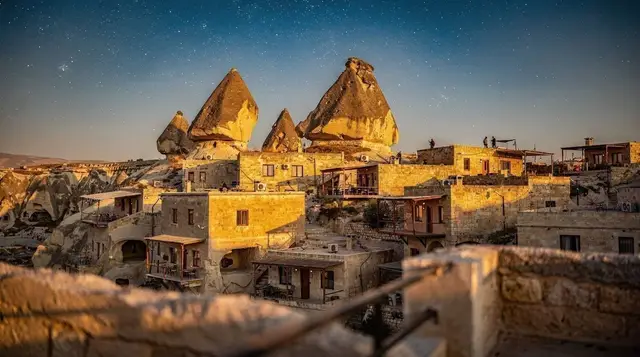
Sleeping in a room carved into the rock is the normal way to stay in Cappadocia, and a growing number of properties add a wellness wing to the same building: a pool, a sauna or steam room, a hammam-style stone platform, and a menu of massages and facials. That is what this page covers. It is a different product from the traditional public hammam, which is a standalone scrub-and-soap ritual run in a historic bathhouse open to anyone who buys a ticket. A cave hotel spa is closer to what most Western travellers already recognise as a hotel spa — it is simply built into volcanic tuf instead of drywall, and it sits on the hotel’s own guest list rather than a public one.
The distinction matters because the two get marketed with overlapping language. A hotel brochure or a tour listing will sometimes use “spa” and “hammam” almost interchangeably, and it is easy to book expecting one experience and receive the other. If what you actually want is the traditional scrub-and-soap ritual with an attendant, read our separate guide to the hammam in Cappadocia rather than this page.
If you want a Western-style spa day with a pool and a treatment menu, this is the right page, and a bookable option combining both formats exists as the Turkish hammam and spa session, which pairs the traditional ritual with spa-style extras in one outing.
Pools, saunas and treatments: what is typically on offer
The facility list varies enormously by hotel size and category, but a cave hotel spa wing generally draws from the same set of components:
| Feature | How common it is | Notes |
|---|---|---|
| Indoor pool | Common at mid-range and above | Often small, sometimes unheated in a genuinely cool cave room |
| Sauna | Common | Usually a compact dry sauna, occasionally rock-cut |
| Steam room / Turkish bath style room | Common | A house version of a hammam, not the public bathhouse experience |
| Jacuzzi or hot tub | Occasional, more at larger properties | Sometimes shared, sometimes in-room |
| Massage and facial menu | Common | Booked separately per treatment, staffing can be limited off-season |
| Fitness room | Occasional | Rarely a full gym |
Smaller boutique cave hotels with a handful of rooms are less likely to run a full spa wing at all; the ones that do usually offer a compact package of sauna plus one or two treatment rooms rather than the full list above. Larger cave hotels around Ürgüp and the bigger properties in Göreme and Uçhisar are where you are more likely to find a genuine pool and a longer treatment menu, simply because they have the floor space and staffing to run one.
The rock-cut setting: cooler, darker, and not for everyone
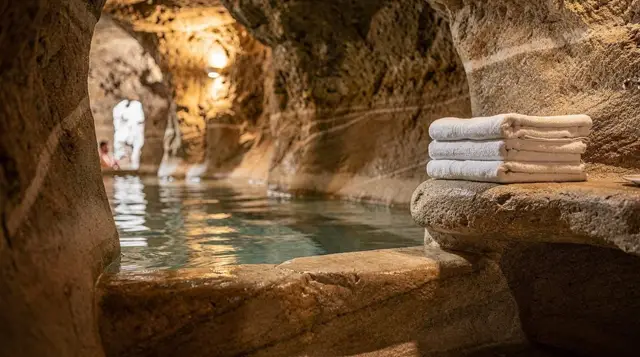
A spa room that is actually cut into the tuf behaves differently from a built structure. The rock holds a stable, cool temperature year-round, so a genuine cave spa room can feel notably cooler and darker than a conventional hotel spa, sometimes with no natural light at all beyond a doorway. Some visitors find this exactly the appeal — a hushed, cave-cool room is a natural fit for a sauna or a massage table, and it is part of the same character that makes cave hotel rooms distinctive in the first place. Others find a windowless stone room gloomy rather than relaxing, particularly for a pool area, where natural light tends to matter more than it does for a single treatment room.
It is worth knowing that not every “cave spa” is actually rock-cut throughout. As with cave hotel rooms generally, some properties build in cave style — masonry walls shaped and finished to look like carved rock — for parts of the spa, especially larger pool halls, where cutting a genuine cave room of that size is either structurally impractical or prohibitively expensive. Photos and recent guest reviews are usually a reliable way to check which you are booking, since the difference is visible even in a a few pictures. If the distinction matters to you, it is a fair question to put to the hotel directly before booking, the same way it is worth asking about any cave hotel room.
Guest access: generally, not always
The general pattern at cave hotel spas is that access is treated as a guest amenity, tied to a room booking rather than sold as a standalone ticket. That is worth stating clearly as a pattern rather than a fixed rule, because practice differs from hotel to hotel: some properties do sell day passes or individual treatments to outside visitors, particularly in shoulder season when occupancy is lower and the spa has spare capacity, while others keep the facility strictly for registered guests. There is no region-wide policy to point to, so if a spa visit is central to your plans and you are not staying at that specific hotel, contact the property directly and ask before you build a day around it.
For travellers who want a spa-style experience without booking a cave hotel room at all, a separate route exists: bookable day sessions that include return transfer from wherever you are staying. The Inferno spa experience with hotel transfer is built for exactly this — a self-contained spa outing with pickup included, aimed at visitors who are not staying at a spa-equipped property and do not want to negotiate access hotel by hotel.
Cave hotel spa vs the traditional hammam
It is worth spelling out the difference once, since the two are easy to conflate:
| Cave hotel spa | Traditional hammam | |
|---|---|---|
| Format | Pool, sauna, à la carte treatments | Fixed ritual: heat, scrub, soap wash |
| Setting | Hotel wellness wing, often rock-cut | Historic public bathhouse |
| Staff | Spa therapist | Hammam attendant (tellak/natır) |
| Access | Usually guests of that hotel | Open to anyone with a ticket |
| Social element | Private, individual | Often communal bathing hall |
Neither is better than the other; they are different products aimed at different moods. If your interest is the communal ritual and the history of the bathhouse itself, our dedicated guide to the Turkish bath in Cappadocia covers what to expect step by step, what to wear, and how the scrub actually works. This page stays on the hotel-spa side of that line.
Where cave hotel spas cluster
Ürgüp has the highest concentration of larger cave hotels in the region, and with that comes a proportionate share of properties running a full spa wing — it is a town built around bigger boutique and four- and five-star cave conversions rather than the smaller guesthouses that dominate central Göreme.
Göreme itself has spa-equipped cave hotels too, concentrated among its larger properties rather than its budget pensions, and Uçhisar has a handful of higher-end cave hotels with wellness facilities that lean on the town’s quieter, more elevated setting. Ortahisar has fewer large hotels overall and correspondingly fewer full spa wings, though that can change as more of its old stone houses are converted.
The practical takeaway is that hotel size predicts spa facilities more reliably than town does. A five-room cave guesthouse in any of these towns is unlikely to run a pool and treatment menu; a forty-room cave hotel is far more likely to. If a spa is a priority, filter by property size and read the amenities list before you filter by neighbourhood — our guide to choosing between Göreme, Ürgüp or Uçhisar covers the wider trade-offs between those three bases, and what a cave hotel is really like is worth reading before you book any rock-cut room, spa or no spa.
Combining a cave hotel stay with sightseeing
Several bookable packages pair a cave hotel stay with a day or two of sightseeing, which is a practical way to get guest-level access to a hotel spa without booking accommodation separately from your touring. The two-day Cappadocia highlights package with a cave hotel stay bundles a night in a cave hotel with a day of regional sightseeing, and the one-night cave hotel stay with a guided Red Tour pairs a cave hotel night with the northern valleys and rock-church circuit.
Neither package is sold as a spa product specifically, so treat any spa access as a hotel amenity that comes with the room rather than a guaranteed feature of the tour itself, and check what the specific hotel on your package offers before assuming a pool or treatment menu is included.
Booking and what to check before you commit
Because spa facilities and access rules vary so much hotel to hotel, a short checklist is more useful here than a price table:
- Ask whether the spa is rock-cut or built in cave style, if that distinction matters to you, and ask for recent photos if the listing photos look dated.
- Confirm whether spa access is included in the room rate or charged separately, and whether that charge covers the pool and sauna or only named treatments.
- Ask about opening hours and staffing, especially outside peak season — smaller hotels sometimes run spa services on request rather than fixed hours, and treatments can need advance notice.
- Check whether outside guests are accepted, if you are not staying at that hotel and want to use its spa as a day visit.
- Don’t assume a listed sauna or pool is heated or filled year-round — some cave hotels close or scale back wellness facilities in the coldest months, which is worth weighing against a visit timed for Cappadocia in winter.
Pricing for spa access and treatments is set by each hotel individually and changes with the season, so this page does not quote figures — treat any number you see as specific to that property on that date, and confirm current pricing directly with the hotel or through your booking platform. The same applies to packages built around a longer stay, such as the airport-to-cave-hotel two-day tour or the cave hotel package combining Ihlara Valley, a balloon flight and an ATV tour: read what each package actually includes rather than assuming spa access travels with any cave hotel booking by default.
Who a cave hotel spa suits, and who it does not
A cave hotel spa suits travellers who want to fold some downtime into a trip that otherwise runs on early starts — a sunrise balloon flight, a full day walking Rose Valley or driving out to Ihlara Valley, then an evening back at a hotel with a pool and a sauna, rather than heading out again for a second activity. It suits anyone who finds a cool, dim, rock-cut room genuinely restful rather than gloomy, and anyone who prefers a private treatment room to a communal bathing hall.
It suits less well travellers whose main interest is the cultural side of Turkish bathing — the shared hall, the marble platform, the scrub performed by an attendant — since a hotel spa deliberately does not replicate that; the traditional hammam guide is the better starting point there.
It also suits less well anyone with mobility concerns who has not confirmed step-free access, since cave buildings run on stone stairs and uneven floors as a rule; our notes on visiting Cappadocia with limited mobility are worth reading alongside any spa-hotel booking. And it is not the place to look for a bargain: a hotel with the floor space and staff for a real spa wing is, almost by definition, one of the region’s larger and pricier properties, a factor worth weighing against our broader notes on what a Cappadocia trip costs.
Cave hotel spas: your questions answered
Are cave hotel spas open to non-guests?
Usually not as a walk-in. Most properties treat the spa as a guest amenity or require a room booking to use it, though some sell day-use packages or standalone treatments. Confirm directly with the hotel before you plan around it.
How is a cave hotel spa different from a traditional hammam?
A cave hotel spa follows a Western wellness format: pool, sauna, steam room and an à la carte treatment menu, often with a spa therapist rather than a hammam attendant. A traditional hammam is a scrub-and-soap ritual on a heated marble slab, covered separately in our hammam guide.
Is a cave hotel spa actually built into the rock?
Many are, at least in part. A genuine rock-cut spa room is cooler, darker and quieter than a built structure, which some visitors find atmospheric and others find gloomy. Some hotels market masonry rooms built in cave style, so the finish is worth checking in photos or reviews if the rock setting matters to you.
Do cave hotel spas cost extra?
It depends on the hotel and the room category. Some include spa access in the room rate, others charge separately for the pool, sauna or treatments, and pricing is not standardised across the region. Check the specific hotel’s policy when you book rather than assuming either way.
Which town has the most cave hotel spas?
Ürgüp has a concentration of larger cave hotels with in-house wellness facilities, alongside Göreme and Uçhisar. Property size tends to matter more than the town: bigger cave hotels are more likely to have invested in a pool and treatment rooms.
Can I book a spa experience without staying overnight?
Yes, in a limited way. Some operators sell standalone spa or hammam-and-spa sessions with hotel transfer included, which is a separate product from booking a room at a spa-equipped hotel.
Wellness & spa experiences on GetYourGuide
Verified deep-linked GetYourGuide tours. Book through these links and we earn a small commission at no cost to you.
GetYourGuide does not provide a product photo for this activity — the image shows the meeting point, photographed by us.