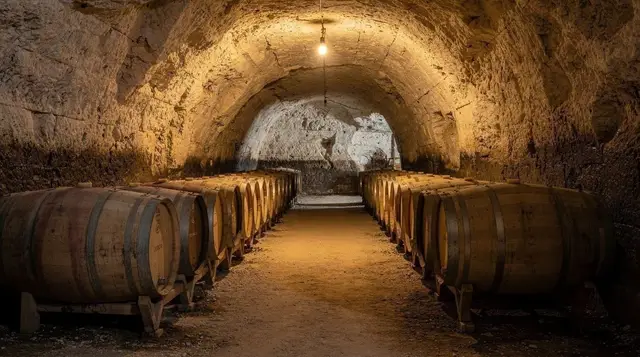
Turkish breakfast in Cappadocia's cave hotels
What does a Turkish breakfast in Cappadocia include?
A spread of small plates rather than one dish: several cheeses, olives, tomatoes and cucumber, jam and honey, eggs cooked one of a few ways, cured meats, and bread, usually with unlimited tea. Quality and range vary a lot by hotel, and a fair number of properties serve a simpler buffet instead of the full spread.
What actually turns up on the table
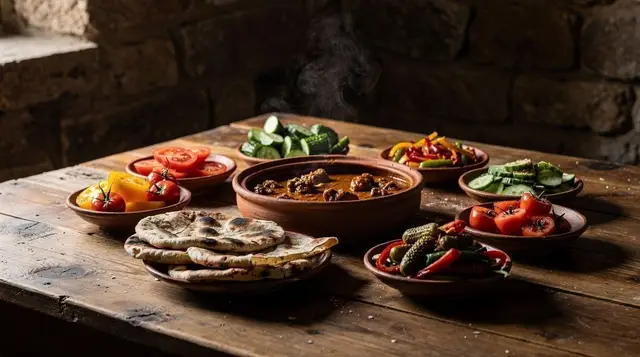
Ask for “breakfast” at a cave hotel in Göreme and what arrives is not a plate, it is a table covered in small plates. A typical spread runs to two or three kinds of cheese (a soft white cheese, a firmer aged one, sometimes a herbed variety), black and green olives, sliced tomatoes and cucumber, a couple of jams, honey with clotted cream (kaymak) if the kitchen makes its own, sucuk or pastırma if the hotel serves cured meats, eggs cooked to order or already prepared as menemen (a soft scramble with tomato and pepper), fresh bread, and a pot of tea that gets refilled without being asked.
Some hotels add simit, cheese-filled pastries, or a bowl of fruit. None of it is a single “dish” in the sense of a Western hotel breakfast: it is assembled from a dozen or more small components, and the meal is the act of working through them.
This matters for planning a morning here in a way it would not in most cities, because Cappadocia visits are built around one very early start: the balloon flight. A hotel pickup for a sunrise flight lands roughly an hour to an hour and a half before sunrise, long before any breakfast service is open. The spread itself is not designed to be eaten quickly.
It is meant to be worked through over three-quarters of an hour or more, cup by cup, plate by plate, which is closer to a lazy Sunday breakfast at home than to grabbing a pastry on the way out. That is worth knowing before booking a flight for the first morning of a stay: it is the right call for the flexibility it buys against cancellation, but it does mean breakfast becomes a mid-morning event after you land, not a pre-dawn one.
Why this format exists here
The small-plates structure is not unique to Cappadocia, it is the standard Turkish breakfast (kahvaltı) served across the country, but the region’s cave hotels lean into it more than most because breakfast doubles as a selling point. A terrace built into the rock, looking out over Rose Valley or the chimneys around town, turns an ordinary meal into part of the reason someone booked that particular hotel. Properties that have invested in a good position often invest in the breakfast to match, since guests are sitting there for the better part of an hour with nothing else to look at but the food and the view.
The rural setting also shapes what is on the table. A lot of the cheese, honey, and preserves at village-level hotels are sourced locally rather than trucked in from a central supplier, which is part of why quality varies so much between one hotel and the next — a family-run guesthouse with its own supplier relationships can put out a better spread than a larger property working through a hotel-chain kitchen, and the reverse also happens. There is no reliable correlation between price bracket and breakfast quality; a mid-range cave hotel can outdo a pricier one simply because of who runs the kitchen.
What this page is not about
This guide covers the meal — the format, the food, and how it fits into a Cappadocia morning. It is not about the drinks themselves: for tea and coffee culture, including how Turkish coffee is made, served, and read for fortunes, see the separate guide to Turkish tea and coffee culture. Coffee rarely appears at breakfast in Turkey in any case — tea is the default morning drink, and Turkish coffee is more of a mid-morning or after-lunch ritual, often taken slowly in a çay bahçesi or on a terrace rather than gulped at the breakfast table.
Setting expectations honestly
It would be easy to describe every cave hotel breakfast in Cappadocia as a lavish spread with a view, and plenty of marketing does exactly that. The reality is more mixed. A genuine multi-plate kahvaltı with local cheese, fresh bread, and a terrace over the valleys is common at hotels in the mid-range and above, particularly ones built around the cave-room concept described in the guide to what a cave hotel actually is.
But a meaningful number of properties, especially at the budget end or in larger hotel-style buildings rather than converted cave houses, serve a simpler buffet: a few standard items, packaged cheese and jam, a self-service urn of tea. Neither is wrong, but it is worth reading recent guest reviews for the breakfast specifically rather than assuming every stay in the region comes with the postcard version.
| What to expect | Typical hotel type |
|---|---|
| Full small-plate spread, local cheese and honey, terrace seating | Boutique cave hotels, mid-range and above |
| Standard buffet, packaged items, indoor seating | Budget guesthouses, larger hotel-style properties |
| Breakfast not included, pay separately | Some budget stays, apartment-style rentals |
| Early tray or packed breakfast for balloon guests | Hotels with regular balloon-flight clientele |
Fitting breakfast around a balloon flight
The single biggest scheduling question visitors ask is how a sunrise flight and a full breakfast fit together, and the honest answer is that they usually do not happen back to back. Pickup for a flight comes well before dawn; the flight itself runs 45 minutes to an hour and a half depending on the package booked, covered in the guide to balloon flight cost and what’s included; by the time guests are dropped back at the hotel it is mid-morning, which is exactly when the full breakfast spread tends to still be laid out or can be requested fresh.
Some hotels used to flight guests will put out a light tray — bread, cheese, tea — before pickup for anyone who wants something in their stomach before an early-morning flight, but this is a courtesy rather than a standard, so it is worth asking the night before rather than assuming.
Timing shifts by season too. Sunrise moves later through autumn and winter, which pushes the pickup time later and can bring it closer to a hotel’s normal breakfast opening; the guide to balloon sunrise timing by season breaks down how much that varies across the year. Flights are also cancelled for wind on a meaningful number of mornings, more often outside summer, which is one more reason a full breakfast waiting on return is a reasonable backup plan rather than an afterthought.
Booking a breakfast-anchored experience
For a slower version of the same idea, a handful of operators run breakfast as the main event rather than a hotel add-on, laid out in one of the valleys with the rock formations as the backdrop instead of a hotel terrace. A table set out in the valley for breakfast is one way to get that setting without needing a specific hotel’s terrace to line up. For visitors who want to see how coffee itself is made in the traditional way — over hot sand rather than a stovetop — a hands-on Turkish coffee workshop covers the drink side that this page deliberately leaves aside.
Where breakfast and the balloon flight are meant to be one package, a sunrise balloon flight bundled with breakfast afterwards removes the guesswork about whether the hotel will have food ready on return. A plainer standard sunrise balloon flight leaves breakfast entirely to the hotel, which is fine at a property that has confirmed it holds the spread for flight guests, and less fine at one that has not.
Where to eat if the hotel breakfast falls short
A weak hotel breakfast is not the end of the morning. Göreme and Ürgüp both have café-restaurants that serve a full kahvaltı spread to anyone walking in, not just overnight guests, and it is a reasonable option either as a substitute or as a second breakfast for anyone who wants a bigger spread than their hotel put out. Rooftop and viewpoint cafés around Göreme, covered in the guide to viewpoint cafés, often run a version of the same spread with a view that rivals what the hotels offer, minus needing to be a guest there.
For a broader look at Cappadocian food beyond breakfast — testi kebab, mantı, gözleme, and the region’s wine — see the Cappadocian food guide, and for the wine side specifically, the Ürgüp wine cellars guide covers tastings built around the region’s Emir and Kalecik Karası grapes.
Choosing where to stay with breakfast in mind
Breakfast quality is one small factor in a bigger decision about where to base a stay. The comparison of Göreme versus Ürgüp and the broader guide to where to stay in Cappadocia both cover the trade-offs between the two main bases in more depth, and the guide to cave hotel versus regular hotel is worth reading before booking, since a “cave” room advertised online is sometimes a stone-built room dressed up to look like one rather than an actual excavated space — the same gap in honesty that shows up between hotels claiming a full Turkish breakfast and delivering a basic buffet.
Practical notes
- Ask specifically about breakfast timing when booking a room around a balloon flight; do not assume the hotel holds food for early departures.
- If travelling with dietary restrictions, mention them at check-in rather than at the breakfast table — a kitchen with notice can usually adjust more than one caught by surprise.
- Families travelling with children will find the format easy going, since the small-plate spread lets everyone pick what they want rather than committing to one dish; the guide to Cappadocia with kids has more on managing meals and pace with younger travellers.
- Budget travellers weighing whether breakfast-included matters for a stay can cross-check against the wider cost breakdown in what a Cappadocia trip costs.
- A short stay leaves little room to waste a morning on a disappointing breakfast; the three-day itinerary allows a buffer for a café stop if the hotel spread turns out thin.
Turkish breakfast in Cappadocia: the essentials
Is breakfast included at Cappadocia’s cave hotels?
Most mid-range and upmarket cave hotels in Göreme include breakfast in the room rate; it is the norm rather than the exception. Budget guesthouses sometimes charge separately or offer a reduced version, so it is worth checking at booking rather than assuming.
What time does breakfast start, and does it clash with a balloon flight?
A sunrise balloon flight needs hotel pickup around 1 hour to 1 hour 30 minutes before sunrise, which is well before most breakfast services open. Hotels used to balloon guests either lay out an early tray on request or hold the full spread for when you get back, typically mid-morning.
Is a Turkish breakfast different from a continental one?
Yes. A continental breakfast is built around one or two quick items eaten fast. A Turkish spread is a table of small plates meant to be worked through slowly over 45 minutes to an hour, which suits a morning with no early appointment more than one with a transfer waiting.
Are there vegetarian and vegan options?
Vegetarian eating is straightforward: cheeses, olives, vegetables, eggs, jam and bread cover most of the table. Vegan is harder, since cheese and eggs are central to the format; a hotel can usually swap in extra vegetables and bread but rarely stocks plant-based substitutes.
Does every cave hotel serve the same breakfast?
No. The format is a regional norm, not a guaranteed standard, and range and quality differ sharply between properties. Some serve a generous, freshly made spread with a dozen small dishes; others put out a smaller buffet closer to what you would find at a standard city hotel.
Do cave hotel breakfasts really come with a fairy chimney view?
Well-positioned hotels in Göreme and Ürgüp do serve breakfast on a terrace facing the valleys, and it is a genuine part of the appeal for that category of property. It is not universal: hotels lower in the village or set back from the rock formations serve the same food without the view.
Cappadocia food & drink tours on GetYourGuide
Verified deep-linked GetYourGuide tours. Book through these links and we earn a small commission at no cost to you.
GetYourGuide does not provide a product photo for this activity — the image shows the meeting point, photographed by us.