What Avanos is, and what it is not
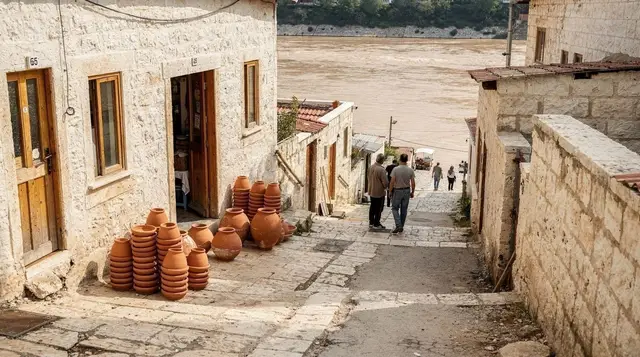
Avanos is a working town of around 13,000 people straddling the Kızılırmak, Turkey’s longest river at roughly 1,355 km, about 15 minutes north of Göreme by road. It is the one place in the region built on a craft rather than on rock-cut monuments. The red clay dredged from the riverbed has been thrown into pots here since Hittite times, and the town still smells faintly of wet clay and kiln smoke around the workshop district near the bridge.
If you have come to see cave churches or fairy chimney valleys, this is not that page — Sarıhıdır covers the countryside north of town and Kızılırmak river covers the river itself along its wider course. This page is about the town: the bridge, the workshops, the streets around them, and what a pottery demonstration actually costs once you are inside one.
The old town sits on the south bank, a tangle of narrow streets climbing gently away from the water, with a scatter of Ottoman-era stone houses that never got the restoration budget lavished on Mustafapaşa. That is part of the appeal: Avanos looks lived-in rather than staged. Market stalls, hardware shops and pottery outlets sit side by side, and a fair share of the pottery for sale elsewhere in Cappadocia was thrown here first.
The bridge and the river
The bridge over the Kızılırmak is the town’s spine. Cross it and the character changes — cafés with terraces over the water on the south side, quieter residential streets on the north. The river itself runs reddish-brown for most of the year, carrying the iron-rich sediment that gives the clay its colour and the river its name (Kızılırmak means “red river”). It is not swimmable in the way the colour photographs suggest; the current and the sediment load make it a working river, not a beach. Riverside walking paths run along both banks near the bridge, shaded in places by willows, and this stretch is the pleasant, unhurried part of a visit — better for an evening stroll than a rushed midday stop.
A short gondola-style boat trip along this stretch of the Kızılırmak is sold locally and gives a different view of the town from the water, useful if you want fifteen minutes off your feet rather than another walk.
a short boat ride along the Kızılırmak past the townThe pottery workshops
Pottery is why most visitors stop in Avanos, and it is worth separating three different things that get bundled together under the same word: the craft itself, the demonstration, and the sale.
The craft. Clay has been worked here since at least the Hittite period, over three thousand years ago, using the same river mud and largely the same kick-wheel technique passed down through families. Several workshops are multi-generational businesses, not tourist props, and some of the pottery on sale really is hand-thrown on site rather than imported.
The demonstration. Larger workshops on the main tourist circuit — the ones coaches stop at — routinely offer visitors a go on the wheel. This is presented very often as a free, included part of the visit. It is not a general rule and should not be treated as one: it is a sales technique, offered because a hands-on five minutes makes people far likelier to buy something on the way out. Smaller neighbourhood potters may or may not offer the same thing, and some genuinely do it for goodwill with no expectation of a sale. Ask before you sit down if it matters to you.
The sale. This is where the price gap is real and worth knowing about before you walk in. The workshops built for coach-tour stops price for a captive, once-only customer, and mark-ups on decorative pieces there can run several times higher than what the same style of piece sells for from a potter working out of a small shop on a back street, away from the main tourist strip. Neither is dishonest — a large workshop with a showroom, packing service and export shipping has overheads a one-room studio does not — but if you plan to buy, it pays to look at more than one place, and prices are always negotiable at the smaller shops in a way they generally are not at the big ones.
| Where | Typical experience | Price level |
|---|---|---|
| Large tour-circuit workshop | Guided demo, wheel-try, showroom, shipping offered | High — demonstration prices |
| Family-run shop, back streets | Simpler demo or none, smaller stock | Moderate, usually negotiable |
| Street stalls near the bridge | Ready-made pieces only, no demo | Lower, fixed or lightly negotiable |
A guided walk along the river and through the workshop district is a way to see several of these side by side with some context rather than guessing which door to try.
a guided walk through the pottery district and along the riverbankWhat else is in town
Beyond the workshops, Avanos rewards an hour of aimless walking more than a checklist. The covered bazaar streets near the bridge sell everything from onyx carvings to kitchenware, and the pace is noticeably calmer than Ürgüp or the centre of Göreme, because most Red Tour groups only stop for an hour before moving on.
The town also has an unusual, small museum built around a private collection of hair clippings left by women visitors over decades — an odd, minor curiosity rather than a headline attraction, but it costs little to see and takes fifteen minutes. Don’t build a special trip around it, but don’t skip it if you are already in town with time to spare.
For a wider view of pottery culture in the region, including workshops and firing methods beyond what a single afternoon in Avanos shows, a dedicated write-up covers that ground in more depth.
When to visit and how long to stay
Avanos gets busiest around midday, when Red Tour coaches stop for their scheduled visit — typically a window of an hour or so at one of the larger workshops, coinciding with lunch. If you are visiting independently, mornings before 10:00 or the late afternoon after 16:00 are quieter, with better light for the riverside streets and fewer groups clustered around the wheel demonstrations.
Two to four hours is enough for most visitors: an hour or so at a workshop, a walk over the bridge and along the river, and time to browse the old town streets. It is not a place to base yourself overnight — Göreme, Ürgüp or Uçhisar all offer far more choice of cave hotels and evening dining, and Avanos itself thins out noticeably after the shops close.
An evening alternative, if you want a longer stop rather than a quick pottery visit, is a dinner-and-show format that keeps you in town after the day-trip crowds have left.
an evening of Turkish music, dance and dinner in AvanosGetting there and combining it with other stops
Avanos sits about 15 minutes by road from Göreme, close enough that dolmuş minibuses run the route through the day, though services thin out in the evening. It is one of the standard Red Tour stops, usually scheduled after Devrent Valley or Paşabağ and before the tour returns to Göreme — see the breakdown of the Red, Green and Blue Tours for where it fits in a full-day itinerary.
If you are travelling independently, Avanos pairs easily with Çavuşin or Zelve on the same half-day, since all three sit within a short drive of each other north of Göreme. A rental car or taxi gives the most flexibility for stringing these together; without one, a short organised tour that bundles Avanos with valley or village stops is the more reliable option for a single afternoon.
a day combining valleys, an underground city and local crafts including AvanosA slow walk through town
The easiest way to get the measure of Avanos is to refuse a plan. Start at the bridge, drift into the lanes on the south bank, and let the workshop doors decide the route. Some stand open with a wheel visible from the street, others are plain shopfronts with shelves of plates and jugs, and the difference in atmosphere is obvious within a few steps. The Avanos walking guide lays out a route if you prefer one, and it stays out of the busiest stretch when the coaches arrive.
Take your time in the doorways. A potter at work is happy to be watched for a minute, and a polite question about the clay, the firing or the glaze usually gets a longer answer than a sales pitch would. The red clay, the white clay and the glazed pieces each have their own story, and the workshops that bother to explain them are generally the ones worth buying from.
Buying pottery without regrets
Decide before you go in what you actually want. A single good plate or bowl is easier to carry and to remember than a box of small items bought on impulse, and a plain functional piece often shows the potter’s skill better than an elaborate decorative one. Hold the piece up, check the base and the rim, and ask whether it is meant for the table or only for display, because glazes differ. For the wider picture of what is worth taking home, the guide to souvenirs worth buying and the page on onyx and jewellery help you compare crafts before you spend.
If you want to try the wheel properly rather than for five minutes as a sales gesture, the page on pottery workshops in Avanos explains what a real session involves. Carpets are a separate and much bigger decision, covered in buying a carpet in Cappadocia, and the same patient habits apply: look first, compare, and never feel hurried by a free glass of tea.
Making Avanos part of a bigger day
Avanos fits naturally into a day that starts in the valleys and ends by the river. Pair it with Çavuşin old village in the morning, then come down to the town for a late lunch and the workshops. If you are choosing between guided and independent options, Göreme is the usual base, and the guide on getting around without a car explains how the minibuses, taxis and tours link the villages. Travellers shaping a longer stay will find Avanos slotted into Cappadocia in two days and the three-day first-timer itinerary.
For a different angle on the town, the blog essay Avanos, clay and the red river is a more personal account of the place, and the Avanos Hair Museum page covers that oddity in detail. If you would rather spend the evening around the table than on the road, Turkish night shows compares the dinner-and-show formats so you can choose with your eyes open.
Little things that make the visit easier
Wear shoes that cope with uneven paving and a bit of clay dust, and keep a layer in your bag, since the riverside can feel cooler than the streets behind it. Carry some small change for tea and for the street stalls. Ask permission before photographing a potter at work, and treat a polite refusal as final. If the midday crowd feels heavy, step out of the main lanes, sit in a café by the water and come back to the workshops when the groups have gone. Avanos rewards patience more than it rewards speed.
Avanos: frequently asked questions
Is the pottery wheel demonstration in Avanos free?
Not as a rule. Larger workshops on the tourist circuit often offer visitors a free go on the wheel, but this is a sales technique aimed at encouraging a purchase afterwards, not a guaranteed or universal courtesy. Smaller neighbourhood potters may charge, may offer it for free, or may not offer it at all — ask before you sit down.
How long should I spend in Avanos?
Two to four hours is typical: enough time for a pottery workshop visit, a walk over the bridge and along the Kızılırmak, and a browse through the old town streets. It works well as the closing stop on a Red Tour or as a short independent half-day trip from Göreme.
Is Avanos pottery cheaper than in Göreme or Ürgüp?
Often, but it depends heavily on which shop. Large workshops built for coach-tour stops price at a premium because of showroom overheads and export shipping; smaller family-run shops on Avanos’s back streets, and street stalls near the bridge, tend to price lower and are usually open to negotiation. Comparing two or three places before buying is worth the extra half hour.
Can I swim in the Kızılırmak at Avanos?
It is not set up for swimming and is not generally recommended near the town. The river carries a heavy sediment load, which is what gives it its reddish colour, and the current through the town centre is a working river current rather than a calm swimming spot. Treat it as a scenic and photogenic river to walk beside, not a bathing spot.
How do I get from Göreme to Avanos without a rental car?
Dolmuş minibuses run between Göreme and Avanos through the day, roughly every 30 to 60 minutes depending on season, though services become rare after early evening. A taxi is a quick, inexpensive alternative for a one-way trip, and most Red Tour itineraries already include Avanos as a scheduled stop.
Is the Avanos Hair Museum worth visiting?
It is a minor curiosity rather than a headline sight — a small private collection of hair clippings left by women visitors over several decades, housed in a cave beneath one of the pottery workshops. It takes about fifteen minutes and costs little, worth a look if you are already in town with time to spare, not worth a special trip on its own.
What should I buy in Avanos if I want something genuinely local?
Hand-thrown pottery is the obvious choice, since the clay itself comes from the riverbed the town sits beside and the throwing technique has been passed down through generations of local families. Look at pieces in more than one workshop before deciding, and expect prices to vary considerably between the large showroom-style outlets and the smaller family shops on the back streets.
Does the Red Tour give enough time in Avanos, or should I go independently?
The Red Tour stop is usually around an hour, enough for a pottery demonstration and a quick look at the shop but not much walking beyond that. If the riverside streets and a slower browse through the old town matter to you, an independent half-day trip from Göreme gives more room to explore at your own pace.