Avanos pottery workshops: what the visit involves
What happens during a pottery workshop in Avanos?
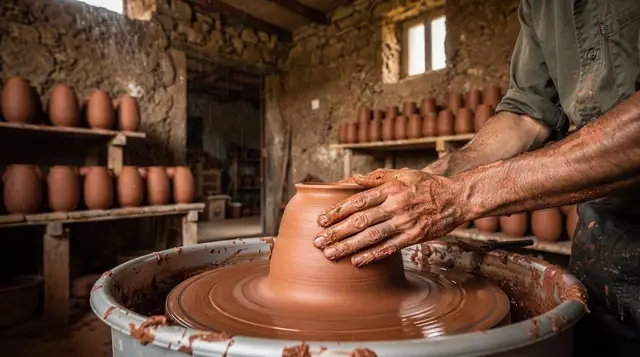
Most visits combine a short demonstration on the wheel using red clay dug from the Kızılırmak riverbed, a chance to shape a piece yourself, and a walk through the finished stock with an invitation to buy. Nobody is obliged to buy anything, and workshops range from a five-minute demo stop to an hour-long hands-on class.
Why Avanos is the place for this
Avanos sits on the Kızılırmak, the Red River, and takes its name from the clay dug straight out of its banks and bed. The colour comes from iron-rich sediment the river has carried down off the volcanic plateau for millennia, and potters here have worked that same seam since the Hittite period, long before Cappadocia’s fairy chimneys became a tourist draw. That continuity, not novelty, is what a workshop visit is selling: a craft that has genuinely been practised on this riverbank for thousands of years, still using foot-powered and motorised wheels side by side.
The town’s old quarter, on the south bank around the main square, is where most of the working studios and shopfronts cluster, a short walk from the river itself. If you want the wider town before or after a workshop, the Avanos walking guide covers the riverside promenade, the old houses, and the Avanos hair museum, a genuinely odd stop tucked inside one of the pottery shops.
What a typical workshop visit looks like
Whether you turn up independently or arrive as a stop on an organised tour, the format is fairly consistent. A potter demonstrates first, throwing a pot on the wheel in a couple of minutes to show how quickly a shapeless lump of clay becomes a recognisable form. You are then usually invited to sit at the wheel yourself for a supervised turn, hands guided by the potter, which is the part most visitors remember afterwards. From there the visit moves into the showroom, where finished pieces, glazed and painted, are laid out for browsing.
That last stage is where the commercial side of the visit sits. It is a legitimate business model, not a trick: workshops make their money on sales, and the demonstration and hands-on turn are, in part, a way of building interest before you see the shop floor. Staff will usually talk you through pieces and price ranges. You are not obliged to buy anything, and walking out empty-handed after a demonstration is entirely normal.
This is a lighter version of the demonstration-then-sales-pitch pattern you will also meet at carpet shops around Cappadocia, where the sales element runs considerably further; the guide to buying a carpet in Cappadocia covers that specific mechanism in more depth if you want to understand it before either kind of visit.
Trying the wheel yourself
Do not expect to walk away with a finished piece on the day. Fresh clay needs to dry slowly and then be fired, so anything you shape yourself is typically left with the workshop to be finished and either collected later in your trip or shipped, depending on the operator. What you get on the spot is the experience: a few minutes with wet clay spinning under your hands, a potter correcting your grip, and usually a photo or two.
Ceramic painting is a separate, calmer option some workshops offer alongside or instead of the wheel: painting a pre-thrown, unglazed piece with mineral pigments before it is glazed and fired. It suits visitors who would rather not get their hands covered in clay, or who are travelling with children too young to safely use a spinning wheel.
How long a visit takes
| Format | Typical length | What is included |
|---|---|---|
| Demo stop on a group tour | 15–20 minutes | Watch a demonstration, browse the shop |
| Standalone pottery-making workshop | Around an hour | Demonstration, hands-on wheel time, browsing |
| Ceramic-painting workshop | 45 minutes to an hour | Painting a pre-made piece, sometimes combined with pottery |
| Combined pottery and underground city tour | Half a day | Pottery stop plus a separate site visit elsewhere |
These are typical ranges rather than fixed timings, and any individual operator can run shorter or longer depending on group size and how many people want a turn at the wheel.
Booking a workshop or visiting independently
Avanos is only around 15 minutes from Göreme by road, and dolmuş minibuses connect the two through the day, so a self-driven or independent visit is straightforward if you are staying in the area. Walking into a workshop off the street works fine for a casual look and a short demonstration; booking ahead matters more if you specifically want hands-on wheel time or ceramic painting, since studios need to have a wheel and a potter free for you.
A handful of tours build a pottery stop into a longer day rather than treating it as the main event:
a combined pottery-making and ceramic-painting workshop in Avanos covers both the wheel and painted-piece options in one session, which suits anyone who cannot decide between the two.
For a visit built specifically around clay from start to finish, this Avanos workshop adds a clay-making stage before you get to the wheel, so you see more of the process than the throwing alone.
If you would rather see pottery as one stop within a broader look at the region’s history, this historical pottery experience tour pairs the workshop with context on Avanos and the wider Kızılırmak valley.
Combining pottery with the rest of Avanos
A workshop rarely needs to be the whole trip to Avanos. The town’s riverside walk, its old stone houses, and the odd little hair museum are all within a few minutes of most workshops, and the Avanos walking guide lays out a sensible order for seeing them together. If you are short on time and want to fold Avanos into a wider loop, it is a common stop on the Red Tour alongside Paşabağ and Zelve, or you can plan it as part of a two-day Cappadocia itinerary that gives the town its own slot rather than a rushed half-hour.
For pottery shopping without the workshop element, browsing the shops along the main square is its own activity, and worth doing separately from a wheel session if buying is your priority rather than trying it yourself. The souvenirs guide covers what is generally worth bringing home from Cappadocia across categories, from textiles to onyx, if you want that broader picture rather than pottery specifically; the local markets by day guide is useful if you would rather time an Avanos visit around a market day than a workshop slot.
What buying actually involves
Quality genuinely varies between workshops, from pieces thrown quickly for volume to work by potters who have been at it for decades. Prices are not fixed the way a supermarket shelf is, and it is reasonable to ask who made a specific piece, whether it was hand-thrown or mould-cast, and to look at more than one shop before deciding. None of this requires confrontation: it is an ordinary craft-shopping conversation, not different in kind from buying pottery anywhere else, just set inside a demonstration format that makes the sales pitch feel more woven into the visit than a plain shop would.
If jewellery or onyx comes up alongside pottery in the same shop, which happens in some of the larger Avanos studios that stock several craft lines, the guide to onyx and jewellery is worth a look before committing to anything in that category specifically.
Getting there and what to plan around
Avanos is around 15 minutes from Göreme, 15 minutes from Ürgüp, and close enough to Zelve and Paşabağ that a pottery stop slots naturally into a morning already covering those sites. If you are driving yourself, see the guide to driving in Cappadocia or, for renting a car specifically, car rental in Cappadocia. Without a car, dolmuş minibuses run between Göreme and Avanos through the day but thin out in the evening, so the guide to getting around without a car is worth checking if you are relying on public transport for a return trip after dark.
Combining a river walk with the workshop is easy on foot once you are in town: a guided walk along the Kızılırmak in Avanos covers the riverside route if you would rather have context on the town and the river alongside the pottery stop than do the workshop as a standalone visit.
Before you sit at the wheel
A few small practical choices make the hands-on turn more enjoyable. Wear clothes you do not mind marking: wet red clay splashes, and it does not always brush out of pale fabric. Short or tied-back sleeves help, and so does removing rings and bracelets before you start, since clay works its way into every gap. Most studios have a place to rinse your hands afterwards, but it is worth keeping a small towel or a few wipes in your bag.
Go in expecting to be a beginner. Centring the clay is the hardest part of the craft, which is exactly why the potter usually does it for you, and the first minutes under your own hands tend to produce something lopsided. That is part of the point. Let the potter guide your fingers, keep your elbows steady, and ask questions while the wheel turns: most potters enjoy explaining why the clay behaves as it does, and the answers say more about the craft than anything on a label in the showroom.
If you are travelling as a family, the calmer painting option described above is often the better fit for younger children, while teenagers usually enjoy the wheel more. The guide to Cappadocia with kids has wider ideas for building a day around the youngest travellers, and a pottery stop works well as a break between more demanding sights.
Reading the craft: what to look at in the showroom
Once the demonstration ends, the showroom is worth browsing slowly, even if you do not plan to buy. Look at the underside of a piece, where tool marks and slight irregularities usually show whether it was thrown by hand. Look at the glaze and the painted decoration, and notice how the motifs differ from one studio to the next: some stay close to traditional Anatolian patterns, others lean towards what visitors expect to see.
Red clay is the signature of the town, so unglazed or lightly glazed pieces in the colour of the riverbank are the most direct link to the place itself. Larger decorative plates and vases are lovely but need careful packing for a flight home; smaller cups, bowls and tiles travel more easily. Ask the studio whether it can wrap and ship a larger piece before you fall for it, and compare the answer with what other shops offer.
Making a morning of it
Pottery pairs naturally with the rest of the area around the river. The blog essay Avanos, clay and the red river is a good read beforehand if you want the story behind the craft, and the Kızılırmak river page explains the waterway that supplies the clay. From Avanos you can also continue to Çavuşin and its old village, covered in the Çavuşin church and old village guide, or head back towards Göreme for lunch; the where to eat in Göreme guide lists places to sit down afterwards.
For a day that feels unhurried rather than ticked off, the slow day in Cappadocia shows how a craft stop can sit between a late breakfast and an afternoon walk, and the seeing Cappadocia without a tour guide explains how to string independent stops like this one together without a fixed group schedule.
If the weather turns, a workshop is also one of the better indoor options in the region, which makes it a sensible fallback in the rainy day activities guide.
Avanos pottery workshops: questions answered
Is a pottery workshop in Avanos free?
Not automatically. Some agencies fold a brief demonstration into a Red Tour itinerary at no extra charge, but a proper hands-on session on the wheel, with clay and firing or painting included, is usually a paid activity booked separately, whether as a standalone workshop or bundled into a longer tour.
Will I be pressured to buy pottery afterwards?
Expect a sales pitch, not necessarily pressure. The standard format is demonstration first, browsing second, and staff will usually talk you through pieces and prices. Saying no and walking out is normal and accepted; how pushy any individual workshop is varies by operator.
What makes Avanos clay red?
The clay is dug from the banks and bed of the Kızılırmak, Turkey’s longest river, and its colour comes from iron-rich sediment the river carries down off the surrounding volcanic plateau. Potters here have worked this same seam of clay since the Hittite period.
Can I actually try the potter’s wheel myself?
At most workshops, yes. A potter usually centres the clay for you first, then lets you take a turn shaping it while they guide your hands. It is a short, supervised go rather than an independent lesson, and finished pieces are rarely something you take home the same day, since they need drying and firing.
How long does a pottery workshop take?
A quick demonstration stop on an organised tour runs 15 to 20 minutes. A dedicated pottery-making or ceramic-painting workshop booked on its own typically runs closer to an hour, sometimes longer if ceramic painting is included.
Is Avanos pottery worth buying?
Quality varies a lot between workshops, from mass-produced tourist pieces to genuinely hand-thrown work by working potters. Prices are not fixed, so it is worth looking at a few pieces and asking who actually made them before deciding, the same way you would with any craft souvenir.
Shopping & market tours on GetYourGuide
Verified deep-linked GetYourGuide tours. Book through these links and we earn a small commission at no cost to you.
GetYourGuide does not provide a product photo for this activity — the image shows the meeting point, photographed by us.