Eating well in Cappadocia without spending much
I didn’t set out to write about food economics. I set out to eat lunch in Göreme on my second day, looked at a menu, and did the same rough maths I do everywhere: convert the price, compare it to what I’d pay for something similar somewhere less convenient, and quietly recalculate what a week here was actually going to cost.
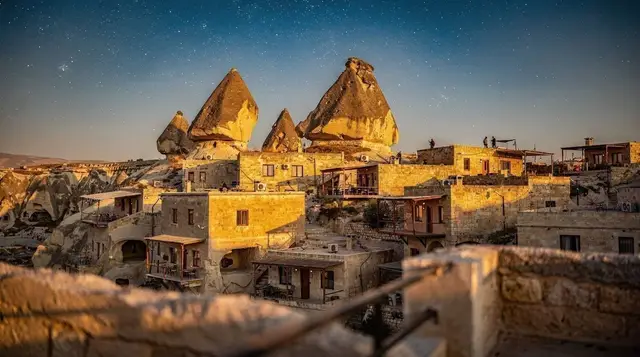
None of it was outrageous. That’s not the point I want to make. Restaurants clustered around Göreme’s centre, and the cafés built for the view, know exactly what they have, and they price accordingly. That’s true of tourist centres everywhere. What surprised me was how quickly the picture changed once I stopped eating only there.
The few kilometres that make the difference
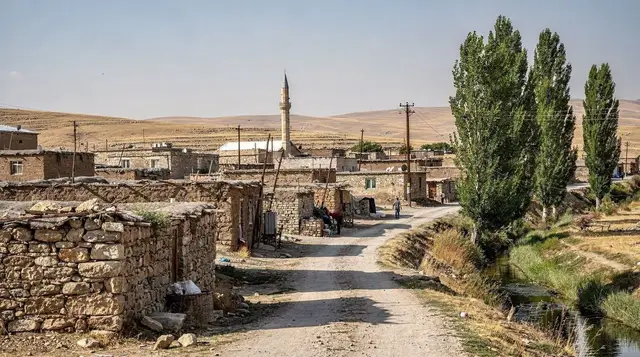
On my fourth day I drove out to Mustafapaşa, partly to see the old Greek stone houses and partly because I’d read that it used to be a mixed Greek-Turkish town before the population exchange of 1923. I ended up eating there almost by accident, at a small place cooking for whoever walked in, which that day was mostly locals. The bill, for what was a genuinely good meal, was a fraction of what I’d paid two days earlier for something comparable near the Göreme Open Air Museum.
I don’t think this is a Mustafapaşa quirk. It’s a distance-from-the-centre pattern. Ayvalı, a similarly quiet village, gave me the same impression a couple of days later: food cooked the way a household cooks, not the way a menu is designed to photograph well. Neither place is far. Ten, fifteen minutes by car, longer by dolmuş, but the pricing logic is completely different once you’re outside the immediate radius that every tour bus and every rental car passes through.
I’m not suggesting anyone skip Göreme’s centre, which is genuinely the practical base for most of the region and I’d stay there again. I’m saying that treating every meal as something you have there, because it’s easiest, is the expensive default, and it’s a default that’s easy to break without much extra effort.
Markets instead of menus
Ürgüp and Avanos both changed how I thought about food here, and for a slightly different reason. Rather than comparing one restaurant to another, the markets let me buy things directly: bread still warm, dried apricots and other dried fruit sold by weight, cheese from someone who clearly made it rather than stocked it. It’s not a full substitute for eating out, but stitched into a self-catering breakfast or a picnic lunch before a valley walk, it cut a real chunk out of a day’s spending without feeling like a sacrifice.
Ürgüp also introduced me to the region’s wine, which I hadn’t expected. Cappadocia has been growing grapes for a very long time, and the wine cellars around Ürgüp are a genuine local product rather than something built for visitors. I’m not going to tell you which bottle to buy. I’ll say that seeing Ürgüp wine on a menu, or dried produce at a market stall that’s clearly moving quickly, has become a decent shorthand for me that a place is dealing in things that are actually local, rather than whatever is easiest to import and mark up.
Avanos, on the other side of the river, works similarly. It’s better known for pottery than food, but the same principle held: a short drive out of the immediate tourist cluster, and prices for a similar meal dropped without any drop in quality that I could tell.
If you want the wider picture before choosing where to eat, the Cappadocian food guide explains what the regional dishes are, and where to eat in Ürgüp covers a town where the balance between visitors and locals is easier to read. For a slower, village-first way of spending a day, Mustafapaşa and Sinasos is a good place to start, and a turkish breakfast is worth knowing about before you decide whether to eat at your hotel or out.
The cost that’s easy to forget
There’s one expense that doesn’t show up on any restaurant bill and that I nearly left out of my own running total: water. Tap water here isn’t something to drink, so bottled water becomes a daily, unavoidable purchase. Individually it’s cheap. Across a week, buying it meal by meal instead of by the case, it’s a cost that quietly adds up in a way a single restaurant bill never does. It’s worth counting it in from day one rather than noticing it on the last day, the way I did.
Where tours fit into this
I’d booked a Göreme: Full Day Small Group Cappadocia Green Tour for my Ihlara Valley day, and it included lunch as part of the itinerary, which I only worked out was a saving once I compared it to what I’d have spent eating along the valley on my own. That’s worth checking before you book, not after: some full-day tours fold a meal into the price, others don’t, and it changes how you should budget the rest of that day.
The mornings were a different story. A sunrise hot air balloon flight over Göreme starts before breakfast, which meant either skipping it, or eating something quick and forgettable at the hotel before the pickup. I’d plan around that rather than expect a proper breakfast on a flight morning. On days I wasn’t on a set itinerary, going out with a private guide exploring Cappadocia at my own pace made it easy to ask to stop in a village rather than wherever a fixed route happened to schedule lunch, which turned out to matter more for the food than for the sightseeing.
Food is only one line of the total, of course. For the other lines, what a Cappadocia trip costs and my own account of a day’s spending in Cappadocia put the meals in context, and where to eat in Göreme is useful on the days when you do stay in the centre.
What I’d actually do differently
If I did this again, I’d build in village meals from the start rather than discovering them on day four. I’d treat Göreme’s centre as the place to sleep and to start the day, not automatically the place to eat every meal, the way I did without thinking about it at first. And I’d budget for bottled water properly instead of treating it as loose change, because by the end of the week it wasn’t.
None of this required a strict budget or giving anything up. It mostly required going a few kilometres further than the most obvious option, on days when I had the time to. Not every day allows that, particularly ones built around a fixed tour or an early balloon pickup, and on those days I just accepted paying the centre’s prices without resenting it. But on the days I could choose, choosing Mustafapaşa, Ayvalı, or a market stall in Ürgüp or Avanos over the nearest menu made a genuine difference, one meal at a time, over the length of a stay.
Eating well in Cappadocia on a budget: common questions
Is food genuinely expensive in Göreme?
Not expensive by European standards, but the restaurants directly around the main square and the viewpoint cafés charge a premium for the location. The same dish a short drive away, in a village with fewer visitors, is usually noticeably cheaper.
Where should I go to eat more cheaply?
Villages a few kilometres out, such as Mustafapaşa or Ayvalı, tend to have family-run places cooking for locals as much as visitors. Ürgüp and Avanos also have working markets where you can buy produce directly rather than paying restaurant prices for every meal.
Is tap water safe to drink in Cappadocia?
Tap water is not recommended for drinking here. Bottled water is cheap and sold everywhere, but it is a cost that adds up over a week and is easy to forget when budgeting.
What local products are worth trying?
Ürgüp wine, dried fruit and nuts, and village bread all come up repeatedly and are a reasonable indicator of quality when you see them on a menu or at a market stall, rather than a specific product to seek out and buy.
Do organised tours include meals?
Some do, particularly full-day tours that stop for lunch as part of the itinerary. It is worth checking before you also budget separately for that meal.
Is it worth renting a car just for cheaper food?
Not on its own, but if you are already planning to drive for sightseeing, using that mobility to eat outside the main tourist cluster is a natural saving rather than an extra trip.
How much does food realistically cost per day?
It varies enough with where and how you eat that a single figure would be misleading. Staying near Göreme’s centre and eating there every meal costs noticeably more than mixing in village food and market produce a few times over a stay.
tours.Food & drink
Verified deep-linked GetYourGuide tours. Book through these links and we earn a small commission at no cost to you.
GetYourGuide does not provide a product photo for this activity — the image shows the meeting point, photographed by us.