Safety and scams in Cappadocia
Is Cappadocia safe to visit?
Yes. Cappadocia is an established tourist region with very low crime against visitors. The real hazards are practical: falling on loose or wet tuf rock in the valleys, heat and dehydration on shadeless summer hikes, and a small set of well-worn commercial scams around tours and carpet shops rather than any physical threat.
The real risk in Cappadocia isn’t crime
Cappadocia is a well-established tourist region, and crime against visitors is genuinely rare. Nobody planning a trip here needs to worry about the kind of street crime that shapes safety advice for larger cities. What actually causes trouble, in order of how often it happens, is a fall on loose or wet volcanic tuf, heat and dehydration on a shadeless valley walk in July or August, and a handful of well-worn commercial scams involving day tours and carpet shops.
None of this is exotic or hard to plan around, but it’s worth being specific about, because vague reassurance (“it’s very safe”) doesn’t tell you what to actually watch for. This page covers the physical hazards and the commercial ones. It doesn’t cover itinerary planning mistakes like pairing the wrong two tours in one day — that has its own page.
Falls on tuf: the most common way people get hurt
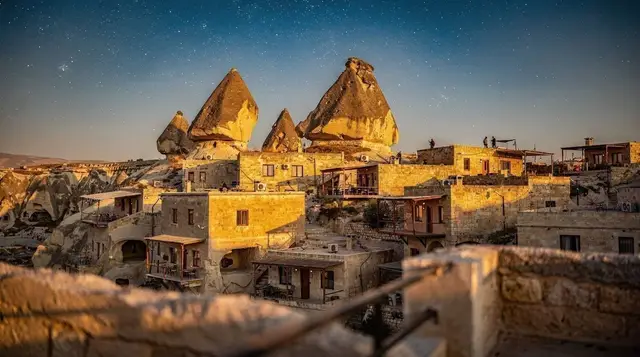
The rock underfoot in Cappadocia’s valleys is soft volcanic tuf — the same material that made the fairy chimneys and cave dwellings possible in the first place. Dry, it’s dusty and generally grips well. After even light rain it turns slick, and the powder that collects on ledges and steps can hide a drop-off until you’re standing on it. Paths in Rose Valley, Red Valley and the longer canyon at Ihlara frequently fork without signage, and it’s common to end up on a goat track that peters out at a ledge rather than the maintained route.
None of this requires special equipment, just ordinary sense. Closed shoes with real tread, not sandals, are the single biggest factor. Slow down on descents rather than ascents — most falls happen going down, when momentum and a loose step combine. If a path narrows to a scramble with a drop on one side, that’s usually a sign you’ve left the main trail, not a shortcut back to it.
Mobile signal drops out at the bottom of most canyons, so tell someone your rough plan before a solo valley walk, or read our broader hiking safety notes and the best hikes roundup before choosing a route. If you’d rather skip the route-finding altogether, a guided walk or a horseback outing such as the Göreme horse riding tour keeps you on a known path with someone who’s done it before.
The underground cities carry a related but smaller risk: not falls so much as bumped heads. Derinkuyu and Kaymaklı are lit and maintained on their public routes, but some of Kaymaklı’s connecting passages are genuinely low, and Derinkuyu’s stairwells are narrow and steep in places. Nothing here is dangerous if you go at walking pace and mind your head on the lintels; it’s simply not a space to hurry through.
Heat and dehydration in the valleys
Cappadocia’s climate is dry and continental, and summer afternoons commonly reach 30–35 degrees with almost no shade once you’re inside a valley — the walls that make Rose Valley and Red Valley dramatic also block any breeze. Heat exhaustion and simple dehydration are a more realistic risk on a July afternoon than any fall. The fix is boring but effective: carry at least two litres of water per person for a valley walk, more in peak summer, and avoid starting a long hike between roughly 11am and 4pm if you can help it. An early-morning start also lines up with the balloon flights overhead and the cooler light for photos, so it isn’t really a sacrifice.
Tap water isn’t recommended for drinking, so factor bottled water into your daily budget rather than assuming you’ll refill from a tap. It’s sold cheaply at trailheads, village shops and hotels throughout the region, so the constraint is remembering to carry it, not finding it.
Dogs, night driving and other everyday risks
A few smaller, practical hazards round out the list. Stray and semi-owned dogs are present in most valleys and villages; they’re rarely aggressive toward walkers but can be territorial in packs after dark, which is one more reason to time valley walks for daylight. If you’ve rented a car, rural roads between villages are unlit and occasionally shared with livestock or unmarked vehicles at night — driving in Cappadocia by day is straightforward, but night driving on back roads deserves more caution than the distances suggest. Sunburn and dust are minor but constant irritants on any outdoor day here; a hat and sunscreen do more good than they get credit for.
If mobility is a concern, note that most valley trails involve uneven, unpaved ground and that many cave hotels have irregular stone stairs rather than lifts — our notes on visiting with limited mobility go into which sites are realistically manageable.
The tout outside the agency
Göreme’s main street has a cluster of tour agencies within a few hundred metres of each other, and it’s common for someone outside one of them to intercept you and insist that theirs is the only trustworthy option, or that a competitor has just cancelled, or that today’s tour is nearly full and you need to book now. None of this is illegal and it’s rarely aggressive, but it’s sales pressure dressed as advice, and it works best on people who haven’t decided anything yet.
The practical fix is to decide before you’re standing on that street: read reviews, pick an operator, and book ahead, whether that’s a walk-in agency you’ve already researched or something like the Red Tour with lunch and a guide reserved online in advance. If someone’s pitch depends on urgency, that’s the signal to walk on and compare elsewhere, or read up on how tour touting actually works before your trip.
The same tour, three names, three prices
The region’s day tours run on fixed, well-known routes — Red Tour to the north, Green Tour to the south, Blue Tour to the southeast — and what each one actually covers barely varies between operators, because they’re largely subcontracted between agencies and running the same minibus circuit regardless of whose name is on the voucher. What does vary is the price, sometimes by a wide margin, based on branding, where you booked, and how the tour was resold. Paying more doesn’t reliably buy a better experience; paying less doesn’t reliably mean a worse one.
The scam, such as it is, isn’t fraud — you generally do get the tour — it’s the impression that you’re comparing genuinely different products when you’re often comparing the same minibus route with a different sticker price. Booking a known operator in advance, reading what a route actually includes first, and not assuming the priciest option is the most exclusive one covers most of this. It’s also worth knowing that Red and Green Tours run in opposite directions and can’t sensibly be combined in one day — that’s an itinerary mistake more than a scam, but it gets sold as a “special combo” often enough to mention here.
The “cultural” stop that’s really a shop
Some day tours, and occasionally hotel-arranged transfers, include an unadvertised stop at a workshop selling carpets, onyx or jewellery, introduced as a chance to see traditional craft. The demonstration itself is often genuine — Avanos potters really do work the Kızılırmak clay and some carpet workshops show real handloom weaving — but the commercial purpose of the stop is to sell, sometimes with a hard-sell pitch once you’re seated with tea in hand.
You are never obligated to buy, and a polite “no thank you” ends it faster than most people expect. If buying a carpet genuinely interests you, it’s worth going in informed about what makes a piece worth its price rather than deciding under pressure in a showroom. If it doesn’t interest you at all, it’s reasonable to ask an operator in advance whether their tour includes a shop stop, and to choose one that doesn’t if you’d rather not have the detour.
Comparing your options
| Situation | Lower-risk choice | Why |
|---|---|---|
| Deciding on a day tour | Book a specific, reviewed operator online in advance | Avoids street pressure and last-minute upselling |
| Walking Rose or Red Valley solo | Go early, tell someone your route, carry water | Shade-free canyons, patchy signal, easy to misjudge time |
| Wanting to see the valleys without route-finding | A guided or horseback outing | Known paths, someone who’s done the walk before |
| Choosing a carpet or onyx workshop stop | Decide before the tour, not under pressure inside | No obligation to buy either way |
| Getting between villages after dark | Arranged transport, not unfamiliar rural roads | Roads are unlit and shared with livestock |
What to actually do if something feels off
If a price or a claim feels off mid-tour or mid-negotiation, the simplest move is to slow down and ask for it in writing or compare it against what you researched beforehand — most pressure tactics lose their force the moment you stop deciding on the spot. For a physical concern like a fall or heat exhaustion, Turkey’s general emergency number is 112, and it connects to police, ambulance or fire; English-speaking dispatchers aren’t guaranteed, so having your hotel’s number and, if you’re on one, your guide’s number saved is a sensible backup.
Göreme and the larger surrounding towns have pharmacies and clinics for minor injuries; anything more serious is handled from the hospitals in Nevşehir or Kayseri. None of this is likely to be needed — it’s the same kind of basic preparation worth having on any trip, not a sign that Cappadocia carries unusual risk.
Solo travellers shouldn’t read any of this as a reason to hold back — Cappadocia is a genuinely manageable place to visit alone, and our notes on solo travel here go into what that actually looks like day to day. The short version of everything above: watch your footing on tuf, carry more water than feels necessary, book tours ahead rather than on the street, and treat any workshop stop as optional. None of it should weigh heavily on the trip.
Emergency numbers and practical basics
- Emergency services: 112 (police, ambulance, fire)
- Country code: +90
- Power: Type C/F sockets, 230V/50Hz
- Time zone: UTC+3 year-round — Turkey does not change clocks, so the gap with European time zones shifts across the year
- Drinking water: bottled, not tap
- Nearest hospitals to Göreme: Nevşehir (around 20 minutes) or the larger facilities in Kayseri (around 1 hour 15)
A basic packing list that includes closed shoes, sun protection and a reusable water bottle covers most of what prevents the physical risks on this page before you’ve even left home.
Safety and scams in Cappadocia: frequently asked questions
Is Cappadocia dangerous for tourists?
No more than any established destination. Violent or opportunistic crime against visitors is rare. The injuries that actually happen come from slipping on tuf paths, walking valleys in the midday heat without water, or driving unlit rural roads after dark.
What is the most common way people get hurt in Cappadocia?
A fall on tuf rock. The paths through Rose Valley, Red Valley and similar canyons are dusty and firm when dry but turn slick after rain, and edges crumble more easily than they look. Closed shoes with grip and a slower pace on descents prevent most of these.
Are the underground cities safe?
Yes, the sites open to the public (Derinkuyu, Kaymaklı, and the quieter Özkonak, Mazı and Gaziemir) are structurally maintained and lit on the visitor route. The main issue is low ceilings on some levels, which mean bumped heads more than any real danger.
How do I avoid getting overcharged for a day tour in Cappadocia?
Book through one operator you’ve checked reviews for, in advance, rather than deciding on the street in Göreme. The same Red, Green or Blue Tour route is resold between agencies at different prices under different names, so shopping around in person mostly wastes a morning.
What is the carpet shop stop on Cappadocia tours?
Some day tours and even some hotel arrangements include an unadvertised stop at a carpet or onyx workshop, framed as a cultural visit. The demonstration is usually genuine craft, but the point of the stop is sales, and there is no obligation to buy anything.
Is tap water safe to drink in Cappadocia?
It’s not recommended for drinking. Bottled water is cheap and sold everywhere, including at valley trailheads, and carrying enough of it is more important to your safety here than almost anything else on this list.
What’s the emergency number in Cappadocia?
112 for police, ambulance or fire, the same number used across Turkey. English-speaking operators are not guaranteed, so having your hotel or tour guide’s phone number saved is a useful backup.
Trip-planning essentials on GetYourGuide
Verified deep-linked GetYourGuide tours. Book through these links and we earn a small commission at no cost to you.
GetYourGuide does not provide a product photo for this activity — the image shows the meeting point, photographed by us.