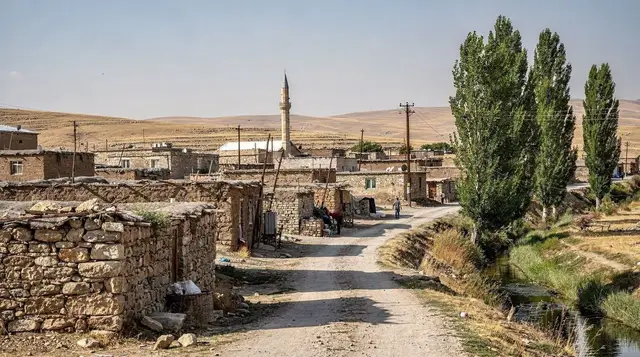
How the tour touts of Göreme work
The pitch starts before you’ve found your hotel
My first encounter happened about ninety minutes off the overnight bus from Istanbul, bag still on my shoulder, walking up from the otogar transfer point toward Göreme. A man in his thirties fell into step beside me, asked where I was staying, said he knew the owner, and had “just” finished putting together a Red Tour group leaving in forty minutes — did I want the last seat, today only, half the usual price. I hadn’t been in town long enough to know what the usual price was. That’s the point.
I didn’t book with him. I also didn’t feel unsafe, harassed, or scammed in any dramatic sense — nothing was stolen, nobody raised their voice. What struck me over the following days, watching the same scene play out with other new arrivals, was how consistent the mechanism is. It isn’t random hustle. It’s a small, repeatable script, and once you’ve seen it once you recognise it everywhere in Göreme.
Where they stand, and how they open
Touts work the arrival points, not the destinations. You won’t meet one inside the Göreme Open-Air Museum or at Paşabağ — you meet them where tired, disoriented travellers with no local reference points pass through: outside the otogar when a night bus unloads, along the main street between the bus stop and the museum turn-off, and outside hostels around breakfast. The opener is almost never a sales pitch. It’s a question — where are you from, how long are you staying, have you found somewhere to eat — friendly, low-stakes, easy to answer without thinking. The tour only comes up after you’ve already talked for a minute or two, once a small rapport exists to lean on.
The three lines that repeat
After a few days comparing notes with other travellers in my hostel, three arguments kept coming back, in different combinations but always some version of the same three:
False urgency. A group is leaving “in twenty minutes” and there’s exactly one seat left. Balloon flights genuinely do sell out for a given sunrise, so this one borrows real scarcity from a different product and applies it to something — a minibus day tour — that runs daily and rarely fills up on short notice.
A discount that appears out of nowhere. The first number mentioned is never the number you’d pay if you asked twenty minutes later. It drops the moment you hesitate, which is the opposite of how a real fixed-price business behaves.
Denigrating a competitor you haven’t chosen yet. Unprompted, before you’ve mentioned another agency, comes a warning that “some” companies use unlicensed drivers, visit closed sites, or cut the underground city stop short. It’s vague enough to be unfalsifiable and specific enough to plant doubt about whatever else you were considering.
None of these three, on their own, proves bad faith — a real discount exists, buses do fill up, and some agencies genuinely are worse than others. It’s the combination, delivered inside the first five minutes of a conversation with a stranger, that’s the pattern.
What actually separates a tout from a shop with fixed prices
Göreme has dozens of legitimate walk-in travel agencies, and most tourists who buy a Red or Green tour from a shopfront have a perfectly ordinary experience. So the distinction isn’t “walk-in agency versus something else” — plenty of the touts work for, or alongside, an actual shopfront a few doors away. What separates the two is behaviour, and it comes down to three concrete things I now check for, not a vague gut feeling:
| Signal | Legitimate agency | Tout |
|---|---|---|
| Price | Printed or posted, same for everyone | Only spoken, changes as you hesitate |
| Pace | Happy for you to come back later | Pushes you to decide in the next few minutes |
| Approach | You walk in | They approach you on the street |
If a price is only ever spoken aloud and shifts depending on how long you resist, that’s the strongest single signal. A shop with a laminated price sheet taped to the window has no reason to negotiate street-side with someone it just met.
Where else the same script turns up
The street approach isn’t limited to day tours. The same rhythm of friendly question, sudden deadline and vanishing discount appears around taxis, so it helps to read taxi prices and common scams before you land. The broader picture of what to watch for sits in the guide to safety and scams in Cappadocia, and none of it is cause for alarm — it is mostly a matter of knowing the pattern.
Balloon flights are the one product where the deadline can be real, which is exactly why they are borrowed as a pressure tactic. If a flight is what you came for, the guide on choosing a balloon company is a calmer place to make that decision than a pavement.
Why it persists
The simple reason it keeps working is volume. Göreme sees a constant churn of first-time arrivals stepping off overnight buses with zero local reference points, staying two or three nights, and gone before word of mouth would ever catch up with them. A tout doesn’t need a high success rate against a town of returning customers who’d remember a bad experience — they need a modest success rate against a stream of people who’ve never been here before and won’t be back next month to compare notes.
That’s not unique to Cappadocia, but the specific shape of Göreme’s tourism — short stays, heavy reliance on the Red/Green/Blue tour system, and a walkable centre where every new arrival funnels past the same few streets — makes the arithmetic work better here than in places with fewer one-time visitors passing through the same corridor.
What I do now
I don’t refuse to book anything from a walk-in agency — I’ve done it since, with no problems, once I’d had a day to compare a couple of price boards and knew roughly what a Red Tour or an underground city half-day should cost. What changed is that I stopped deciding in the moment someone approached me. If I’m asked for an answer in the next ten minutes, I say I’m comparing two agencies and I’ll come back — and I actually walk to a second place before committing to anything, even if the first offer sounded fine. A legitimate operator has no reason to mind that; the ones who get visibly annoyed or follow you a few steps down the street are telling you something useful for free.
For the tours I knew I wanted before I even landed — the sunrise balloon flight and the Red Tour route through the underground lunch stop — I booked them ahead through a fixed-price platform instead of on the street, which meant there was nothing left to negotiate once I arrived: the Red Tour itinerary with an underground-city lunch stop and a private half-day covering the open-air museum and an underground city were both set before I’d even had a conversation with anyone on the street.
It’s not the only way to do it — plenty of travellers book everything in person and are glad they did — but it removes the one variable that makes the whole tout mechanism work in the first place: a price with room to move.
The rest of a Göreme trip really doesn’t need this level of caution. Bakeries, restaurants, and most souvenir shops have prices on display and behave exactly as advertised. It’s specifically the day-tour booking moment, right after you’ve arrived and before you’ve got your bearings, where the pressure shows up — and once you know what it looks like, it’s easy enough to just keep walking.
If you would rather skip the street entirely
Some travellers prefer to avoid the question of agencies altogether. Seeing Cappadocia without a tour shows how far you can get on your own, and guided tour versus self-drive helps you decide which style suits you before anyone has a chance to decide for you.
If you do want a guided day, it is worth understanding the options first. The Red Tour versus Green Tour comparison explains what each route covers, so you can recognise a vague description when you hear one. And if the day is mostly about the sites themselves, the Göreme Open-Air Museum guide and the Paşabağ guide tell you what is worth your time, which makes a pushy sales pitch much easier to ignore.
For a rough sense of what you should be spending, what a Cappadocia trip costs is a useful anchor, and the first-timer three-day itinerary shows how the tours slot into a short stay so you arrive with a plan rather than a blank afternoon.
tours.Planning
Verified deep-linked GetYourGuide tours. Book through these links and we earn a small commission at no cost to you.
GetYourGuide does not provide a product photo for this activity — the image shows the meeting point, photographed by us.