Taxi prices and common scams in Cappadocia
How much does a taxi cost in Cappadocia, and what scams should I watch for?
A short taxi ride between neighbouring Cappadocia villages typically runs somewhere between 150 and 400 TRY, though fuel costs and the season push that around, so treat any figure here as a rough guide rather than a fixed rate. The three risks worth knowing are a driver who skips the meter for an inflated flat price, unofficial cars touting for business before the designated airport taxi rank, and an unnecessary detour on a route a visitor has no way of checking — all of which a thirty-second conversation before you close the door mostly heads off.
Taxis picked up on the spot, not booked ahead
This page is about the taxi you flag down, call from a hotel, or pick up at a rank once you’re already in Cappadocia — not the transfer you book online before your trip lands you at Nevşehir or Kayseri airport. That distinction matters because the two have almost opposite risk profiles. A pre-booked airport transfer has a fixed price agreed in advance, a named driver waiting with a sign, and nothing left to negotiate on arrival.
A taxi taken on the spot in Göreme, Ürgüp or at the airport terminal has none of that structure, which is exactly where the classic overcharging happens. None of what follows should put you off taking a taxi — for a late return, a heavy bag, or four people splitting a fare, it’s often the simplest option on offer. It just needs a few checks that take less time than reading this paragraph.
What a taxi actually costs
Cappadocia’s villages sit five to fifteen minutes apart by road, and taxi fares scale roughly with that. The ranges below are illustrative only — fuel prices and the lira itself move enough that any number printed here will be out of date within months. Treat this as a sense of proportion, not a tariff to quote at a driver.
| From Göreme to | Drive time | Typical taxi fare (TRY) |
|---|---|---|
| Çavuşin | 5 min | 120–200 |
| Uçhisar | 10 min | 150–250 |
| Ortahisar | 10 min | 150–250 |
| Ürgüp | 15 min | 200–350 |
| Avanos | 15 min | 200–350 |
| Nevşehir | 20 min | 250–400 |
Longer runs — to Kayseri, Nevşehir Kapadokya airport, or across to Derinkuyu and the south — cost proportionally more and are exactly where a fixed-price transfer or an organised day trip starts to make more sense than a metered taxi, if only because the sums involved are large enough that a bad estimate actually hurts. Anyone weighing up whether to drive themselves for these longer legs instead should see the separate comparison of car rental and driving conditions in the region.
A fixed fare for the airport run
The short hops between Göreme and its neighbours are easy to judge, because a five or ten minute drive leaves little room for a large argument. The airport run is different. You arrive tired, the driver names a figure, and you have no village-to-village sense of proportion to test it against.
The simplest fix is to settle the fare before landing, with your Göreme hotel’s name written down for the driver. A confirmed price removes the haggling at the rank and the question of whether the meter will be switched on. For that, a Kiwitaxi airport transfer with a set fare can be arranged before the flight.
The meter that never gets switched on
The single most common complaint about Cappadocia taxis is straightforward: the driver doesn’t start the meter, and instead names a flat price once you’re already moving or already at your destination. A flat price isn’t inherently dishonest — plenty of short, well-known routes are quoted that way as a matter of course — but a flat price you didn’t agree to in advance is a different problem entirely. If a driver doesn’t mention the meter or a price before pulling away, ask directly. “Meter, please” or a simple pointed question about the fare is usually enough; a driver with nothing to hide will either switch it on or state a number without hesitating.
Touts before the taxi rank
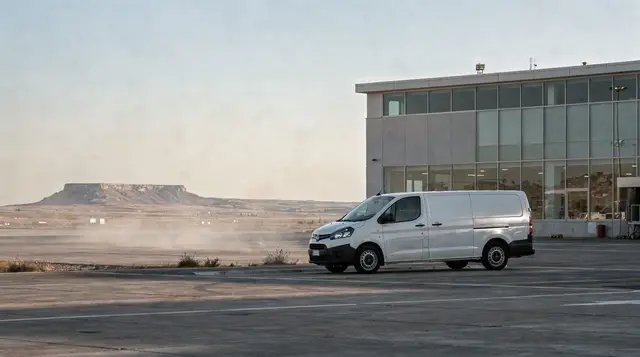
Both airports serving Cappadocia have an official taxi rank just outside the terminal, and it’s the only place worth getting into a car from. The scam here is less about the ride itself and more about who’s offering it: unofficial drivers, not part of the licensed rank, position themselves inside the terminal or on the walk out to it, calling out to arriving passengers who are tired, laden with luggage, and not yet oriented. These cars are sometimes unmarked, sometimes fitted with a taxi sign that means nothing official, and the price agreed with them tends to be well above what the rank would charge — with none of the accountability a licensed, numbered taxi carries.
The fix is simple and slightly uncomfortable: walk past anyone who approaches before you’ve reached the marked rank, even if they’re friendly and persistent. For a first trip in particular, arranging a transfer before you fly removes this decision altogether, and it’s worth reading how Nevşehir compares with Kayseri airport for onward journey time either way.
The route that takes the scenic way round
The third classic complaint is the detour: a driver taking a longer route than necessary on a journey the passenger has no way of judging, running the meter or padding a flat fare in the process. This is far harder to spot in the moment than the other two scams, which is exactly why it works.
A rough sense of the distances between Göreme and nearby villages — most runs are under twenty minutes — helps here more than anything else: a fifteen-minute trip that stretches to thirty-five with no obvious reason (a closed road, a diversion around roadworks) is worth a polite question. Following the route on a phone map, even without data, gives a driver less room to wander and rarely causes offence — most have nothing to hide and won’t mind.
Why short rides are the easiest to inflate
The shorter the ride, the less a visitor has to compare it with. Nobody arriving in Göreme knows whether a hop to Uçhisar should feel cheap or expensive, and a driver who senses that can round a fare upwards without anything feeling obviously wrong. A long run to an airport at least comes with a sense of scale, because you can look up the going rate before you travel. A five-minute hop to a restaurant comes with none.
That is why the habit matters more than the amount. Asking about the fare once, calmly, before the car moves costs nothing and sets the tone for the whole ride. Drivers who deal with visitors every day recognise a traveller who has done a little homework, and most of them simply quote a sensible figure and get on with it. The same quiet confidence is useful elsewhere in the region, as the wider safety and scams guide explains, and it is worth reading how the tour touts of Göreme work if you want to understand the pressure you meet on the street before you ever reach a taxi.
Paying, change and the small print of the ride
A few practical habits make the end of the ride as smooth as the start. Keep small notes ready, because a driver who claims not to have change for a large note is another quiet way a fare creeps upwards. If you have agreed a price, hand over that amount and no more, and say thank you; there is no obligation to round up beyond what you are comfortable with. If the meter was running, glance at it as it ticks over so the final figure is not a surprise.
Luggage deserves the same attention. Load it yourself where you can, check that it all comes out at the other end, and do not accept a separate charge for bags that was never mentioned at the start. If anything feels off, a calm question at the window is far better than an argument on the pavement, and a hotel reception will often smooth over a misunderstanding on your behalf. Keeping a note of the taxi’s number or the name on the door is a small step that quietly discourages bad behaviour.
Ordering through your hotel or restaurant
For most visitors the most reliable route is the least dramatic one: ask the person at the desk. Hotels and restaurants in Göreme and Ürgüp have drivers they use again and again, and those drivers know that a complaint comes straight back to the people who sent them. You will usually get a sensible figure quoted over the phone, and you can ask the reception to confirm it so that nothing is left to negotiate when the car arrives.
This works especially well for early starts. If you are heading out before dawn for a balloon flight, most operators collect you from your hotel anyway, but if you have a separate early departure, such as a bus or a flight, book the car the evening before and confirm the time with your hotel. A driver who has been told the night before is far less likely to be late than one found at the roadside at an awkward hour, and the whole matter of how to get to the airport on time is covered in the guide to airport transfers in Cappadocia.
Sharing a taxi and when it earns its keep
A taxi stops being a splurge when the fare is split. Four people sharing one car for a late return from dinner often pay little more than a seat each would have cost on a longer bus journey, and nobody has to wait for a timetable. Groups and families with small children also benefit, since carrying tired children and bags along unlit roads is not a time to save a few coins. The notes on Cappadocia with kids and on travelling with limited mobility both come back to the same idea: a taxi is a tool for the moments when walking or waiting is the harder option.
Solo visitors, on the other hand, feel every fare in full. If you are travelling alone, the solo travel guide is worth a look, and a mix of daytime dolmuş rides and the occasional taxi after dark is usually the sensible balance. Cyclists and walkers can cover many of the short hops themselves; the pages on cycling and e-bikes and the Göreme walking guide show how much of the area is comfortable without any car at all.
When a taxi is the wrong tool
Not every journey belongs in a taxi. For a full day of sightseeing, a driver waiting while you walk a valley is an expensive way to see anything, and the comparison between a guided tour and self-driving explains where each approach pays off. For a long cross-country leg, a Konya day trip or a visit to Ankara is better organised in advance than negotiated at the roadside, and the same is true of the longer routes in from Istanbul or Antalya.
If you simply want to stop thinking about transport, the getting-around options and the first-timer itinerary show how a short stay can be built around walking, a dolmuş and one or two booked pick-ups, with a taxi kept in reserve for the evening.
Three checks before you get in
None of this requires confrontation. A driver running an honest meter or quoting a fair flat price won’t be bothered by any of the following, and a driver who bristles at being asked is telling you something useful before you’ve committed to the ride.
- Agree the fare, or confirm the meter, before the car pulls away — not on arrival, when there’s nothing left to negotiate with.
- Use the marked taxi rank at the airport, not the first car that offers before you get there.
- Have a rough idea of the distance and drive time, from a map or from the figures on this page, so a detour is noticeable rather than invisible.
Alternatives that sidestep the question entirely
A taxi isn’t the only way to move between villages, and for some trips it isn’t the best one. A dolmuş — the shared minibus running between Göreme, Uçhisar, Ortahisar, Ürgüp, Avanos and Nevşehir — costs a fraction of a taxi fare and removes any pricing question, though services thin out in the evening and stop altogether by night, so it suits daytime hops better than a late return from dinner.
Renting your own wheels removes the question just as completely: a scooter rented in Göreme covers the same short village hops a taxi would, on your own schedule and without a fare to negotiate at either end, and is worth reading alongside the wider notes on getting around without a car if you’re weighing the options.
For the well-trodden sightseeing routes — the loop that takes in the open-air museum, Paşabağ and the northern valleys — a day organised in advance sidesteps taxi negotiation altogether: a day tour that includes lunch and hotel transfers bundles the whole day’s transport into one price fixed before you set out, similar in spirit to how the region’s colour-coded circuits work — see the breakdown of the Red, Green and Blue tours for how those are put together.
A jeep safari through the valleys is a similar case: the transport is part of the booked activity, not a separate taxi decision at all. Anyone arriving overland from further afield, meanwhile, can skip the local taxi question on that leg too — a transfer booked from Konya to Cappadocia is priced and confirmed before you travel, the same logic that makes airport transfers the lower-risk option compared with a taxi picked up cold.
For a broader sense of how taxi fares sit against everything else you’ll spend on, the cost breakdown for a Cappadocia trip puts transport in context next to hotels, tours and food, and the general safety and scams guide covers the handful of other situations — carpet shop pressure, tour reselling — worth knowing about before you land. For those who’d rather skip organised transport altogether and work everything out village by village, seeing Cappadocia without a tour lays out how that actually works day to day.
Night rides and the quieter villages
Taxis matter most after dark, once the dolmuş has stopped running and a scooter feels less appealing on unlit village roads. A taxi called through a hotel or restaurant late in the evening is generally the most reliable version of this trip — the driver has a reputation with that hotel to protect, which does more to keep a fare honest than any amount of haggling at the roadside.
The same applies for reaching quieter spots off the main routes: getting to a low-key evening meal in Ortahisar or a late dinner out of Avanos is far easier with a taxi ordered through your accommodation than one hailed cold, precisely because the accountability runs through someone you’re already trusting with your stay.
If something does go wrong
Most taxi problems are small and end with a mild lesson rather than a real loss. If you realise partway through that the price was not what you expected, stay calm, say so politely, and settle at the destination in a busy, well-lit spot rather than a quiet side street. A hotel or restaurant doorway is a good place to finish a disagreement, because staff can step in and a witness changes the tone immediately.
If you feel you were overcharged, treat it as the cost of learning the local rhythm and move on, but do tell your hotel, since they would rather know which drivers to avoid. Keep your expectations realistic: a few extra coins on a short ride is irritating, not dangerous, and the sensible response is to adjust your habits for the next journey rather than let it sour the trip. The rest of your time in the region, from the valleys to the evening scene in Göreme, is far better spent on what you came for.
A short routine worth memorising
Before any ride: know roughly where you are going and how long it should take, decide whether you are happy with a flat price or want the meter, and ask once, clearly, before the door closes. During the ride: glance at the route on a map. At the end: pay what was agreed, with small notes, and take your bags. That is the whole system, and it takes far less effort than it sounds. Pair it with a rough budget for the trip so you know where taxis fit, and with the packing list so you are not carrying more than you need on the way in.
Transport passes & transfers on GetYourGuide
Verified deep-linked GetYourGuide tours. Book through these links and we earn a small commission at no cost to you.
GetYourGuide does not provide a product photo for this activity — the image shows the meeting point, photographed by us.