Cycling and e-bikes in Cappadocia
Is cycling a practical way to see Cappadocia?
It works well for the paved and packed-earth links between Göreme, Uçhisar, Çavuşin, Ortahisar, Üzüp and Avanos, all under 15 kilometres apart. It works poorly inside the valleys themselves, where loose tuf sand, rock-cut steps and narrow tunnels stop a bike, e-assisted or not, and force you to walk it through.
Where the tyres actually go
Cappadocia sits on a plateau at around 1,000 metres, and the villages that matter to a visitor based in Göreme are all close together: Uçhisar is about 6 kilometres away, Çavuşin roughly 5, Ortahisar around 7, Ürgüp close to 10, and Avanos about 13. On paper, that’s an easy afternoon on two wheels. In practice, a bike does two different jobs here that are worth separating before you book one: it gets you between villages on roads and packed tracks, and it does not get you into most of the valleys that make the region worth photographing in the first place.
The rock underfoot is soft volcanic tuf, worn by wind and water into loose sand in the low valleys and packed dust on the plateau tracks. A road bike or hybrid handles the plateau tracks fine. It struggles in sand, and Cappadocia has a lot of sand once you drop off the ridge lines into a valley floor. That’s the single fact that shapes almost every cycling decision here: is this a plateau route on a track or road, or a valley route through tuf.
The village loop: where cycling genuinely works
The most reliable ride from Göreme links Uçhisar, Ortahisar and Ürgüp, then back, mostly on paved or well-packed roads with moderate climbs. Uçhisar sits on the highest point in the area, so the ride out from Göreme climbs steadily; the return is easier. Ortahisar adds a similar short climb to its own rock outcrop. None of this requires technical skill, just legroom for hills, and it’s the same loop the sunset wine-tasting day tour groups pass through by minibus.
A separate, flatter option follows the valley floor roughly parallel to the road toward Avanos, tracing part of the course of the Kızılırmak river. It’s a longer ride at around 13 kilometres each way, mostly on tarmac with a few unpaved stretches, and it’s the closest thing in the region to an easy, low-effort cycling day. Çavuşin, just north of Göreme, is close enough to add without much extra effort, and the road there is paved for most of the way.
| Route from Göreme | Distance | Surface | Suitable for a standard bike |
|---|---|---|---|
| Göreme to Çavuşin | ~5 km | Paved | Yes |
| Göreme to Uçhisar | ~6 km | Paved, one steady climb | Yes |
| Göreme to Ortahisar | ~7 km | Paved and packed track | Yes |
| Göreme to Paşabağ / Zelve | ~7–8 km | Paved with short unpaved sections | Yes, up to the entrance |
| Göreme to Devrent Valley | ~11 km | Paved | Yes |
| Göreme to Ürgüp | ~10 km | Paved, rolling hills | Yes |
| Göreme to Avanos | ~13 km | Mostly paved, partly unpaved along the river | Yes, with more effort |
What an e-bike actually buys you, and where it stops helping
An e-bike flattens the climbs on the village loop, which is the real advantage: the road out to Uçhisar or the rolling stretch toward Ürgüp stops being a workout and becomes a cruise. That’s worth paying for if you’re combining a ride with a full day of walking around ruins and viewpoints and don’t want tired legs for the second half.
Where it stops helping is inside the valleys. Motor assist pushes the rear wheel harder into whatever the front wheel is doing, and on loose tuf sand that mostly means digging in rather than gripping. Riders who assume an e-bike can go anywhere a mountain bike can, only easier, are usually the ones pushing it through Rose Valley or Love Valley fifteen minutes after entering.
The motor doesn’t remove the sand, the steps or the tunnels; it only removes some of the effort on the parts that were already rideable. Expect to walk the bike, e-assisted or not, over any section cut into steps or through soft drifted sand — this is not a corner that gets designed out, it’s built into how the terrain formed.
Battery range is the other honest caveat. A rated 50 to 70 kilometres on flat tarmac is a manufacturer’s best case: level ground, moderate temperature, low assist setting. On the plateau, climbing out of Göreme toward Uçhisar or Ürgüp on a higher assist level, on dusty and sometimes loose surfaces, that range drops substantially — often to somewhere around half the rated figure.
Heat makes it worse again: lithium batteries lose efficiency as temperatures climb, and Cappadocia’s summer afternoons regularly hit 30 to 35 degrees. A battery that comfortably covers the Göreme to Avanos and back at 9am may not manage the same round trip at 3pm in July. Budget the ride assuming roughly half the advertised range, ride the longer legs in the morning, and confirm with the rental shop whether a spare or swap battery is available before committing to the Avanos route.
Trails that are off-limits to any bike
Some of the best-known valley walks are ruled out for cycling entirely, and it’s worth knowing which before renting anything for a full day:
- Ihlara Valley descends via roughly 380 steps to the canyon floor and follows the Melendiz river on a narrow footpath for around 4 kilometres to Belisırma. There is no cycling route in or out.
- Zelve includes staircases and a tunnel through the rock; it’s a walking site, not a riding one.
- Love Valley and Rose Valley have long stretches of soft sand that swallow a wheel, loaded or not, e-assisted or not.
- The underground cities, Derinkuyu and Kaymaklı, are stairs and low tunnels below ground. Bikes stay at the entrance.
- Devrent Valley, by contrast, is flat, short and largely packed earth right up to the formations, so it’s one of the few valley stops you can genuinely ride to and walk around without much detour.
If the point of the day is seeing the sculpted valleys up close rather than covering distance between villages, a bike is the wrong tool for that half of the trip. Walking remains the only way into most of them; see our best hikes guide and hiking safety notes for the routes a bike can’t reach.
Cycling versus scooter versus the motorised alternatives
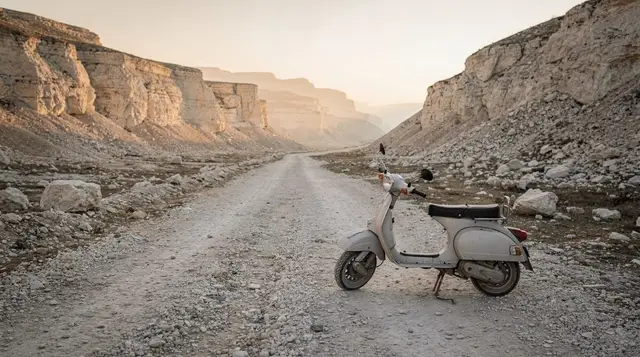
A scooter or small motorbike covers the same paved village-to-village roads faster and without worrying about battery range, which makes it the better choice if the day’s plan is mostly about covering ground between Göreme, Ürgüp, Avanos and Uçhisar. It has the same limitation as a bike once the road ends: valley trails are walking terrain, and riding a scooter into one isn’t permitted or sensible. See our scooter and motorbike guide for the rental and licensing details that differ from cycling.
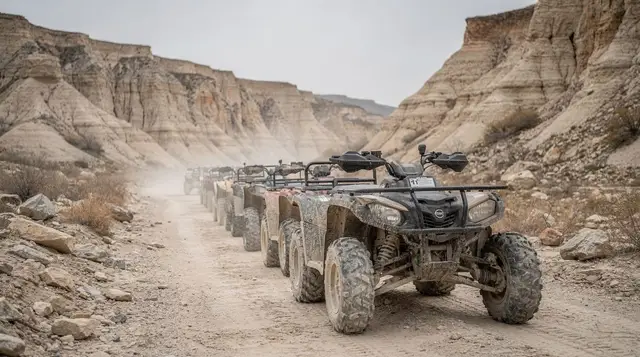
For travellers who want to cover valley terrain that a bike can’t handle without doing it entirely on foot, an ATV or a guided jeep are the practical alternative, since both are built for the loose surfaces that stop a bike. An ATV ride through the valleys around Göreme reaches viewpoints and trail sections a bike would have to be walked through, and a guided jeep route across the back-country tracks covers more ground in a morning than most riders manage on two wheels.
There’s also a half-day jeep safari that loops through several valleys with a driver, useful if the plan is sightseeing rather than exercise. Our quad and jeep overview compares all three non-cycling ways into the valleys, including horseback, which is the traditional option and still works where sand stops wheels entirely — a sunset horse ride through the valleys near Göreme or a shorter one or two hour horse riding session covers ground a bike physically cannot.
Renting, timing and what to carry
Rental shops cluster along Göreme’s main street and near the otogar, with a smaller number in Ürgüp. Expect roughly 300 to 700 Turkish lira for a half or full day on a standard bike, and something closer to double for an e-bike, though the lira moves enough that these figures are a guide rather than a quote. Ask three things before handing over payment: the battery’s rated range, whether a spare battery or charging option exists for a longer route, and whether the tyres are suited to loose surfaces if you’re planning to reach valley edges rather than staying on paved roads.
Ride early. Mornings on the plateau are cooler, the light is better for the fairy chimneys, and the battery performs closer to its rated figure. See best time to visit and the summer-specific notes for how much the July and August heat changes the calculation — afternoon rides in high summer are uncomfortable and drain a battery fast, while an April, May, September or October morning is close to ideal.
Carry at least two litres of water per person, since shade is scarce on the open tracks, and keep an eye on mobile signal, which drops out at the base of some of the deeper valleys even though it’s fine on the plateau roads above them. If you don’t have a car and are stitching together a full trip without one, our getting around without a car guide covers how cycling fits alongside dolmuş minibuses and organised tours for the parts a bike can’t cover, and driving in Cappadocia is worth reading if you’re weighing a rental car against two wheels for the trip as a whole.
Frequently asked questions about cycling and e-bikes in Cappadocia
Can you get around Cappadocia by bike without a car?
Yes, for the villages. Göreme, Uçhisar, Çavuşin, Ortahisar and Ürgüp sit close enough together on rideable roads and tracks that a car isn’t necessary for that loop. Avanos is a longer but still manageable ride. Getting to Ihlara Valley, Derinkuyu or Kayseri by bike is not realistic given the distances involved.
How far does an e-bike battery actually last here?
A rated range of 50 to 70 kilometres on flat tarmac typically drops to something like 25 to 35 kilometres on the plateau, once you factor in the climbs between villages, loose dusty surfaces that force a higher assist level, and summer heat that reduces battery efficiency. Plan any ride assuming roughly half the manufacturer’s stated range.
Which valleys can’t you ride a bike into?
Love Valley and Rose Valley have long sandy stretches that a loaded bike simply sinks into. The Ihlara Valley floor is reached by around 380 steps and threads through a canyon on foot. Zelve’s paths include tunnels and staircases. Pigeon Valley and Red Valley have short rideable sections but turn to scree and steps further in.
Is an e-bike actually easier than a regular bike on these trails?
On the road links between villages, clearly yes. Inside the valleys, less than it sounds: motor assist doesn’t help on loose sand, where the front wheel still wanders, and it doesn’t help at all on the rock-cut steps and narrow passages where you have to dismount and push regardless of battery charge.
Where can you rent a bike or e-bike in Göreme?
Several shops along Göreme’s main street and near the otogar rent both standard mountain bikes and e-bikes by the half-day or full day, generally in the range of 300 to 700 Turkish lira for a standard bike and roughly double for an e-bike, though prices move with the lira. Ask specifically about battery range and whether a charger or swap battery is included.
Is a scooter or motorbike better than a bike for exploring Cappadocia?
For village-to-village travel on paved roads, a scooter covers more ground with less effort and doesn’t run out of charge. For getting into the valleys themselves, neither a bike nor a scooter helps much, since the trails that matter are walking trails; a scooter is also not allowed and not practical on them.
What’s the best time of year to cycle around Cappadocia?
April to June and September to October, when daytime temperatures stay in a comfortable range for climbing between villages. July and August push afternoon heat to 30 to 35 degrees, which drains both rider and e-bike battery fast; ride early morning or late afternoon if cycling in summer.
Do you need prior experience to ride an e-bike on Cappadocia’s tracks?
Basic bike-handling confidence is enough for the paved village routes. The unpaved tracks and valley edges call for more caution: loose tuf gravel, sudden drops at valley rims and blind bends around rock formations catch out riders who assume the motor assist means less control is needed.
Adventure & outdoor activities on GetYourGuide
Verified deep-linked GetYourGuide tours. Book through these links and we earn a small commission at no cost to you.
GetYourGuide does not provide a product photo for this activity — the image shows the meeting point, photographed by us.