Watching from below, not from the basket
Most of what gets written about Cappadocia’s balloons is about flying in one. This page is about the other half of the experience: the crowd on the ground, standing in the cold before dawn, watching a hundred-odd envelopes fill with hot air and lift off in staggered waves over Love Valley and Rose Valley. You don’t need a booking, a basket or a fee to see this. You need to be awake at the right time, in the right place, and prepared for the possibility that some mornings it doesn’t happen at all.
Cappadocia is the world’s original hot-air ballooning site, and the launch fields sit in the open ground and shallow valleys just outside Göreme, within easy reach of Üçhisar and Çavuşin too. Turkey’s civil aviation authority caps how many balloons can fly from a given field on a given morning, but even with that limit, a clear high-season dawn can put well over a hundred balloons in the sky at once. Seen from a hillside rather than from inside one of them, it is a genuinely different experience: a wide, slow-motion view of the whole event rather than a single basket’s perspective.
Where the launch fields actually are
There isn’t one single “balloon field” — operators use a scatter of open sites around Göreme depending on the wind direction and ground conditions that morning, mostly in the flatter stretches near Love Valley, around Çavuşin, and in the open country towards Uçhisar and Nevşehir. None of these are fenced off or ticketed. Balloon crews and their ground vehicles arrive before first light, unload the envelope and basket, and start the burners once there’s just enough light to work by.
You won’t necessarily be standing on the exact launch field — crews need clear space to work and don’t want spectators near the burners — but you don’t need to be. The balloons climb quickly once inflated, and from any of the viewpoints above they’re visible within a minute or two of leaving the ground.
The best places to watch from
| Viewpoint | Distance from central Göreme | What you actually see |
|---|---|---|
| Sunset Point, above Göreme | 10-15 minute walk | Wide panorama over several valleys, most balloons visible at once |
| Uçhisar castle terrace | 10 minutes by car or taxi | Highest ground in the region, 360-degree view, balloons rising below eye level |
| Inside Love Valley | 10-15 minutes by car | Close to individual balloons, narrower field of view, dramatic foreground rock |
| Rose Valley rim | 15-20 minutes by car | Balloons rising out of the valley itself, fewer crowds |
| A cave hotel rooftop | Depends on hotel | No walk needed, often paired with a paid breakfast |
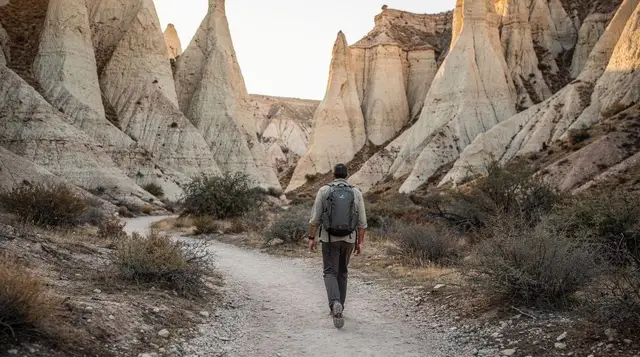
For a first visit, Sunset Point above Göreme or the terrace at Uçhisar castle are the easiest choices: both are reachable without a car, both look out over several valleys rather than one, and both put you above most of the balloons rather than beside them. If you’d rather be inside the action, walking a short way into Love Valley or standing on the Rose Valley rim puts fairy chimneys in the foreground with balloons rising past them, which is the shot most people are actually chasing.
Some cave hotels sell rooftop breakfasts timed to the launch, which removes the early walk in exchange for a fixed table and a fee. It’s a reasonable trade if your hotel has the right aspect; it’s a wasted booking if the terrace faces the wrong direction, so ask before paying rather than assuming.
Getting there before sunrise
Launches follow sunrise, not a printed timetable. In June that means arriving at your viewpoint by roughly 4.30-5am; by December, closer to 6.30-7am. Whatever the season, plan to be in position at least 45-60 minutes before official sunrise — balloons are already inflating in the dark by then, using the burners as work light, and the first ones can leave the ground while it’s still more grey than gold outside. Arriving “at sunrise” usually means arriving after the first wave has already gone up.
Walking to a nearby viewpoint like Sunset Point needs nothing more than a torch and warm layers. Reaching Uçhisar, Rose Valley or further afield means arranging a taxi or driver the night before — dolmuş minibuses don’t run this early, and Göreme’s taxi stand is thin on drivers before dawn if you haven’t booked. If you’re travelling independently, our broader guide to seeing Cappadocia without a tour covers the logistics of getting around before the town wakes up.
Bring more clothing than seems necessary. Cappadocia sits around 1,000 metres, and even a summer morning can be genuinely cold at 5am; a windproof layer matters more than how warm the afternoon forecast looks.
What you’ll actually see
The sequence is fairly consistent, even though the exact timing shifts daily. Ground crews inflate the envelopes first with large fans, then use the burners to heat the air until the balloon stands upright — this stage is the most visually striking from a distance, dozens of half-lit shapes rising out of the dark fields at once, burners flashing orange against the rock. Baskets are loaded once the envelope is upright and stable, and then the launches happen in waves rather than all together, spread over 20-30 minutes as crews get clearance and conditions allow.
Once airborne, most balloons climb for several minutes before levelling off and drifting with the wind, and pilots vary their altitude deliberately, some staying low enough to graze near the valley floor, others rising several hundred metres for the wider view. Flights typically run 45 minutes to an hour and a half depending on the package sold, so the sky stays busy for a while before it starts to thin out. By around 45-60 minutes after the first launch, most balloons are descending or already down, and the field empties out almost as quickly as it filled.
The change in atmosphere is part of the experience. Before dawn there’s a genuine buzz — burner roars, crews shouting instructions, the crunch of gravel as chase vehicles reposition — and then, once the balloons have cleared the immediate area and drifted off over the valleys, it goes remarkably quiet. Most first-time visitors aren’t prepared for how abrupt that shift is.
For background on how the flights themselves work, our Göreme sunrise balloon flight page and the main hot air balloon guide cover the booking side in full; this page stays deliberately on the ground.
When it doesn’t happen
Cappadocia’s balloon flights are grounded by wind on a meaningful number of mornings every month, and winter and early spring see the most cancellations. The call is usually made by pilots and the aviation authority in the hour before dawn, based on wind speed and direction at altitude — conditions that can look calm from a hotel window and still be unflyable higher up. There’s no way to predict a cancellation from the ground the night before, and no local source will give you a reliable forecast more than a day out.
The practical consequence for a ground-based visit is the same one that affects people who’ve actually booked a flight: some mornings you’ll walk to a viewpoint before dawn and the sky will simply stay empty. It isn’t a wasted trip in the way a cancelled flight is — you haven’t paid for anything — but it’s worth knowing before you set an alarm.
If your own flight got cancelled and you’re watching the next morning instead, our piece on balloon flight cancellations and wind explains why the decision gets made so late and how operators handle rebooking, and the personal account in the morning the flight was cancelled covers what that actually feels like from the ground. Never treat a launch, or even a partial launch, as guaranteed on a fixed date — plan a flexible morning around it rather than a one-shot event.
Photography without a basket
Ground photography has real advantages over shooting from inside a basket: a wide, stable platform, no motion, and the option to include fairy chimneys, cliffs or the town itself in the frame alongside the balloons. A telephoto lens (100mm or longer) helps compress distant balloons against the rock; a wider lens works better for the pre-dawn inflation scenes if you can get reasonably close to a field’s edge without crossing into the crew’s working space.
Arrive with your camera set up before the first burners fire — the change from near-darkness to full colour happens faster than it feels like it will, and missing the first ten minutes of light usually means missing the best combination of balloon count and soft colour. For a longer rundown of specific spots and settings, see balloon photography spots and balloon sunrise timing by season, which sets out how much sunrise time shifts across the year.
Some operators sell dedicated photography sessions timed to the launch, which handle transport and positioning for you. The Cappadocia balloon photo zone tour is built around exactly this — getting a group to a working viewpoint before dawn without anyone needing to drive themselves in the dark.
A quieter, closer alternative
For a slower version of the same morning, a handful of valley restaurants and terraces serve breakfast timed to the launch, letting you watch from a fixed table rather than standing on a hillside. The breakfast with balloons in the valley, private table experience trades the walk and the cold for a seated view and a set menu — a reasonable option for anyone travelling with young children, older relatives, or simply less inclined to stand around before sunrise. It’s worth booking the night before, since tables at the terraces with the clearest sightlines fill up in high season.
Season by season
Balloon numbers and launch times shift noticeably across the year, and it affects when — and whether — it’s worth setting an alarm.
| Season | Typical launch window | What to expect |
|---|---|---|
| April-June | Around 5-5.30am | High balloon counts, warm mornings, some wind cancellations in April |
| July-August | Around 5.30-6am | Consistently warm, occasional hazy skies, busiest viewpoints |
| September-October | Around 6-6.30am | Clear mornings, comfortable temperatures, considered the best combination |
| November-March | 6.30-7.30am | Far more cancellations, colder mornings, smaller crowds when it does fly, occasional snow on the ground |
The autumn window of September and October gets recommended most often for a reason: mornings tend to be clear and still, temperatures are manageable for a pre-dawn wait, and cancellations are less frequent than in winter or early spring. Our best time to visit Cappadocia guide and the seasonal breakdown in Cappadocia in winter go into more detail on how the trade-offs change across the calendar.
Combining it with the rest of a short stay
Because the launch is over within about an hour, it slots easily into a longer morning rather than needing a day of its own. Many visitors watch from a viewpoint, then walk down into whichever valley the balloons were rising from — the ground is usually calm again by 7am, and the light is still good for a valley walk. If you’re planning a single tight day around Göreme, our Cappadocia in one day itinerary and the standalone one-day itinerary both build the morning around this same window. Families travelling with children who’d rather watch than fly will find more on the trade-offs in Cappadocia with kids.
If the appeal is specifically not flying — nervousness about heights, cost, or simply preferring solid ground — watching the balloons without flying covers the decision in more depth, and what nobody tells you about the balloon flight is a useful read before deciding either way.
For a different kind of dawn or dusk moment in the same valleys, some operators also run set-piece experiences after dark — the romantic dinner in the valley is one of the more requested, for anyone extending the day rather than ending it after breakfast.
The practical bottom line
Watching the launch costs nothing beyond an early alarm and, if you’re not walking, a short taxi ride. It asks for warm clothes, a position 45-60 minutes before sunrise, and a genuine acceptance that some mornings the wind will cancel the whole thing and you’ll watch an empty sky instead. Nobody — not a hotel, not a tour desk, not this page — can promise you a launch on a fixed date. What’s reliable is the location: Sunset Point, Uçhisar’s terrace, and the rims of Love and Rose valleys will keep giving you the best view of Cappadocia’s mornings, on the days the balloons fly at all.
Frequently asked questions about watching the balloon launch
Do I need a ticket to watch the balloons launch?
No. The fields and viewpoints around Göreme are open ground or public paths, and watching costs nothing. The only fees apply if you choose a paid vantage point, such as a hotel rooftop breakfast or a viewpoint café table.
What time do I need to arrive to watch the launch?
Arrive at your chosen viewpoint at least 45-60 minutes before official sunrise, since balloons inflate in the dark and the first ones lift off close to first light. Sunrise shifts by roughly two hours between June and December, so check the date’s actual sunrise time rather than copying a schedule from another trip.
Is the launch guaranteed to happen every morning?
No. Cappadocia’s balloon operators are grounded by wind on several mornings a month, more often in winter and spring, and the decision is usually made in the hour before dawn. Arriving to watch does not guarantee any balloons will fly that day.
Where is the best place to watch from the ground?
Sunset Point above Göreme and the terrace below Uçhisar castle give the widest views over several valleys at once. Standing inside Love Valley or Rose Valley puts you closer to individual balloons but with a narrower field of view.
Can I watch the balloons without staying in Göreme?
Yes, Üçhisar and Üçhisar’s high ground arguably give a better overview than most spots in Göreme itself, and both are close enough for a pre-dawn taxi or a short drive. Staying further out in Nevşehir or Avanos makes the early start considerably harder.
Is it worth watching if my own balloon flight was cancelled?
Many travellers do exactly this on the next available morning, since it’s the only way to see what the flight would have shown from below. It’s a genuine consolation, not a substitute experience, and it costs nothing beyond the early start.
How long does the whole thing take to watch?
Budget 45-90 minutes from arrival at a viewpoint to the point where the sky empties out, including the pre-dawn inflation, the staggered launches, and the climb-out. Most of the activity is compressed into the first 20-30 minutes after the earliest balloons lift off.
Do the balloons fly over the town of Göreme itself?
Some do, since flight paths depend on the wind that morning, but many balloons stay over the valleys to the north and west of town rather than directly above the centre. Nobody, including the pilots before take-off, knows the exact route until the balloon is in the air.