Balloon flight cancellations and wind in Cappadocia
How often are Cappadocia balloon flights cancelled for wind?
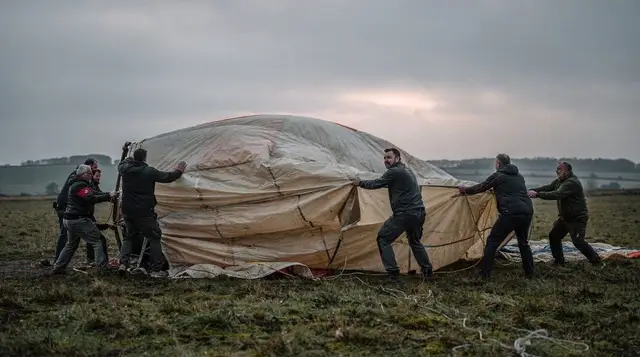
Wind grounds flights several days a month on average, more often in winter and spring than in summer. The decision is made close to departure, sometimes after guests have already gathered at the hotel, because pilots need current readings from the ground and from altitude before they can call it.
Why wind grounds so many mornings
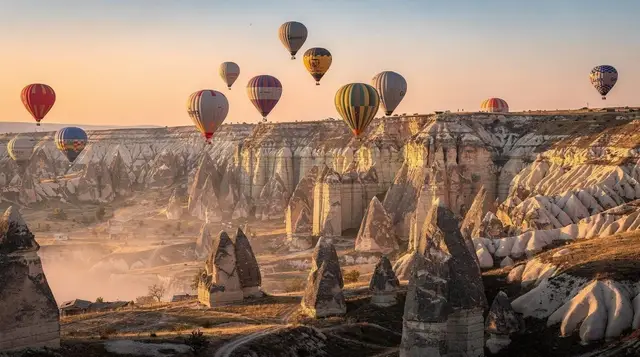
Cappadocia is the busiest hot-air balloon site in the world, and also one of the windiest places to fly a balloon safely. The two facts are connected: the same open plateau around Göreme that gives balloons room to launch also gives wind nowhere to break before it reaches the valleys. A gust that would be a non-event on a city street can push a balloon into a canyon wall, so Turkey’s civil aviation authority sets firm conditions for when flights are allowed to go up, and pilots will not fly outside them.
This page deals only with the wind side of that equation — how cancellations actually happen, how operators handle a grounded flight, and how to book so one bad morning doesn’t cost you the whole thing. If you want the fuller picture of what a flight involves, from pricing to what the basket feels like, that’s covered in the main hot air balloon guide rather than here.
How the go/no-go call is actually made
Every flight starts the same way: pickup from your hotel roughly an hour to an hour and a half before sunrise, because the whole operation — inflating dozens of balloons, briefing groups, getting everyone to a fair launch position — takes real time. What happens next depends entirely on the wind.
Pilots check wind speed and direction at ground level and, critically, at the altitudes the balloon will actually pass through during the flight. Those two readings do not always agree. A morning can feel completely still in the launch areas around Göreme while wind at a few hundred metres is moving fast enough to make steering unpredictable, or push a balloon toward terrain the pilot can’t safely clear. Because conditions at altitude can shift within the hour before dawn, many operators hold off on a final decision until as late as they safely can — sometimes after you’ve already been collected from your hotel and are standing with a group waiting for news.
That order of events surprises people who expect a phone call the night before. It’s worth going in expecting the opposite: a “confirmed” pickup means the operator plans to fly if conditions allow, not that the flight is guaranteed. The one instrument you can’t argue with is the one the pilot is using, and it isn’t the flag outside your hotel.
A calm morning on the ground proves nothing
This is the single most common misunderstanding among first-time visitors, so it’s worth stating plainly: if the streets of Göreme feel still at 5 a.m., that tells you almost nothing about whether the flight will happen. Wind speed changes with altitude, often substantially, and a balloon spends its flight moving through exactly the layer of air that a ground-level check can’t see. Pilots are trained to distrust what the air feels like at eye level for precisely this reason.
The practical effect is that cancellations can feel arbitrary from the ground — everyone in your group can be standing in dead-calm air and still be told the flight is off. It isn’t arbitrary; it’s the pilot reading a layer of atmosphere none of the guests can sense. Assume nothing about whether you’ll fly until you’re told either way.
Reading the signs without second-guessing the pilot
Nobody in the lobby can forecast the call, but a few things are worth knowing so the wait feels less like a mystery. Balloon companies in Göreme watch the same sky, the same readings and each other. When one operator holds its groups back, others usually do the same, and the quiet that settles over a lobby is rarely a sign of poor organisation. It is a sign that people who fly for a living are being careful.
It also helps to know what a delay is not. A late start does not mean the flight is lost; sometimes the air needs a little longer to settle, and pilots would rather wait than launch into something they are unsure about. Equally, a flight that does go ahead is not a sign that the day before was a mistake. Conditions change from one morning to the next, and one grounded day tells you nothing about the following one.
If you are the kind of traveller who likes to prepare, keep your morning light. Dress for the cold of a pre-dawn start, bring something warm to drink if you can, and treat the waiting as part of the story. The what to wear for a balloon flight guide covers the practical side, and it applies whether you end up in the air or on the ground.
How often this happens, and when it’s worse
There’s no way to promise a number, because wind varies year to year, but the pattern is consistent: flights are cancelled for wind on multiple days most months, and cancellations cluster more heavily in winter and into spring than in the calmer stretches of summer. Cold-season air tends to move less predictably and can bring stronger gusts at altitude even on days that look clear from below. Summer mornings are the most reliable window overall, but “more reliable” is not the same as “guaranteed” — cancellations happen in July and August too, just less often.
| Season | Typical wind reliability | What it means for planning |
|---|---|---|
| Late spring–early autumn (April–June, September–October) | Best odds of flying on any given morning | Still worth a spare morning, not essential |
| High summer (July–August) | Generally reliable, hot afternoons don’t affect dawn conditions | Fine with a single booked morning if your trip is flexible |
| Winter (December–February) | Cancellations more frequent, plus flights can be affected by snow and cold | Build in two or more mornings if flying matters to you |
| Shoulder weeks either side of winter | Unpredictable, can swing either way | Treat like winter for planning purposes |
For a closer look at how the calendar affects sunrise timing and light rather than cancellations specifically, see balloon sunrise timing by season; for the wider climate picture across the year, best time to visit Cappadocia, Cappadocia in winter and Cappadocia in spring cover what else changes month to month.
What happens when your flight is cancelled
Operators in Göreme deal with wind cancellations constantly, and most have a standard way of handling them: they’ll usually try to move you to another morning within your stay first, and offer a refund for whatever can’t be rebooked. That’s the general shape of it, but the exact terms — how a rebooking is prioritised, what counts as a refundable no-fly, how quickly money moves back to you — vary from company to company and can depend on how you booked (direct with the operator, through a hotel, or through a booking platform).
Don’t assume a specific number of days’ grace, a specific refund window, or a specific rebooking guarantee; ask the operator directly what their policy is when you book, and keep any confirmation email or booking reference so there’s a clear record if the flight doesn’t go.
This is also one of the practical reasons to think carefully before choosing a balloon company: established operators that run this route daily tend to be more transparent about how they handle cancellations, because they deal with the situation often enough to have a routine for it.
A rebooking only works if your stay has a spare morning left, so the flight home matters as much as the balloon ticket. Avoid an early departure the day after your planned flight, and check whether the fare can be changed before you pay, since a grounded morning may push your plans around. To keep that buffer, you can search flights to Turkey with Aviasales and pick dates that leave a free day at the end.
Book early in your trip, not on your last night
The single most useful piece of planning advice on this whole subject has nothing to do with the weather and everything to do with your itinerary: book your balloon flight for the earliest morning your trip allows, not the last one.
The logic is simple. If your flight is scheduled for your first or second morning in Göreme and wind cancels it, you still have nights left to try again. If you’ve scheduled it for your final morning — a common instinct, since it can feel like the natural way to end a trip — a cancellation leaves nowhere to go. You fly home having paid for something that never happened, with no chance to rebook.
If your schedule allows it, treat the first two or three mornings of your stay as your flying window rather than fixing on one date. This matters more the shorter your trip is: on a three-day itinerary there’s very little slack to absorb a cancellation, so putting the flight first is close to essential rather than merely sensible. It’s a recurring theme in itinerary mistakes worth avoiding, and it factors into how many days in Cappadocia you should plan for if flying is a priority for you.
a sunrise balloon flight over Göreme can usually be booked for a specific morning early in your stay, which is exactly the booking pattern that gives you the best chance of eventually flying if the first attempt is cancelled. The same applies to a Göreme sunrise flight booked through a different operator — the scheduling logic doesn’t change with the company.
Choosing between a private and a shared basket when wind is a risk
Wind affects every basket the same way, so the type of booking does not change the odds of the pilot calling it off. What it can change is how easy it is to be moved. A shared basket fills up according to the operator’s list for each morning, and a rebooking has to fit into spaces that remain. A private basket is arranged around one group, which can make a replacement morning simpler to agree, though the exact arrangements depend on the company. The trade-offs between the two are laid out in private versus shared balloon basket, and the cost side is in the balloon flight cost breakdown.
Whichever you pick, the sensible habit is the same: ask how a cancelled morning is handled before you pay, and write the answer down.
Planning a trip around the possibility of no flight
The calmest way to approach all this is to stop treating the balloon as a single appointment and start treating it as a goal with several chances. Place it early, leave the next mornings as light as you can, and avoid stacking something unmovable, such as a long transfer or an early departure, straight after your flying window.
That matters most for people whose time is tight. If you are arriving late and leaving early, check getting to Cappadocia and airport transfers in Cappadocia so you know how much of your first and last mornings you truly have. A flight booked for a morning you spend half-packed is a flight with no safety net.
Families and nervous flyers have a particular reason to plan with slack. A child who has been promised a balloon and then hears it is off needs a good alternative ready, and balloon flight with kids and fear of heights is worth reading beforehand. It also helps to say out loud, before the morning arrives, that the pilot might say no and that this is a normal part of flying here.
If a flight is the main reason you came, you may even choose to lengthen the stay by a night rather than shave it. The how many days in Cappadocia guide helps you weigh that, and the balloon sunrise timing by season page tells you what the early start looks like at different times of year.
What to do with a grounded morning
If wind cancels your flight, you still have a full early morning free, and Cappadocia gives you real options for it rather than a wasted day. Many visitors head up to a high point to watch the balloons that do fly nearby villages, or simply take in the sunrise over the valleys without a basket — a subject covered in full in watching the balloons without flying.
Beyond that, a grounded morning is a good moment to bring forward something else on your list rather than treat the day as lost. a guided visit to the Göreme Open-Air Museum starts early enough to slot into a cancelled-flight morning before the site gets busy from mid-morning onward, and a jeep safari through the valleys around Göreme is another way to use the same window productively if your balloon operator can’t rebook you until the following day.
A grounded morning can also be a pleasant one if you let it. Walk to one of the viewpoints, find a café with a view, and watch whatever balloons the conditions allow, if any. The balloon photography spots and viewpoint cafés in Göreme pages suggest where to stand, and flying versus watching the balloons is a fair read for anyone wondering whether the view from below is enough on a day when the sky stays empty.
If you want a story to take home from a cancelled flight, the morning the flight was cancelled is a first-hand account of one such day, and when the weather turns in Cappadocia puts wind and cold into wider context. For anyone who wants a broader sense of what the region offers beyond the sky, Cappadocia in two days shows how a short stay can still be full.
Keep the decision in perspective
None of this is a reason to skip booking a flight, and it isn’t a hidden flaw in the experience — it’s simply how flying safely over this terrain works. Pilots who ground a flight for wind are making the same call that keeps the record here as strong as it is. The practical response isn’t to worry about the odds; it’s to build a small amount of slack into your schedule, book the earliest morning available, and treat any later morning as a backup rather than the plan. Do that and a single cancelled flight becomes a minor scheduling hiccup rather than the end of the attempt.
Hot-air balloon flights on GetYourGuide
Verified deep-linked GetYourGuide tours. Book through these links and we earn a small commission at no cost to you.
GetYourGuide does not provide a product photo for this activity — the image shows the meeting point, photographed by us.