What to wear for a Cappadocia hot air balloon flight
What should I wear for a hot air balloon flight in Cappadocia?
Dress in layers you can add or remove, since the pre-dawn pickup is cold but the air warms fast once the sun is up. Wear closed, low-heeled shoes for a landing that can be on uneven ground, and keep pockets zipped so nothing falls out of the nacelle in flight.
The pickup is the cold part, not the flight
Balloon flights in Cappadocia launch at sunrise, and the hotel pickup happens about an hour to an hour and a half before that, in the dark. That is the coldest point of the whole morning: the plateau sits at roughly 1,000 metres, and ground temperatures before dawn are noticeably lower than what the same day will feel like by mid-morning.
By the time your balloon is airborne and the sun clears the horizon, the temperature climbs quickly, and most passengers end up shedding a layer within the first half hour. Anyone booking a sunrise flight for the first time tends to either overdress for the whole three hours or underdress for the wait in the hotel car park, and both are avoidable with the same fix: layers, not one heavy item.
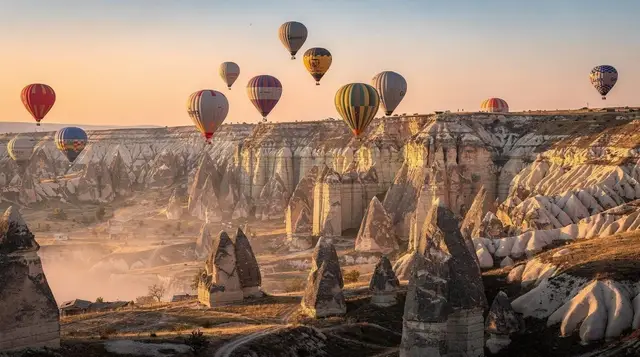
The flight itself, once it starts, is calmer than people expect. There is no engine noise and no rush of wind across the basket, because the balloon moves with the air rather than against it, so you do not get a wind-chill effect from motion the way you would on an open vehicle. What you feel is altitude and the hour of the day. For most of the year that means a warm outer layer is welcome at launch and unnecessary by the time you are looking down at Rose Valley or Love Valley from a few hundred metres up.
A pickup in the dark, with the plateau at its coldest, is a poor moment to be tired from a late arrival with your warm layer buried in a checked bag. Aim to land the day before your sunrise flight, and keep that layer in your cabin bag so it is within reach at the hotel car park. For the arrival day, you can compare flights on Aviasales and choose one that lands in daylight.
Layers you can add and remove
The single most useful packing decision is choosing clothing you can adjust in stages, because you will be dressed for roughly 5°C at pickup and something 10 to 15 degrees warmer by the time you land, depending on the season. A base layer, a mid layer, and a windproof or water-resistant outer layer covers the range without anyone needing to carry a separate winter coat and a separate summer jacket for the same trip.
| Layer | Purpose | Notes |
|---|---|---|
| Base layer | Wicks off overnight chill and any nervous sweat | Long sleeves, not cotton if it is winter |
| Mid layer | The layer doing most of the warming | A jumper or fleece is enough outside deep winter |
| Outer layer | Blocks the pre-dawn wind at pickup | A packable jacket, not a bulky coat, so it stows once the sun is up |
| Extras | Hat and light gloves, autumn to spring | Small enough to fit in a pocket once removed |
Trousers rather than shorts are worth it even in summer, since standing around at 5 a.m. in short sleeves and shorts is uncomfortably cold whatever the forecast says for midday. A scarf or buff is a reasonable substitute for a hat if you would rather not pack one specifically for a single activity.
Footwear: plan for an uneven landing, not a smooth one
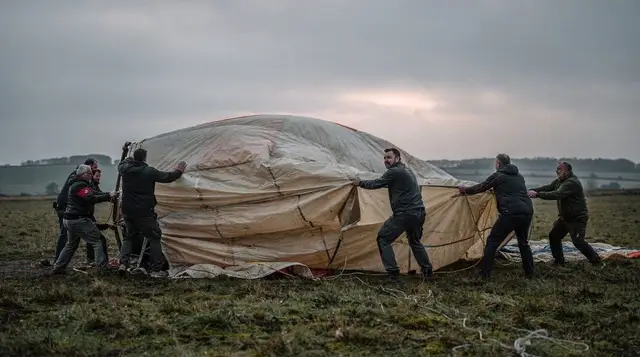
Balloon landings in Cappadocia go wherever the wind on that particular morning puts the basket down, and the pilot and chase crew work with the conditions rather than a fixed landing pad. Some mornings that is a flat, mown field a few steps from the trailer; other mornings it is a rougher patch of ground, a slope, or a spot the crew has to walk you across before the vehicle can reach you. Either way, you need shoes that grip and that you can climb over the edge of the basket in without a wobble.
Closed, flat or low-heeled shoes with some tread are the right call. Trainers, walking shoes, or anything with a similar sole work well; sandals, flip-flops, high heels, and anything with a loose or slip-on fit are the wrong choice, both for the climb into the basket at pickup and for the moment after landing when you are stepping out onto whatever surface the balloon happened to find. If your itinerary has you heading straight from the flight to one of the walking valleys, the same shoes will usually do double duty for the rest of the morning.
What not to bring into the basket
The nacelle is an open compartment with waist-high sides, and once something goes over the edge in flight, it is gone until someone finds it on the ground later, if at all. That makes loose or droppable items the main thing to plan around, more than the temperature.
- Keep phones, cameras, and anything valuable in a zipped pocket or a small crossbody bag rather than an open one.
- Skip loose scarves or long straps that can catch on the basket’s edge or the burner frame.
- Leave hats and gloves off, or hold them, during the actual burner bursts and the landing sequence, when you need both hands free.
- Large bags, tripods, and anything that needs two hands to manage are better left with the chase crew’s support vehicle if the operator offers that option; ask when you book.
- Sunglasses on a retaining strap are a small, sensible addition, since the low sun at that hour is genuinely bright once you are above the valley haze.
None of this is about restricting what you can bring on the trip generally; it is specific to the twenty minutes of getting in, flying, and getting out of an open basket. For guidance on cameras and where to actually point them, see the balloon photography spots guide.
Winter mornings versus June mornings
Cappadocia has a dry continental climate, and the gap between a January pickup and a June pickup is large enough to change what you actually need, not just how many layers of the same thing.
| Season | Typical pre-dawn temperature | What that means for clothing |
|---|---|---|
| December–February | Around or below 0°C, colder with wind | Proper thermal base layer, insulated mid layer, hat and gloves are not optional |
| March–April, October–November | A few degrees above freezing | Base layer plus a warm jumper and windproof jacket, hat and gloves worth carrying |
| May, September | Mild, roughly 10–15°C | A single warm layer over a t-shirt is usually enough, jacket for the wait |
| June–August | Warm even before sunrise, but still cool at altitude | Light layers, a packable jacket for the first part of the flight only |
Winter carries the extra complication that flights are cancelled for wind more often between roughly November and April than in summer, so the practical advice is to book your flight for the earliest possible morning of your stay, giving yourself a second chance if the first one is scrubbed. See balloon flight cancellations and wind for how that decision gets made and what it means for your booking. A snow-covered landscape does change the photographs, and flying over the valleys in the snow is a different experience from a summer sunrise; more on that trade-off in Cappadocia in winter.
What the operator actually provides
Most companies running a sunrise flight from Göreme include a safety briefing, the flight itself, and often a certificate and a drink after landing, sometimes at a small ceremony near the launch site. Clothing is not part of that. A handful of operators provide a thin cap for warmth during the burner sequence, but you should not plan around it being available, and it is not a substitute for dressing properly for the hour. If you are comparing operators before booking, choosing a balloon company covers the differences that actually matter, distinct from anything about clothing.
a standard sunrise flight over the valleys near Göreme is the most common way visitors experience this, with a shared basket and a set flight window of roughly 45 minutes to an hour and a half depending on conditions. Some visitors prefer a similarly timed sunrise flight with a different operator if their preferred pickup slot or hotel area is already full, which is common in high season. A third option, a further sunrise flight departure from the Göreme area, is worth checking if you are trying to fly on your first morning and need a backup slot in case of a wind cancellation.
A quick checklist by season
Year-round, whatever the month:
- Closed, flat or low-heeled shoes with grip
- A layer you can remove once the sun is up
- A small zipped bag or pocket for phone and wallet
- Sunglasses, ideally on a strap
Add for late autumn through early spring:
- Thermal or long-sleeve base layer
- Hat and light gloves
- A windproof outer layer, not just a jumper
Add for deep winter (December–February):
- An insulated mid layer under the windproof outer layer
- Thicker socks, since standing on cold ground at pickup is often the coldest part of the morning
- A scarf or buff for the neck
Ease off for June–August:
- Skip the hat and gloves; a light jacket for the first fifteen minutes is usually enough
- Trousers rather than shorts are still worth it for the pre-dawn wait, even in midsummer
- Keep sun protection in mind for the second half of the flight once the sun is fully up
None of this needs to be bought specifically for the flight. If you are travelling in shoulder season and already packing for walking the valleys or a day trip out of Göreme, the same layers and the same shoes generally cover both.
For a broader view of what to bring on the trip as a whole, see the Cappadocia packing list, and for how the flight itself fits into your first morning, what to expect from a Cappadocia balloon flight covers the pickup, the briefing, and the landing in sequence. If you would rather watch than fly, watching the balloons without flying needs a warmer approach still, since you are standing still on a viewpoint for longer than the passengers are in the air.
Families weighing up whether children should fly at all can find more in balloon flights with kids and fear of heights, and anyone deciding between a private and a shared basket should see private versus shared balloon basket, since basket size affects how much room you have to manage layers as you remove them mid-flight. For the wider seasonal picture beyond clothing, best time to visit Cappadocia and Cappadocia in summer cover how the season shapes the rest of the trip, not just the balloon morning.
What to wear for a Cappadocia balloon flight: FAQ
Do I need a proper winter coat for a Cappadocia balloon flight?
Only from roughly November to March. A thick jumper under a windproof outer layer is usually enough the rest of the year, because you are only standing in the cold air for the pickup and the first part of the flight before the sun warms things up.
Is it cold in the balloon basket during the flight?
It is coldest at pickup, before sunrise, and it eases once you are airborne and the sun clears the horizon. There is no engine or fan blowing on you in the basket, so the main chill comes from altitude and the early hour rather than wind.
What shoes are best for a hot air balloon flight?
Closed, flat or low-heeled shoes with a grip sole. Landings happen wherever the wind puts the balloon down that morning, which is sometimes a smooth field and sometimes uneven or stony ground, and the chase crew needs you to climb out quickly.
Can I bring a bag or a camera on the balloon?
A small bag that zips shut and sits close to your body is fine; loose items, dangling straps, and anything that can slip out of a pocket are not, because the nacelle has open sides and there is no way to retrieve something once it has gone over the edge.
Should I wear gloves and a hat for the sunrise flight?
A hat and light gloves are worth carrying from autumn to spring, especially for the pickup and the first fifteen minutes of the flight, and easy to stuff in a pocket once the sun is up and the group is airborne.
What do balloon companies provide, and what do I need to bring myself?
Most operators supply the safety briefing, a helmet-style padded cap in some companies, and a certificate and drink after landing, but almost none supply clothing. What you wear to the hotel lobby at pickup time is what you fly in.
Hot-air balloon flights on GetYourGuide
Verified deep-linked GetYourGuide tours. Book through these links and we earn a small commission at no cost to you.
GetYourGuide does not provide a product photo for this activity — the image shows the meeting point, photographed by us.