Fear of heights, kids, and Cappadocia's balloon flights
Is a Cappadocia balloon flight manageable for someone with a fear of heights, or for children?
Once airborne, the basket is an enclosed, stable space, and most nervous flyers find it calmer than they expected — closer to standing on a balcony than to the sensation of a fairground ride. The parts that tend to catch people off guard are take-off and landing, not the hour in between, and some operators set a minimum age or discourage very young children, so it is worth asking when you book rather than assuming.
The question nobody quite asks out loud
Most people researching a balloon flight from Göreme look at cost, operators, and cancellation odds. Fewer say out loud that they, or the child they’re travelling with, are genuinely nervous about being lifted a few hundred metres into the air in what is essentially a large wicker crate. That nervousness is not a small thing to wave away, and it doesn’t deserve to be treated as a quirk to push through with cheerful reassurance. It’s a reasonable reaction to an unusual activity, and it’s worth planning around properly rather than hoping it resolves itself at 5 a.m. in a hotel lobby.
This page doesn’t try to talk anyone into flying. It sets out what the experience actually involves, moment by moment, so you can judge for yourself whether it suits you or the children you’re travelling with, and what to do if the answer turns out to be no.
What the basket is actually like once you’re airborne
The single most useful thing to understand in advance is that the flight itself, once the balloon has left the ground and settled into its climb, is calmer than the idea of it. The basket is a solid, waist-to-chest-height compartment, usually divided into a central pilot’s section with a burner overhead and several passenger compartments around the outside. There is no swaying, no sudden drops, and very little sensation of speed, because you are moving with the air around you rather than through it. Many passengers say the strangest part is how quiet it becomes between burner bursts — you can often hear dogs barking or a call to prayer from the villages below.
For someone who struggles with heights on a viewing platform, a glass floor, or a cable car, this matters. Those situations usually involve a fixed structure with visible drops and a sense of exposure at the edge. A balloon basket removes several of the specific triggers: there’s no glass floor, no swaying cable, and the horizon stays level rather than tilting.
That doesn’t make the fear disappear, but it explains why a number of people who avoid other height-based activities get through a balloon flight without much trouble, and why others who are fine with cable cars find the balloon unexpectedly unsettling. The two are not the same kind of experience, and it’s worth being honest with yourself about which specific thing you find difficult before assuming either way.
None of this is a guarantee. If height in any form is a hard limit for you, read the rest of this page and the balloon flight overview before booking, not after.
The two moments that actually surprise people
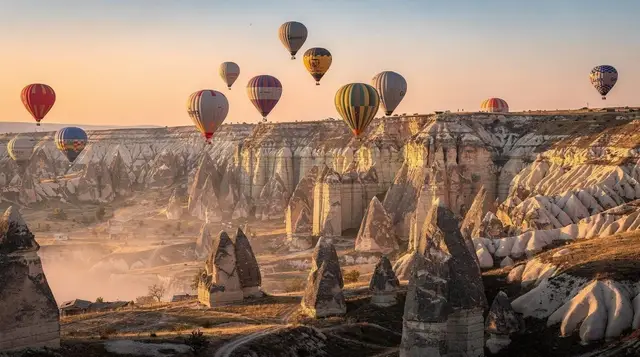
If there is a part of the flight that catches nervous passengers off guard, it is not the hour spent cruising over Rose Valley or Love Valley — it’s the few minutes at either end.
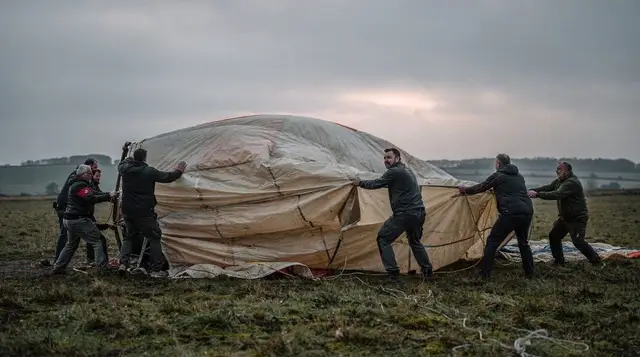
Take-off starts on the ground, with the envelope laid out and inflated by large fans before the burner fires it upright. The burner itself is loud — a sustained roar, repeated in bursts — and it fires close enough overhead that the heat and noise are noticeable. As the balloon lifts, the basket tips slightly before righting itself, and the whole sequence happens faster than most people expect: a calm standing wait, then a short burst of noise and motion, then you’re moving. Warning a nervous child, or yourself, that the burner will be loud and the basket will lean for a second is genuinely useful preparation; going in expecting silence and stillness makes the noise land as alarming rather than merely loud.
Landing is the other pressure point. Pilots aim for a soft touchdown on open grass or a flat field, but wind on the day decides how smooth that is. Most landings are a gentle bump; some involve a short skid or a slightly firmer contact, especially in a crosswind. Crews brief passengers beforehand on the landing position — knees bent, holding the internal rope handles, staying inside the basket until told otherwise — and that briefing is worth taking seriously rather than half-listening to while taking photos. Knowing that a bump is normal and expected, rather than a sign something has gone wrong, changes how it lands psychologically as well as physically.
Between those two points, the flight itself — typically 45 minutes to an hour and a half depending on the package — is the calm part, not the tense part. It helps to say this plainly to a nervous child or partner beforehand: the loud bit is at the start, the bumpy bit is at the end, and the middle is quiet.
Age policies vary — ask, don’t assume
Operators differ on how young a child can be to fly. Some will take children from a fairly young age provided a parent is in the same compartment; others set a firm minimum age or actively discourage flying with toddlers and very young children, partly because of the burner noise and partly because a frightened or squirming small child in an enclosed compartment mid-flight is a genuine safety concern for the pilot, not just a comfort issue. There is no single rule across the industry, and a company’s policy can also depend on the specific basket configuration they’re using that season.
The practical takeaway is to ask directly when booking, rather than assuming either that “of course children can fly” or that “balloons aren’t for kids.” If you’re travelling with a toddler or a child under school age, this is worth resolving before the morning of the flight — see family-friendly cave hotels and the broader Cappadocia with kids guide for how families structure a trip around this.
Practical advice if you or a child are prone to vertigo
A genuine fear of heights, or a child who gets overwhelmed easily, deserves specific planning rather than a general “you’ll be fine.” A few things actually help:
Ask for a centre compartment, not a corner one. Baskets are usually divided into sections, with a central compartment around the burner controls and separate outer compartments around the rim. A corner compartment puts you against the outer wall on two sides, with more of your field of view taken up by the drop below the rim. A centre position, where available, keeps more solid basket around you and reduces how much of the view is straight down. It’s a reasonable, specific request to make to the crew when you board, and most pilots will accommodate it if the balance of the basket allows.
Larger baskets generally mean more choice of position. A bigger basket — whether that’s a larger shared group booking or a private basket — spreads passengers across more compartments, which means more chance of getting a centre spot and more floor space generally. A small, tightly packed basket leaves fewer options if the compartment you’re assigned turns out to feel exposed. If height anxiety is a real factor for your group, it’s worth factoring basket size into how you book, alongside the usual cost and operator questions.
Keep hold of something. The internal rope handles fixed to the basket’s frame are there for the landing brief, but holding one loosely during the flight itself, rather than gripping the rim and looking straight down, gives a lot of nervous flyers something to anchor to.
Look at the horizon, not straight down. This sounds obvious, but it’s a genuinely effective and simple technique: the view across the valleys towards Erciyes or the ridgeline is expansive and levelling, while looking straight down over the rim is the view that tends to trigger vertigo. Both are available from the same spot in the basket; which one you choose to focus on makes a real difference.
Don’t oversell the calm to a child in advance. Promising a nervous child that “it’s totally fine, nothing will happen” sets up a mismatch the moment the burner fires. A more accurate version — it will be loud for a second, then it’s calm, then there’s a bump at the end — tends to land better because it matches what actually happens.
What if you decide not to fly
If, on reflection, or on the morning itself, you or your child decide the flight isn’t for you, say so to the crew before boarding rather than once the burner has started. This happens regularly enough that reputable operators have a way of handling it without drama — someone stays on the ground, or in some cases the whole booking is rescheduled or partially refunded, depending on the company’s own policy.
That policy is worth asking about at the time of booking if you think there’s a real chance you’ll back out, rather than discovering it at 5 a.m. See balloon flight cancellations and wind for how operators generally handle no-shows and changes of mind, which tends to run on similar lines to weather cancellations.
Backing out is not a failure, and a good crew will not treat it as one. What matters more is deciding this before you’re standing in the basket with the burner already lit, which is a much harder moment to change your mind in.
Watching instead of flying
Not flying doesn’t mean missing the spectacle. Several spots around Göreme — Göreme Panorama among them — fill with people at sunrise specifically to watch the balloons lift off, and on a clear morning in high season you can see well over a hundred balloons rising together.
It costs nothing beyond getting up early and finding a spot, and it’s a genuinely good option for a nervous child, a grandparent, or anyone travelling with the group who’d rather stay on solid ground. The watching without flying guide covers where to stand and what time to arrive; the flying versus watching comparison lays out what each option actually gives you.
If your group is split — some flying, some not — a reasonable plan is to book one of the shorter shared experiences, such as a Göreme sunrise hot air balloon flight, for those who want to fly, while the rest watch from a viewpoint and everyone meets afterwards for the traditional champagne toast many operators do on landing. It keeps the morning shared without forcing anyone into the basket.
A balloon morning that gets cancelled, moved or dropped by a nervous child can shift the rest of your plan, so leave a spare day between the flight and your journey home. Check the fare conditions for changes before you pay, and avoid a departure on the afternoon of your sunrise slot. That slack lets the group re-book or simply watch from a viewpoint, and you can look at flight options on Aviasales once you know how much room your dates have.
Choosing an operator with this specifically in mind
When you’re comparing companies, it’s worth asking two questions beyond the usual price and safety record: what is your policy on children, and can you request a centre compartment or larger basket for a nervous passenger. Not every call centre will have a scripted answer, but the response tells you something about how the company runs its mornings.
A Göreme sunrise balloon flight booked directly with attention to basket size and passenger placement is a different experience from the cheapest option filled to capacity. The choosing a balloon company guide goes into fleet size, basket types, and how to read a company’s safety record if this is a deciding factor for you.
If flying still feels like the wrong call for part of your group on the day, Göreme has other early starts worth building the morning around instead — a guided walk through the Göreme Open-Air Museum before the coach parties arrive, or a Cappadocia horse riding tour through the valleys at a pace that stays firmly on the ground. Both give the same early-morning light over the fairy chimneys without the basket.
Packing and preparation notes specific to nervous flyers
A few practical points that matter more if you’re anxious than if you’re not:
- Arrive with time to spare. Hotel pickup is typically an hour to an hour and a half before sunrise; being rushed adds stress on top of nerves. See what to wear for a balloon flight for how cold it is at that hour and what actually helps.
- Ask the crew’s name and say you’re nervous. Pilots and ground crew deal with this often; telling them in advance, quietly, before boarding, means they can put you in a better position without a scene.
- Skip a heavy breakfast if you’re prone to motion or nerves. The morning fans and burner noise before take-off can be enough on their own without a full stomach.
- Bring the child’s own reassurance object if relevant — nothing operators mind a small toy or blanket for a young child on board, within reason.
FAQ: Cappadocia balloon flights, children, and fear of heights
Is there a minimum age for hot air balloon flights in Cappadocia?
Policies vary by operator. Some companies fly children from a young age with a parent in the same compartment, others set a minimum age or discourage flying with toddlers and very young children. There’s no single industry-wide rule, so confirm with the specific company you’re booking.
What does take-off actually feel like?
The burner fires in short, loud bursts to inflate and lift the balloon, and the basket tips slightly before levelling out as you rise. The noise and the initial lean are what surprise most first-time flyers — height itself is barely perceptible once you’re moving.
What does landing feel like?
Usually a soft touch on grass or open field, sometimes with a small bump or short skid in a crosswind. Crews brief passengers on the landing position in advance. It’s brief, not violent, but it’s the moment that most resembles a fairground ride.
Is the basket safe for someone with a fear of heights?
The basket is a solid, walled compartment, and once airborne there’s no sensation of swaying or falling the way there can be on a bridge or glass viewing platform. Many people who struggle with heights on the ground find the flight calmer than expected, though the anticipation beforehand is real.
Where should I stand if I’m nervous?
Ask for a centre compartment rather than a corner one against the outer wall. It keeps more solid basket around you and reduces how much of the view is straight down over the rim.
Should I choose a smaller or larger basket?
A larger basket, shared or private, generally gives more floor space and more centre-compartment positions to choose from. A small, packed basket leaves fewer options for a nervous passenger.
What if my child or I decide not to fly after all?
Tell the crew before boarding, not after the burner has started. Reputable operators handle this regularly; what happens next — refund, reschedule, or nothing — depends on the company’s own policy, so ask when you book.
Can children or nervous adults watch from the ground instead?
Yes. Several viewpoints around Göreme let you watch dozens of balloons lift off at sunrise without flying, and it costs nothing beyond arriving early.
Hot-air balloon flights on GetYourGuide
Verified deep-linked GetYourGuide tours. Book through these links and we earn a small commission at no cost to you.
GetYourGuide does not provide a product photo for this activity — the image shows the meeting point, photographed by us.