Zelve open-air museum: the village people actually lived in
What is Zelve open-air museum, and how is it different from Göreme's?
Zelve was a troglodyte village inhabited until 1952, when erosion made the rock-cut houses unsafe to live in. It preserves three connected valleys of homes, an old mosque and communal spaces carved into the tuff, rather than the frescoed churches that define the Göreme Open-Air Museum.
A village abandoned to erosion, not a museum of churches
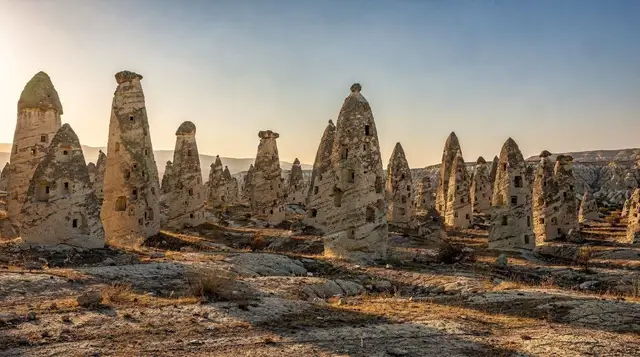
Most visitors arrive at Zelve expecting a smaller version of the Göreme Open-Air Museum, and that comparison is the first thing to drop. Göreme is a cluster of rock-cut churches from the tenth and eleventh centuries, and the reason people queue for it is the frescoes inside. Zelve has almost none of that. What it preserves instead is a working village: houses stacked into the cliff face, a mosque, storerooms, stables, a small school, and the connecting passages a community used every day, right up until the rock itself made living there too dangerous.
People lived in Zelve until 1952, when the state moved the last families out to a new settlement a few kilometres away, now known as Yeni Zelve (“new Zelve”). The old rock, already softened by centuries of wind and rain the way it is everywhere in this region, had started to collapse in places. Roofs came down, passages narrowed further, and the authorities judged it unsafe to keep families in houses that could no longer be trusted. What’s left is the shell of that village: empty rooms, cut staircases, niches for oil lamps, and the shape of a life that had gone on here for generations.
That’s the angle worth keeping in mind before you go: Zelve rewards people who want to picture how a community occupied this landscape, not people chasing painted saints. If frescoes and church architecture are what you’re after, the Göreme Open-Air Museum and its Karanlık Kilise are where that interest is served. Zelve is for the other question: what did daily life actually look like, carved into tuff, on the edge of these valleys.
Three valleys, loosely joined
Zelve sits across three parallel valleys that run into each other, separated by ridges of rock. Visitors usually enter through the first valley, which holds the densest concentration of houses and the easiest walking. It’s here that most of the recognisable domestic spaces survive: rooms with cut shelves and niches, stables with feeding troughs carved straight into the rock, and storage chambers that would once have kept grain and dried produce cool through the summer.
The old mosque is one of the more distinctive structures in the first valley: a minaret carved from the rock itself rather than built up from stone blocks, which is unusual even by Cappadocian standards. It’s a plain, functional space rather than an ornamented one, and it’s easy to walk past without noticing what it is unless you’re looking for it. There’s also a former Greek Orthodox church from an earlier period, before the village’s religious character shifted, tucked into the same valley system.
The second and third valleys are quieter and less visited, partly because getting to them takes more effort. Passages connecting the valleys include narrow tunnels cut directly through the rock and steep, uneven staircases, and in places the only way through is to stoop or climb rather than simply walk. None of it is technical in a mountaineering sense, but it isn’t a stroll either.
Anyone who wants to see all three valleys should expect to duck under low ceilings, use their hands on a few of the rock-cut stairs, and accept that a full circuit takes noticeably longer than a single-valley visit. This is the detail that trips up a lot of day-trippers on a schedule: Zelve looks, from the entrance, like a site you can tick off in half an hour. Seeing it properly takes closer to double that.
If mobility, tight spaces or heights are a concern, you can still get a genuine sense of the site by sticking to the first valley and skipping the connecting tunnels — you’ll miss the third valley entirely, but you’ll still see the houses, the mosque and the general shape of the village.
What you’ll actually find carved into the rock
Walking through Zelve, the things worth slowing down for are domestic rather than decorative:
- Houses on multiple levels, connected by internal staircases cut into the rock, some still showing the soot marks of old cooking fires on their ceilings.
- Storage rooms and cellars, cool and dark, used for keeping food through the heat of summer — the same logic that still makes cave interiors popular for wine storage in Ürgüp today.
- Stables with rock-cut mangers, showing that animals were kept inside the same complexes as people, a detail that says as much about the climate here as anything else.
- The rock-cut mosque and its carved minaret, a rare structural choice worth pausing at even if you’re not counting yourself a mosque-visiting tourist.
- A pigeon house, riddled with small square nesting holes — pigeon droppings were prized as fertiliser here for centuries, and pigeon houses like this one turn up across the region, including in the valley named for the practice.
- A former church, from before the site’s population and religious character shifted, with none of the fresco cycles that define Göreme.
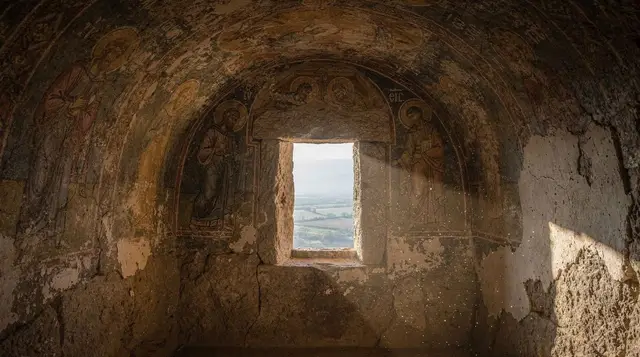
What you won’t find is anything resembling the painted interiors at Göreme. A handful of faint traces of plaster or pigment survive in places, but Zelve was never primarily a religious site in the way Göreme’s cluster of churches was — describing it that way to fellow travellers, or expecting it from the ticket price, sets you up to be disappointed.
Zelve, Paşabağ and Devrent: same tour, separate stops
Zelve sits on almost every version of the Red Tour, the standard northern-loop itinerary sold out of Göreme, alongside Paşabağ and Devrent Valley. It’s worth being clear that these are three distinct stops with three different things to offer, even though operators bundle them into a single day:
| Stop | What it actually is | Typical time on-site |
|---|---|---|
| Zelve | Abandoned troglodyte village, three valleys | 1.5–2 hours |
| Paşabağ | Fairy chimneys with double and triple caps, hermit’s cell | 20–30 minutes |
| Devrent Valley | Eroded rock formations, no structures at all | 30 minutes |
| Göreme Open-Air Museum | Rock-cut churches with frescoes | 1.5–2 hours |
Because Zelve takes longer than Paşabağ or Devrent, it’s usually the stop where a rushed group tour starts running behind schedule — worth knowing if you’re the one deciding how long to linger. For the full run of what a Red Tour typically covers and how it differs from the Green and Blue routes, see the Red Tour, Green Tour and Blue Tour explained guide.
If you’re arranging your own day rather than joining a set group tour, a lunch stop built around this same cluster of sites keeps the logistics simple:
a Red Tour day that pairs Zelve with lunch included, which removes the need to plan a separate stop for food between valleys.
For a shorter loop that sticks to just Zelve and its immediate neighbour, a combined Zelve and Paşabağ tour covers the two sites without folding in the Göreme museum or a full Red Tour itinerary.
Getting there from Göreme
Zelve is roughly 10 minutes from central Göreme by road, the same distance as neighbouring Paşabağ. There’s no direct dolmuş service running to the site, which makes a car, scooter or organised tour the practical options for most visitors. A taxi from Göreme is straightforward and can usually be arranged to wait or return at a set time if you’re not driving yourself.
Combining Zelve with Paşabağ and Devrent Valley in a single morning is easy if you have your own transport, since all three sit within about 15 minutes of each other north of Göreme. Without a car, joining an organised Red Tour is the more reliable route, since it removes the coordination of separate taxis for three short stops.
If you’d rather see the underground cities alongside Zelve instead of the other Red Tour stops, a tour combining Zelve with Özkonak underground city pairs a quieter underground site with the village above ground, and skips the crowds that build up at Kaymaklı and Derinkuyu.
Practical details for the visit
Tickets are sold at the site entrance and are separate from the Göreme Open-Air Museum ticket — the two are not combined, despite both being described as “open-air museums.” Turkey’s Müzekart+ pass, if you’re carrying one, covers entry. Prices are adjusted periodically, so treat any figure you’ve seen online as a rough guide rather than the number you’ll pay on the day.
There’s very little shade across any of the three valleys, and the ground is the same dusty, uneven tuff found throughout the region — closed shoes with a decent grip matter more here than at most sites, given the amount of climbing involved in seeing all three valleys. Carry water; there’s minimal shelter once you’re inside the site itself. For general guidance on moving safely through this kind of terrain, see hiking safety in the valleys and the wider roundup of best hikes in Cappadocia, even though Zelve is a site visit rather than a hike in the strict sense.
Morning visits tend to be quieter and cooler, which matters more here than at Göreme because of the amount of physical effort involved in the connecting passages. Midday sun inside the third valley, with no shade and a fair bit of climbing behind you, is the least comfortable version of this visit.
Nearby stops worth combining with Zelve
Because Zelve sits in a cluster of northern sites, it’s rarely visited alone. The obvious pairings:
- Paşabağ — cone-shaped fairy chimneys with distinctive double and triple caps, a 5 to 10-minute drive away.
- Devrent Valley — a flat, church-free valley of eroded shapes, good for a short stop either side of Zelve.
- Çavuşin — an old rock-cut church and an abandoned hillside village with a similar theme to Zelve, though on a smaller scale and with a different collapse history.
- Avanos — the pottery town on the Kızılırmak river, a reasonable stop to round off a northern-loop morning.
If you’re building your own itinerary rather than following a set tour, the one-day Cappadocia guide and the matching one-day itinerary both work through how much of this northern cluster is realistic to fit alongside a balloon flight and lunch.
For travellers who’d rather see Zelve as part of a broader mix that includes an underground city and a second open-air site in one day, a mixed tour covering an underground city and open-air museums is built around exactly that combination, and a Red Tour built around Zelve and Paşabağ specifically keeps the day focused on these two related sites rather than spreading across the whole northern loop.
Zelve open-air museum: the questions people actually ask
Is Zelve the same as the Göreme Open-Air Museum?
No. They’re two separate sites about 15 minutes apart by road. Göreme preserves rock-cut churches with Byzantine frescoes. Zelve preserves a lived-in village: houses, a mosque, storerooms and stables, with almost no religious art on view.
How long do you need at Zelve?
Budget 1.5 to 2 hours to walk all three valleys properly, more if you climb every side passage. A quick look at the first valley alone can be done in 30 to 40 minutes, but you’ll miss most of what makes the site worth the detour.
Do you need to climb or crawl to see Zelve?
Some connecting passages between the valleys are narrow tunnels or steep rock-cut stairs that require stooping and a bit of scrambling. You can see a great deal without them, but reaching every corner of all three valleys means bending, climbing and occasionally squeezing through.
Is Zelve included in the Red Tour?
Yes, most Red Tour itineraries stop at Zelve alongside Paşabağ, Devrent Valley and the Göreme Open-Air Museum. It’s usually the longest single stop on the day because there’s more ground to cover than at the other sites.
When was Zelve abandoned, and why?
The village was evacuated in 1952 (some accounts say a little later in the decade) after decades of erosion left the rock too unstable for the houses cut into it. Families were resettled in what’s now Yeni Zelve, a few kilometres away, and the old village was left empty.
Is there an entrance fee for Zelve, and is it covered by the Museum Pass?
Zelve charges its own entrance fee, separate from the Göreme Open-Air Museum. Turkey’s Müzekart+ museum pass covers it if you’re carrying one; otherwise you pay at the gate. Prices change yearly, so check the current rate on-site rather than relying on an old figure.
Can you visit Zelve without a car?
It’s difficult without a tour or a rented car or scooter. There’s no direct dolmuş route from Göreme to Zelve, so most independent visitors either join a Red Tour, hire a driver for the morning, or combine it with Paşabağ and Devrent Valley by taxi.
Museum & art tours on GetYourGuide
Verified deep-linked GetYourGuide tours. Book through these links and we earn a small commission at no cost to you.
GetYourGuide does not provide a product photo for this activity — the image shows the meeting point, photographed by us.