Cappadocia month by month
What's the best month to visit Cappadocia?
April to June and September to October give the most reliable weather and the lowest balloon flight cancellation rates. July and August are hottest and busiest, January and February are coldest and cheapest but see the most cancelled balloon flights. The table below breaks down every month; the best time to visit guide covers the trade-offs in more depth.
Cappadocia’s high, dry plateau around Göreme runs on a continental climate, which means the difference between visiting in January and visiting in July is much bigger than in most European destinations. This page is a quick-reference table, not a mood piece: for what each season actually looks and feels like on the ground, use the four seasonal guides linked below. What follows here is temperature, crowds, price level and balloon reliability, month by month, so you can pick a window before reading further.
The year at a glance
The table below gives a typical daytime high, a rough crowd level, a rough price level, and how likely a sunrise balloon flight is to be cancelled for wind or weather that month. Every figure is an average across recent years, not a forecast for any single day.
| Month | Typical daytime high | Crowds | Prices | Balloon cancellation risk |
|---|---|---|---|---|
| January | 4°C | Low | Low | High |
| February | 6°C | Low | Low | High |
| March | 11°C | Low-moderate | Low-moderate | Moderate |
| April | 17°C | Moderate-high | Moderate-high | Moderate |
| May | 22°C | High | High | Low |
| June | 27°C | Very high | High | Low |
| July | 31°C | Very high | High | Moderate |
| August | 31°C | Very high | High | Moderate |
| September | 26°C | High | High | Low |
| October | 19°C | Moderate-high | Moderate | Low |
| November | 12°C | Low-moderate | Low-moderate | Moderate-high |
| December | 6°C | Low-moderate | Low | High |
These are averages for the plateau around Göreme, Ürgüp and Uçhisar; nights are cooler than the daytime figure in every month, often by 15-20 degrees, because the same dry air that heats up fast at midday loses heat just as fast after dark.
Winter: December to February
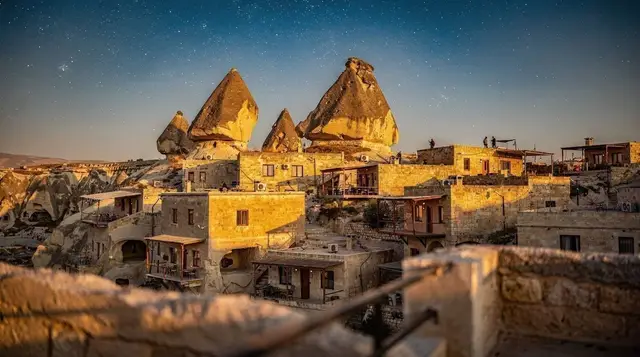
This is the cheapest, quietest and coldest window of the year. Daytime highs hover close to freezing, nights regularly drop below zero, and snow settles over the fairy chimneys for a few days at a stretch most winters — a specific look that has its own guide, Cappadocia in the snow. Hotel and tour prices fall to their lowest point, and the open-air museum and underground cities are close to empty outside weekends.
The trade-off is the balloon flight. Wind and low cloud ground flights more often in midwinter than in any other stretch of the year — see balloon flight cancellations and wind for how operators actually make that call each morning. If a flight is cancelled and you don’t have a spare morning to try again, a half-day jeep safari through the valleys is a reasonable way to still cover ground while the weather clears. For the fuller picture of what a winter trip looks and feels like day to day, read Cappadocia in winter.
Spring: March to May
March starts cool and unpredictable, closer in feel to winter than to what comes later in the season; by May, daytime highs are comfortably in the low twenties and the valleys are at their greenest. Crowds and prices both build steadily through the season, from low in March to genuinely busy by May. This is also one of the two windows with the lowest balloon cancellation rate of the year, alongside early autumn, which is why late April and May are consistently the most-booked weeks for a flight.
Spring is one of the two periods, along with autumn, when Ramadan or the Bayram holidays that follow it might fall — the dates move by about ten days each year on the lunar calendar, so check Ramadan and Bayram in Cappadocia for the current year rather than assuming a fixed month. The mood and texture of a spring visit — wildflowers in the valleys, longer daylight, what to pack — is covered in Cappadocia in spring.
Summer: June to August
This is peak season on every measure: the hottest weather, the most visitors, and the highest hotel and tour prices of the year. Afternoons regularly reach the low-to-mid thirties with almost no shade on the open valley trails, so the practical adjustment is to walk early and treat midday as rest time rather than sightseeing time. Balloon cancellations tick up slightly from the spring low, mostly for occasional summer storms rather than the steady winter wind, but flights still go up most mornings.
Crowding is worst at the fixed pinch points — the Göreme open-air museum between 10am and 3pm, and the underground cities on weekend mornings — rather than on the walking trails themselves, which thin out fast once you’re a few hundred metres past a car park. What to actually pack for the heat, sun and dust is covered in the Cappadocia packing list; the full texture of a summer trip is in Cappadocia in summer.
Autumn: September to November
September carries over most of summer’s heat and crowding, but by October the daytime high has dropped into the high teens and both prices and visitor numbers ease off. Along with late spring, September and October make up the other low-cancellation window for balloon flights, which is part of why they’re a popular alternative to the summer peak for travellers who want reliable weather without the July-August crowds. It’s also the grape harvest season around Ürgüp, and a full-day tour with wine tasting works better in this window than in high summer, when the cellars are closer to full.
November is the quiet hinge between autumn and winter: daytime highs fall into the low teens, prices ease further, and the cancellation risk for balloon flights starts climbing back toward winter levels. A sunset horseback ride through the valleys is a good way to use the shorter but still mild autumn afternoons. For the full seasonal detail, see Cappadocia in autumn.
Ramadan, Bayram and the lunar calendar
Ramadan and the Bayram holidays that follow it are set by the Islamic lunar calendar, which means their dates shift by roughly ten to eleven days earlier each year and can land in any of the twelve months depending on where you are in that cycle. During Ramadan, some restaurants and cafés outside the main tourist strip adjust their daytime hours, and Bayram itself brings a short but noticeable spike in domestic travel and higher demand for hotels and transport. Rather than pin a date to a specific month on this page — which would be wrong within a year or two — check Ramadan and Bayram in Cappadocia for how the current year lines up and what it actually changes for visitors.
Balloon flights by month
The single biggest weather-driven decision most visitors make is when to fly. The pattern is consistent across recent years even as exact numbers shift: cancellations cluster in December, January and February, ease through March and April, hit their lowest point in May, June, September and October, then start climbing again through November. A sunrise balloon flight booked for the first morning of a trip in any of the low-risk months still isn’t a guarantee — wind can ground flights even in June — but it gives the best odds of flying at all, and the best odds of a second attempt if the first morning is scrubbed.
The mechanics of how that go/no-go call gets made each morning, and what operators do with a cancelled booking, are covered in balloon flight cancellations and wind; the broader logistics of booking a flight at all are in the Cappadocia hot air balloon guide.
Prices by month
Prices for hotels, tours and balloon flights move roughly in step with the crowd levels in the table above: lowest in January and February, climbing through spring, peaking in July and August, easing slightly in September before dropping again through October and November, then ticking up briefly around the New Year. Cave hotels in particular can double their nightly rate between a February weeknight and an August weekend for what is nominally the same room.
For a fuller breakdown of what a trip costs at different times of year, see what a Cappadocia trip costs, and use the best time to visit tool to weigh weather against budget for your own dates. Families travelling with children may also want Cappadocia with kids, since school holiday windows shift the crowd and price picture in ways this general table doesn’t capture.
None of the twelve months is a wrong choice — Cappadocia’s core sights, the valleys, the underground cities, the open-air museum, are open and worth visiting year-round. The trade-offs above are about comfort, crowding, budget and the odds of a balloon flight, not about whether a given month is worth the trip. For a single, weighted answer to “when should I go”, read the best time to visit Cappadocia guide, which pulls these same factors together into a direct recommendation.
Choosing a month by what you want to do
The table ranks months by comfort, but most people arrive with one or two activities in mind, and those can matter more than the average temperature. If walking is the point, the shoulder months are the natural fit: the best hikes in Cappadocia are far more pleasant when you are not squinting into a midday summer sun, and hiking safety in the valleys is mostly a question of heat in July and August and of slippery ground after rain or snow in winter. A trail such as the Rose Valley hike rewards an early start in any month, but in summer that early start stops being a preference and becomes the plan.
If photography is the priority, the light changes the picture as much as the weather does. Clear, cold winter mornings and the softer light of spring and autumn each give a different look to the same rock formations; the balloon photography spots guide and the Cappadocia viewpoints guide help you decide where to stand once you know when you are going. The timing of the sunrise itself shifts through the year, which is why balloon sunrise timing by season is worth a read before you set an alarm.
If your trip is built around food and wine, autumn has the strongest case, with the harvest atmosphere around Ürgüp and cellars that feel lived in rather than crowded. The Cappadocia wine guide and the Ürgüp wine cellars guide explain what to expect. If you would rather spend your days indoors and out of the weather, there is plenty to do in any month, and rainy day activities in Cappadocia covers what to fall back on when a cold or wet day cancels the plan.
Building a trip around the weather
Whatever month you choose, the practical advice is the same: leave slack in the schedule. The table gives odds, not promises, and a flexible plan absorbs a grounded balloon or a rainy afternoon far better than a tight one. Putting the balloon flight on your first morning, and keeping a second morning free, is the single habit that protects the trip in every season. A rigid itinerary is where most weather disappointments come from, and the Cappadocia itinerary mistakes guide lists the other ways people overfill their days.
The number of days you have also interacts with the month. In the colder months, with shorter daylight and a higher chance of disruption, a few extra days give you room to wait for a clear morning; in the busy months, a short stay is easier to manage if you book the popular experiences ahead. The how many days in Cappadocia guide helps you size the trip, and the three-day itinerary is a sound template to adjust to the season. Travellers visiting in the colder months can also look at the winter three-day plan, which is built around what the season does well.
Finally, remember that clothing does most of the work of making a difficult month comfortable. Layers handle the large gap between a cold dawn and a warm afternoon, and the same dry air that makes nights cool also makes the sun feel strong at midday. The what to wear for a balloon flight guide is a useful check for the one outing where you stand still in the cold before sunrise, whatever the month. And if the forecast turns, when the weather turns in Cappadocia describes how a change plays out on the ground.
Questions about timing a Cappadocia trip
Which month has the fewest cancelled balloon flights?
Late spring (May, June) and early autumn (September, October) tend to have the calmest morning winds and the lowest cancellation rates. Midwinter, from December to February, sees the most cancellations. No month guarantees a flight; see the dedicated guide on cancellations and wind for how the decision is actually made.
Is Cappadocia too hot to visit in summer?
July and August regularly reach the low-to-mid 30s Celsius in the afternoon, with little shade in the valleys. It’s manageable if you walk early and rest through the middle of the day, but it isn’t the most comfortable window. See the summer guide for detail.
Does it actually snow in Cappadocia?
Yes, most winters bring at least a few snowfalls between December and February, and snow can settle on the fairy chimneys for several days at a time. See the guide to Cappadocia in the snow for what that changes about getting around.
When are Ramadan and Bayram, and do they affect a Cappadocia trip?
Both follow the Islamic lunar calendar, so their dates shift roughly ten to eleven days earlier each year and can fall in any month. Some restaurants and shops adjust their hours during Ramadan, and Bayram brings a short surge in domestic travel. See the dedicated Ramadan and Bayram guide rather than relying on a fixed date here.
What’s the cheapest month to visit Cappadocia?
January and February, followed by November, tend to have the lowest hotel and tour prices, reflecting the cold, the shorter days and the higher chance of a cancelled balloon flight. Prices climb steadily from March and peak in July and August.
Is spring or autumn better for a first visit?
Both sit in the same comfortable temperature band with similar crowd levels and balloon reliability. Spring adds wildflowers to the valleys; autumn adds the grape harvest around Ürgüp. Neither is clearly better; pick based on which activities matter more to you, or check the specific month against the table above.
How far in advance should I book if I want a balloon flight in a specific month?
Book your accommodation and balloon flight for the first available morning of your trip, whatever the month, so a weather cancellation still leaves you a second chance before you leave. This matters more in winter and least in late spring and early autumn.
Seasonal experiences on GetYourGuide
Verified deep-linked GetYourGuide tours. Book through these links and we earn a small commission at no cost to you.
GetYourGuide does not provide a product photo for this activity — the image shows the meeting point, photographed by us.