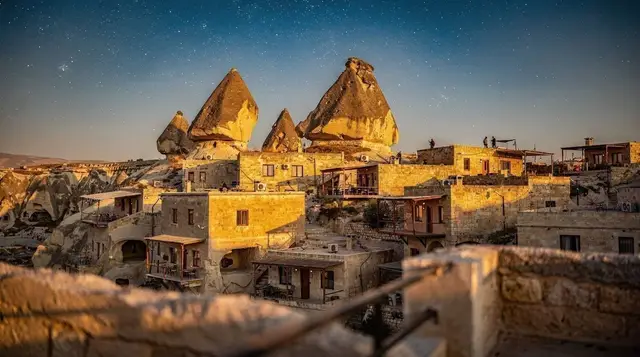
Ramadan and Bayram in Cappadocia
Does Ramadan affect a Cappadocia holiday?
Some family-run restaurants in Göreme and Ürgüp shorten their daytime hours during the Ramadan fasting month, while hotels and businesses set up for international visitors keep serving normally. Balloon flights and organised tours run on their usual schedule throughout. The bigger practical change is Bayram: the three or four public holiday days that follow Ramadan and mark the Sacrifice Feast bring a sharp rise in domestic Turkish travel, with more people at viewpoints, restaurants and on the roads.
What Ramadan and Bayram actually mean for a Cappadocia trip
Turkey is a majority-Muslim country, and Ramadan, the lunar month of fasting observed by many Turkish Muslims, plus the Bayram holidays that follow, are part of the annual calendar here the same way they are anywhere else in Turkey. None of that stops a trip to Göreme from working. What it changes is narrower and more practical than most visitors expect: a handful of local restaurant hours, and a few days of heavier domestic travel around Bayram. This page sticks to those two things — what shifts, and what doesn’t — without getting into the religious observance itself, which is a private matter for the people practising it.
Because the Islamic calendar is lunar, Ramadan and the two Bayram holidays that follow it move roughly eleven days earlier each Gregorian year. That means the exact dates are different every year and it isn’t useful to print a fixed date range on a page meant to stay accurate over time. If your trip falls near either period, a quick search for the current year’s dates before you book is more reliable than anything printed here months or years in advance.
Restaurants: mostly unchanged, with local exceptions
The single most common question visitors ask is whether they’ll be able to get lunch. In practice, yes, almost everywhere.
Cappadocia’s tourism economy is built around international visitors, and the restaurants, cafés and hotels that cater to them run on their normal hours throughout Ramadan. Viewpoint cafés above Göreme, hotel restaurants, and the larger restaurants along the main streets of Ürgüp and Göreme keep serving breakfast, lunch and drinks exactly as they would in any other week. If you’re staying in a cave hotel and eating where most guests eat, you’re unlikely to notice a difference.
Where things can shift is at smaller, family-run places that mainly serve a local clientele rather than tourists — a lokanta tucked away from the main tourist strip, a bakery, a tea house used mostly by residents. Some of these adjust their daytime hours during the fasting month: opening later, closing for a stretch in the afternoon, then reopening for the evening meal when the day’s fast ends. This isn’t a rule and it isn’t universal — it’s a choice each owner makes, and plenty of family businesses keep normal hours regardless. If a specific restaurant matters to your plans, it’s worth checking that it’s open on the day rather than assuming either way.
For guidance on where to eat generally, where to eat in Göreme and where to eat in Ürgüp cover the options that serve visitors normally year-round, Ramadan included. For a wider read on food in the region, see the Turkish breakfast in Cappadocia guide.
Bayram: the part that actually affects your itinerary
Bayram is where the practical impact is real, and it has nothing to do with restaurant hours. Turkey observes two major religious public holidays each year, a shorter one that follows the end of Ramadan and a longer one roughly two months later marking the Sacrifice Feast. Each runs to a multi-day public holiday, typically three to four and a half days depending on the year and how the dates fall against the weekend.
During those days, a large number of Turkish travellers from Istanbul, Ankara and other cities take the time off and travel domestically — and Cappadocia is one of the country’s most popular domestic destinations. The effect is a genuine spike in visitor numbers that has nothing to do with the international tourist season. Cave hotels that would otherwise have availability can sell out for those specific dates, restaurants that serve local groups get busier, and the well-known viewpoints around Uçhisar, Ortahisar and the balloon-watching hills fill up earlier in the morning than usual.
Sites also see more domestic visitors during Bayram. The Göreme Open-Air Museum, already prone to being saturated between 10am and 3pm on an ordinary day, gets an added layer of domestic tour groups and family visits during the holiday. The underground cities and the main valley trailheads see the same effect, though it’s less pronounced away from the handful of marquee sites.
None of this makes Bayram a bad time to visit — plenty of visitors have a perfectly good trip during it — but it’s worth planning around if you have flexibility. Booking cave hotels and any Red Tour or Green Tour seats further ahead than you otherwise would, and building in a bit more patience at the Open-Air Museum and the sunrise viewpoints, covers most of it.
Balloon flights: unaffected
Hot air balloon operations do not pause or scale back for either Ramadan or Bayram. Flights are scheduled every morning that the weather allows, on the same wind and visibility checks described in the hot air balloon guide, regardless of what else is happening on the calendar. Balloon companies serve a mostly international clientele and staff their operations accordingly.
a sunrise balloon flight over Göreme runs on its usual booking and pickup pattern through both periods, including during Bayram itself. The one thing worth doing during Bayram specifically is booking a few days earlier than you might otherwise, purely because hotel pickup logistics and available baskets can fill up faster when the region is busier overall — not because the flight operation itself changes.
Organised tours: also running as normal
The Red, Green and Blue Tours, and the private and small-group options built around them, continue on their usual routes and schedules through Ramadan and Bayram alike. Guides who work with international visitors are generally not fasting-affected in a way that changes how they lead a tour, and vehicles, drivers and site access all operate normally.
a Red Tour with lunch and a guide covers the northern circuit — the Open-Air Museum, Paşabağ, Zelve, Devrent and Avanos — on the same itinerary it runs year-round. If you’d rather cover ground independently, a jeep safari through the valleys is a way to see the terrain away from the busiest fixed stops, which is a genuine advantage if your dates land on a Bayram weekend and you’d rather avoid the thickest crowds at the marquee sites.
For visitors who want the region’s food and wine alongside the sightseeing, a full-day tour with wine tasting pairs valley visits with stops at the wine cellars around Ürgüp — those cellars, like the tour operators themselves, keep their normal opening hours through both Ramadan and Bayram.
What to actually plan around
Put simply, there are two separate things happening and only one of them needs planning around.
| Period | What changes | What doesn’t |
|---|---|---|
| Ramadan (the fasting month) | Some family-run local restaurants may shorten daytime hours | Tourist-facing restaurants, hotels, balloon flights, organised tours, site opening hours |
| Bayram (the holiday days after Ramadan, and again after Kurban) | Domestic visitor numbers rise sharply for 3–4 days; hotels and tour seats can sell out; popular sites and viewpoints get busier | Balloon operations, tour schedules, site access, restaurant service |
If your trip overlaps with Ramadan but not with the Bayram holiday days themselves, the practical difference from any other week is minor — check ahead if you have a specific small restaurant in mind, and otherwise plan as normal. If your trip overlaps with Bayram, book cave hotels and tour seats earlier than you would for the same week in a non-holiday year, and expect the Open-Air Museum, Uçhisar’s viewpoints and the balloon-watching hills to be busier at peak times than the usual crowd patterns would suggest.
Neither period is a reason to avoid Cappadocia, and neither requires reworking an itinerary built around the best time to visit — Ramadan and Bayram move around the calendar independently of season, so they can land in a quiet winter week or the middle of a busy summer one. If you’re already planning by month, Cappadocia month by month covers the seasonal side, and this page covers the calendar side, and the two are worth cross-checking together rather than treated as the same question.
Getting around during Bayram
The other place Bayram shows up is on the road. With more domestic travellers moving between cities, the highways connecting Cappadocia to Ankara, Konya and Kayseri see heavier traffic on the days immediately before and after each holiday, as families drive to visit relatives or take a short break. If you’re arriving or leaving by road on those specific days, or planning a day trip such as the Konya day trip or the Ankara day trip that falls right on a Bayram travel day, it’s worth allowing extra time.
Domestic flights into Kayseri and Nevşehir airports also see a bump in demand around the holiday, so booking those legs earlier than usual is a reasonable precaution. Within the region itself, driving in Cappadocia and getting between villages by dolmuş or rental car works exactly as it does the rest of the year — the extra traffic is concentrated on the intercity routes, not the short hops between Göreme, Uçhisar and Ürgüp.
Costs
Bayram’s demand spike can nudge cave hotel prices up for those specific dates, the same way any other period of high domestic demand would. Outside the Bayram days themselves, Ramadan has no measurable effect on prices — the season (see what a Cappadocia trip costs) is a far bigger factor than the religious calendar. If your dates are flexible by even a few days, shifting a visit to just before or after the Bayram holiday keeps the pricing and crowd patterns closer to a normal week while still landing in the same broad season.
Shaping a day around a busy holiday
If your dates do land on Bayram, the simplest adjustment is to change the order of your day rather than the list of places. Start with the sights that fill up first, and leave the quieter ones for the middle of the day. A morning at the Göreme Open-Air Museum before the domestic groups arrive feels very different from the same visit at midday, and the same logic applies to Paşabağ and Zelve.
Valleys are the natural pressure valve. Walking trails such as Rose Valley, Love Valley or Pigeon Valley spread visitors out over many kilometres of path, so even on a holiday weekend you can find stretches where you meet few people. Meskendir Valley and Zemi Valley are less visited still. For a broader choice of routes, best hikes in Cappadocia lays out the options, and hiking safety in the valleys is worth a read before you set out.
Villages away from the main strip also feel the holiday less. Mustafapaşa, Soğanlı and the quieter corners of Avanos are good places to spend a Bayram afternoon if the centre of Göreme feels crowded. The underground cities follow the same pattern: Derinkuyu and Kaymaklı draw the groups, while the quieter underground cities give you more room.
Evenings, markets and slower moments
Ramadan evenings have a character of their own. Because the fast ends at sunset, local families tend to gather for the evening meal, and small restaurants that kept shorter daytime hours come back to life. If you are curious, eating a little later than usual lets you share in that atmosphere without needing to do anything special. Goreme after dark describes how the village changes in the evening, and Turkish tea and coffee culture is a good introduction to the hospitality you may be offered.
Markets and shops keep their usual rhythm, and Bayram can be a pleasant moment to browse because the mood in town is festive. Local markets day by day explains which towns host markets on which days, and souvenirs worth buying helps you decide what is worth carrying home.
A few courtesies go a long way and cost nothing. During Ramadan, avoid eating or drinking conspicuously in front of someone you know is fasting, and be ready to accept that a local acquaintance may politely decline tea until evening. Dress as you would for any visit to a village or a religious site, and be patient with staff during a busy holiday stretch. A greeting in Turkish is always appreciated, and during Bayram people may wish you a happy holiday, which you can simply return with thanks.
If the crowds still worry you, Cappadocia’s crowds hour by hour shows how much timing matters, and seeing Cappadocia without a tour offers ways to build a flexible plan that you can adjust once you see how busy the holiday really is.
A practical checklist
- Check the current year’s Ramadan and Bayram dates before booking, since they shift roughly eleven days earlier each year.
- If you have a specific small, local restaurant on your list, confirm it’s open on the day if your visit falls during Ramadan.
- If any part of your trip overlaps the Bayram holiday days, book cave hotels and tour seats earlier than you would for an ordinary week in the same season.
- Expect the Göreme Open-Air Museum, the main sunrise viewpoints and popular restaurants to be busier than usual during Bayram; arriving early still works as the main way around it, as it does on any crowded day.
- Don’t rework your plans around Ramadan itself if you’re not booking a specific local restaurant — balloon flights, organised tours, hotels and sites all run as normal.
- Allow extra time for intercity road travel immediately before and after each Bayram if you’re driving to or from Ankara, Konya or Kayseri, or flying on those specific days.
None of this changes the basics of a Cappadocia trip. If you’re still working out the shape of the visit itself, how many days in Cappadocia and a sample three-day itinerary are a better starting point than the calendar — then layer the Ramadan and Bayram dates on top once you know roughly when you’re going.
Seasonal experiences on GetYourGuide
Verified deep-linked GetYourGuide tours. Book through these links and we earn a small commission at no cost to you.
GetYourGuide does not provide a product photo for this activity — the image shows the meeting point, photographed by us.