A mountain range, not a valley walk
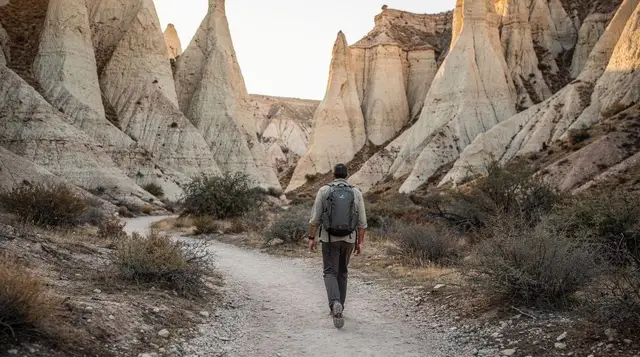
The Aladağlar is easy to spot on a map of the region: a block of grey limestone rising well above 3,000m, sitting south of Niğde while the fairy chimneys and cave churches cluster north around Göreme. It is easy to spot in person too, because it looks nothing like the rest of Cappadocia. Where the valleys around Göreme are soft volcanic tuff, walkable in a morning in ordinary shoes, the Aladağlar is a proper mountain range, with peaks that top out above 3,700m, glacial cirques, and routes that demand hiking boots at minimum and mountaineering equipment on the higher terrain.
This distinction matters because the two get lumped together on itinerary blogs and in casual conversation, both filed under “Cappadocia nature.” They are not interchangeable. A visitor who has just walked Rose Valley or Love Valley in trainers and assumes the Aladağlar works the same way is planning for the wrong trip.
This page treats the massif as what it is: a multi-day trekking destination that needs its own planning, separate from the balloon flight, the open-air museum, and the underground cities that make up a standard Cappadocia stay. If the aim is to tick off a mountain view between a hotel checkout and an evening flight, the Aladağlar is the wrong target — see the note on what actually fits into a one-day itinerary instead.
The massif: scale, geology, and what “trekking” means here
The Aladağlar, part of the wider Taurus mountain system, is a limestone massif rather than the volcanic tuff that shaped the rest of the region. Its highest points sit above 3,700m, with a cluster of peaks, ridgelines, and glacial valleys that make it one of the more serious trekking and mountaineering areas in Turkey. That is a different kind of geology and a different kind of terrain from the eroded cones and cave dwellings around Göreme, and it produces a different kind of walking: multi-day routes between refuges or camps, river crossings, scree and rock sections, and exposure to weather that can shift fast at altitude even when Göreme, an hour or two north, is warm and clear.
None of this is meant to discourage a visit — the range is a genuine destination for hikers who want it — but it does mean setting expectations correctly. A single afternoon does not get anyone into the interior of the park in any meaningful way. What a worthwhile visit actually involves is several days: travel to the gateway villages, a trek planned in advance (independently or with a local operator), overnight stays in mountain refuges or tents, and food and water carried or resupplied along the way.
None of that is exceptional for anyone with trekking experience elsewhere, but it is a wholly different commitment from an afternoon in Pigeon Valley or a morning at the Göreme Open Air Museum.
Cappadocia valley walks versus Aladağlar trekking
| Cappadocia valley walks | Aladağlar trekking | |
|---|---|---|
| Typical length | A few hours, self-guided | Several days, planned in advance |
| Terrain | Soft tuff paths, well used | Limestone mountain terrain, scree, river crossings |
| Elevation | Gentle, around 1,000m plateau level | Peaks above 3,700m |
| Footwear and kit | Trainers or light boots | Hiking boots, layers, mountaineering gear on higher routes |
| Guide | Optional | Strongly advisable, essential for the summits |
| Distance from Göreme | 5–20 minutes | Around 2–2.5 hours to the trailheads |
| Fits into a Cappadocia day | Yes | No |
Getting there: Niğde and the approach
The road into the Aladağlar runs through Niğde, which acts as the hub for the wider south of the region before smaller roads climb toward trailhead villages such as Çukurbağ and Demirkazık. Niğde is worth treating as a waypoint rather than a destination in its own right for anyone heading into the mountains — it has its own sights, but most trekkers pass through rather than linger. From Göreme, reckon on roughly two to two-and-a-half hours to reach the villages nearest the park, longer again to get into the mountains proper, which is part of why this is not a same-day proposition.
On the way south, Gümüşler Monastery, just outside Niğde, is a well-preserved Byzantine rock-cut monastery and one of the more worthwhile stops on the approach road — a good way to see something of this southern region even for travellers who are not planning to trek. A guided day tour that pairs Gümüşler with the approach to the national park is a reasonable way to get a sense of the landscape without attempting the high routes:
a day tour combining Gümüşler Monastery with the approach into Aladağlar National ParkFor a broader loop through the south that also covers the underground cities and Soğanlı, a wider day tour works better than trying to improvise transport with no car:
a South Cappadocia day tour covering the region’s south in one tripTravellers without their own vehicle should note that public transport thins out well before the mountains — this is a route where renting a car (see the notes on driving in Cappadocia and car rental) or arranging a trekking operator’s transfer matters more than it does for the villages immediately around Göreme.
Seasons, weather, and conditions at altitude
The main trekking window runs from late June to September, once winter and spring snow has cleared from the higher routes; before that, snowfields and unstable conditions persist on the peaks even as the lowlands warm up. Weather in the mountains changes faster and more sharply than it does on the Cappadocia plateau — a clear morning in Niğde says little about conditions two hours further into the range — so forecasts should be checked close to departure rather than assumed from the general Cappadocia best time to visit guidance, which is written around the valleys and the balloon flights, not the high peaks.
Regardless of season, this is not a range to underestimate. Basic hiking safety that applies across the region — carrying enough water, wearing proper footwear, telling someone the planned route — matters even more here than in the shorter valley walks; see the general notes on hiking safety in the valleys for the baseline, then add the extra margin that altitude and remoteness demand. Mobile signal is unreliable across much of the park, which is another reason independent trekkers without local experience are better served going with a guide or an established local operator based around Niğde or the trailhead villages.
What a visit actually takes
There is no single fixed itinerary to hand over here, because routes through the Aladağlar vary by ability, season, and how much of the range a group wants to cover — and a guide or trekking operator is the right source for a specific plan, not a generic guide page. What can be said plainly is what it takes in general terms:
- Time: several days at minimum, treated as its own trip rather than folded into a Cappadocia itinerary built around Göreme, Ürgüp, and the underground cities.
- Gear: proper hiking boots, layered clothing for temperature swings, a rucksack suited to multi-day carrying, and — for the higher and more technical routes — mountaineering equipment.
- Logistics: transport to the gateway villages, accommodation arranged in advance (mountain refuges or camping), food and water planned for days without resupply, and ideally a guide or operator with local route knowledge.
- Fitness and experience: this is not a beginner’s introduction to hiking. Fit, experienced walkers can manage lower routes with the right preparation; the summits and glacier-adjacent terrain call for mountaineering background or a qualified guide.
Anyone weighing this up should be honest about the time budget. A trip built around the Aladağlar is a different holiday from the one built around balloon flights and cave hotels — worth doing on its own terms, badly served if it is squeezed into a single afternoon.
If a short trek is more realistic
Not every visitor to the region has a week free for a mountain trek, and that is a reasonable position — the Aladağlar rewards proper time, and a rushed attempt at the higher routes is not a sensible substitute. For travellers who want a taste of serious walking without committing several days, the shorter, quieter valleys further into the Soğanlı area and the approach roads south of Niğde offer more accessible walking, and a guided day out that covers Soğanlı and Kaymaklı gives a sense of the emptier, less-visited south:
a day tour through Soğanlı and Kaymaklı in the quieter south of the regionFor general planning across the wider region — how many days a Cappadocia trip needs, and where a range like the Aladağlar fits against the standard sights — the guides on how many days in Cappadocia and common itinerary mistakes are worth reading before committing either to a rushed detour or an over-ambitious add-on. A structured multi-day hiking itinerary, built around the region’s walking generally rather than the Aladağlar specifically, is covered in the four-day hiking itinerary.
Landscape and wider context
The Aladağlar sits within the broader story of the volcanoes that shaped central Anatolia — though its own limestone geology is distinct from the tuff and ash that formed the fairy chimneys further north, produced instead by older uplift and glacial carving rather than the eruptions of Erciyes and Hasan Dağı.
For context on how the wider landscape came together, the guide on the volcanoes that made Cappadocia covers the tuff-forming eruptions, while a dedicated page on Mount Erciyes covers the other major high-altitude destination in the region, reachable from Kayseri and popular for skiing in winter rather than summer trekking.
Travellers drawn to mountain walking more broadly, rather than the Aladağlar specifically, may also find the round-up of the region’s best hikes useful for comparing the short valley walks near Göreme against more demanding options like this one, and for working out realistically how much walking a given trip has room for.
Aladağlar National Park: what to know before planning a trek
Can you visit the Aladağlar as a day trip from Göreme?
No. The massif sits well south of the tuff valleys, past Niğde, and the walking is on real mountain terrain rather than waymarked valley paths. Anyone treating it as a stop between a balloon flight and an underground city will see a car park and a distant ridgeline, not the mountains themselves.
Do you need a guide to trek in the Aladağlar?
It is strongly advisable, especially for anyone without local experience. Trails are less consistently marked than the Göreme valleys, weather changes quickly at altitude, and mobile coverage is patchy across much of the park. Local guides and trekking operators based around Niğde and the Çukurbağ valley organise routes, permits where needed, and refuge or camping logistics.
What’s the difference between the Aladağlar and the valleys around Göreme?
The Göreme-area valleys are soft volcanic tuff, walkable in trainers over a few hours with no real elevation gain. The Aladağlar is a limestone range with peaks above 3,700m, glacial cirques, and routes that require hiking boots, layered clothing, and in places mountaineering equipment. They are not the same kind of walking.
When is the best time to trek in the Aladağlar?
Late June through September is the main window, once winter and spring snow has cleared from the higher routes. Conditions at altitude can still turn quickly even in summer, so weather should be checked close to departure rather than assumed from Cappadocia’s forecast lower down.
Do you need mountaineering experience for the high peaks?
For the summits and glacier-adjacent terrain, yes, or a guide with the relevant experience and equipment. Lower valley approaches and shorter walks near the trailhead villages are accessible to fit hikers without technical climbing background, but they still require proper boots and multi-day planning, not a spontaneous detour.
Is Niğde a place to stay, or just a gateway?
Niğde functions mainly as the road hub on the way to the mountains, with onward routes to smaller villages like Çukurbağ and Demirkazık that sit closer to the trailheads. Most visitors pass through rather than base themselves there for long, though it has its own sights covered separately.
Can the Aladağlar be combined with the rest of a Cappadocia trip?
As a full trek, not easily within a standard Cappadocia holiday — it needs its own days, gear, and logistics. What does combine well is a shorter day tour into the southern region, taking in Gümüşler Monastery and the approach roads toward the park, which gives a sense of the landscape without attempting the high routes.