Horse riding in Cappadocia: a practical guide
Is horse riding in Cappadocia suitable for beginners?
Some rides are, most aren't automatically. Stables vary widely in the horses they keep and the ground they cover, so a totally inexperienced rider needs to say so when booking rather than assume any advertised ride will be gentle.
Why so many people ride here
Cappadocia has long been associated with horses, and the connection still shows in how easy it is to book a ride from almost any village near Göreme. That heritage is a story told properly elsewhere on this site; what matters for planning a ride today is more practical: the region’s valleys of eroded tuff make an unusually good setting for riding, and a working stable industry has grown up around Love Valley, Rose Valley and Red Valley to serve it. This page sets out what a ride actually involves, so you can work out which kind suits you before booking one.
Riding here is not a single, standard product. Ask three stables in Göreme for “a horse ride” and you can get three different answers: a flat hour on a lead rein, a two-hour trot through open valley, or a route that assumes you already know how to sit a horse on uneven ground. None of that is obvious from a tour listing alone, which is the main thing worth understanding before you book.
What a Cappadocia ride typically involves
Most visitors book one of three formats. A short guided loop, usually one to two hours, covers a single valley or two at a walk and trot, with a guide leading or riding alongside. A sunset or sunrise ride follows a similar route but is timed so you’re at a viewpoint as the light changes, which pushes the duration toward the two-hour mark and usually costs more. Multi-day treks are a different undertaking entirely, riding for several hours a day between overnight stops, and they’re covered on their own page rather than here, since they demand a level of riding fitness a single afternoon ride doesn’t.
For a first outing, a one- or two-hour loop through the valleys near Göreme is the easiest way to test whether riding here suits you, without committing to a longer or more demanding route.
| Ride type | Typical length | Best suited to |
|---|---|---|
| Short valley loop | 1–2 hours | First-timers, families with older children, a taster |
| Sunset or sunrise ride | ~2 hours | Riders comfortable at a walk and trot, wanting the light |
| Multi-day trek | 2+ days | Experienced riders, fitter itineraries |
If you’d rather watch the scenery from the ground, walking the same valleys is covered in a guide to hiking in Cappadocia, and a slower, guided version of valley sightseeing is set out in the comparison of walking, quad biking and horseback.
Your level and the horse’s level both matter
The single most important thing to get right before booking is matching yourself to the right ride, and that cuts both ways. Stables differ enormously in the horses they keep and the training those horses have had. Some maintain calm, well-schooled animals used to carrying nervous first-timers at a walk; others run leaner operations where the horses are fitter, faster and better suited to riders who already know what they’re doing. A ride description rarely spells this out, so it’s worth asking directly: how experienced does the stable expect its riders to be, and how would they describe the horses on this particular route.
If you’ve never ridden before, say so plainly when booking rather than hoping the ride adjusts to you on the day. A guide leading a totally inexperienced rider through a narrow, sloping valley track on a horse that isn’t used to nervous handling is a genuinely bad combination, and it’s avoidable simply by being upfront in advance. A dedicated page on horse riding for beginners in Cappadocia goes into this in more depth, including what to ask a stable before you commit.
Don’t assume a ride is gentle just because it’s marketed toward visitors generally. Plenty of tour listings use the same handful of photographs — a rider silhouetted against fairy chimneys — regardless of what the actual route or horse involves.
Terrain: why this isn’t like riding on a flat trail
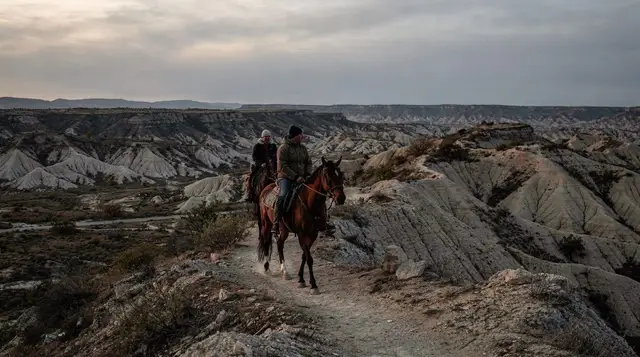
The valleys around Göreme are cut into soft volcanic tuff, and that rock shapes what a ride here feels like more than anything else. Trails are often narrow, with drops to one side, loose dust underfoot that turns slippery after rain, and switchback sections where the path climbs or drops sharply between valley floor and rim. None of this is a problem for a horse that knows the ground, but it is a real factor for a horse that doesn’t.
This is the second half of the matching problem, alongside rider experience: a horse also needs to be genuinely used to Cappadocia’s terrain, not just generally well trained. A horse accustomed to flat paddocks or wide tracks elsewhere can be uneasy on a tight tuff switchback, however good its temperament in open ground. Established local stables know their own horses’ terrain experience; it’s a fair question to ask directly rather than assume from a listing.
Love Valley and Rose Valley are the routes used most often, since their tracks are relatively established and their scenery is what most riders are hoping for. Red Valley and White Valley appear on some routes too, usually combined with one of the others into a longer loop. Which valley you actually ride often depends on recent weather as much as the stable’s usual route — after rain, a guide may switch to firmer ground.
Choosing a stable and a ride
With standards varying this much between operators, a few direct questions before booking do more good than any amount of reading reviews after the fact:
- How long is the ride, and how much of it is walking versus trotting?
- What level of rider does the stable expect, and can they describe the horses accordingly?
- Is a helmet provided, and is it required?
- Is the group led together, or can riders go at different paces?
- What happens if it has rained recently — does the route change?
A stable willing to answer these plainly, and ideally to let you see the horses before you commit, is generally a safer bet than one that simply confirms a time and place. If the horses look thin, listless or reluctant to move when you arrive, that’s a legitimate reason to walk away rather than proceed.
For a ride timed around the light rather than just the terrain, a two-hour ride timed to finish as the valleys turn gold in the evening is the most popular version of this, and it’s covered in more detail, including exactly which valleys it tends to use, in the dedicated sunset ride guide for Love Valley.
What to expect on the day
Rides are usually picked up from your hotel in Göreme, Uçhisar or Ürgüp and driven a short distance to the stable, since the best trailheads aren’t always next to accommodation. Expect a short briefing on handling the horse — how to hold the reins, how to signal a stop — before setting off, even if you’ve ridden elsewhere before, since every horse responds slightly differently.
Groups are typically small, often four to ten riders with one or two guides. Pace is set by the group’s slowest or least confident rider, which is worth knowing if you’re an experienced rider hoping for a faster outing — ask when booking whether faster riders can be grouped separately. Breaks for photographs are built into most routes, particularly at valley viewpoints.
Bring closed shoes with at least a small heel, trousers rather than shorts, and a layer for wind, since valley floors can be noticeably cooler and breezier than the surrounding plateau. Sun protection matters even on a short ride, given how little shade the valleys offer. A reputable stable provides a helmet; if a listing doesn’t mention one, ask before you book rather than assume.
Reading a ride listing before you pay
Most of the confusion around riding here starts with the listing itself. A title such as “valley ride” or “sunset ride” tells you the setting and the time of day, but almost nothing about pace, group size or how the horses are matched to riders. Read the description for the small signals: whether it mentions a briefing, whether it names the valley, whether it says anything about rider level. A listing that is specific on those points usually comes from a stable that has thought about who it is carrying.
Pickup arrangements, the meeting point and what is included are worth checking too, because they affect how the day fits around everything else you have planned. If a ride is meant to sit between a morning activity and an evening one, a vague start time can quietly break the schedule. Where the listing is unclear, a short message to the operator before booking is a normal thing to do and a good test of how the stable communicates.
Choosing between a ride, a walk and a quad
Horses are one of several ways to cover the same valleys, and the right choice depends on what you want from the afternoon. Riding gives you height, a slower pace and a closer feel for the landscape; it also asks for some trust in an animal you have just met. Walking gives you total control of the pace and costs nothing beyond time, and the valley hikes show how much ground a keen walker can cover alone. A quad is faster and louder, and it suits travellers who want movement and a bit of dust rather than quiet; the comparison of the three options lays out the trade-offs.
If your group is split, with one person keen on horses and another not, nothing forces everyone into the same activity. One can ride while the other walks a nearby stretch of the Love Valley walk or relaxes at a viewpoint, and you can meet again at the stable afterwards. Pairing a ride with a more adventurous outing such as a jeep safari across the same landscape from a different angle also works, since the two experiences feel quite different even where they pass the same rocks.
Looking after the horse and yourself
A good ride is a shared effort between rider and animal, and a few habits make it better for both. Sit balanced, keep your heels down, and avoid pulling on the reins for balance on a slope; the horse reads those signals immediately. Listen to the guide on narrow sections and let the horse choose its footing rather than steering it onto what looks like a tidier line. Horses that know the valley generally know where the ground is firm.
Ask the guide before feeding, patting or dismounting anywhere on the route. Dismounting on a slope is a classic source of small injuries, and a stable that runs a tidy operation will tell you when and where to get down. Drink water before and after the ride, since the dry air and the sun are tiring even at a walk, and keep your phone secure rather than reaching for it in the middle of a trot. If something feels wrong, whether a saddle that slips, a stirrup that is badly adjusted or a horse that seems uneasy, say so early; a good guide would rather stop and fix it than carry on.
Pairing a ride with the rest of your trip
A horse ride fits easily into a wider plan because it takes up a defined block of time and leaves the rest of the day free. Many visitors place it on the evening before or after a balloon flight, when the valleys are already part of the itinerary; the Red Tour, Green Tour and Blue Tour explainer helps with the days when you would rather join a group sightseeing day, such as a guided Red Tour that includes lunch, and keep the riding for another afternoon.
If you are still shaping the overall trip, the three-day Cappadocia plan and the slow five-day itinerary both leave room for an unhurried ride, and the photography itinerary suits the sunset version in particular. Riders who like the evening light can also read about Red Valley at sunset to see how the same colours look from the ground.
When to ride
Spring and autumn offer the most comfortable riding conditions, avoiding both summer’s midday heat and winter’s cold and occasional ice on shaded trail sections. Summer rides are best scheduled for early morning or late afternoon rather than the middle of the day. Winter riding is possible but more weather-dependent, and some stables reduce their schedule or close routes entirely after snow. The seasonal guide to the best time to visit Cappadocia covers this in more detail across all activities, not just riding.
Beyond a single ride
A short guided loop is the right starting point for most visitors, and it’s a fair way to judge whether you’d enjoy more time in the saddle. A standard guided ride through the valleys booked through a local stable covers the basics without committing you to anything longer.
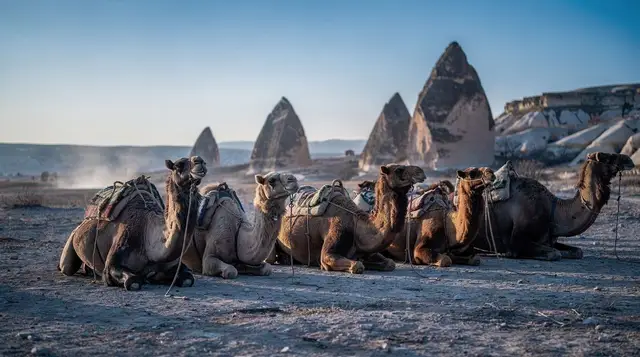
From there, a few more specific options branch off this general picture, each covered on its own page rather than here: riders wanting the light and the views together should look at the sunset ride through Love Valley; anyone starting from zero experience should read the beginner’s guide to horse riding in Cappadocia before booking anything; riders wanting more than an afternoon should look at multi-day horse treks; and visitors who like the idea of the region’s animals but would rather something gentler than a horse can read about camel rides in Cappadocia instead.
The region’s long relationship with horses, including where the name “the land of beautiful horses” comes from, is explored separately in the land of beautiful horses.
If riding turns out not to be your preference after all, the same valleys are just as accessible on foot — see hiking safety in the valleys — or by quad, covered in the guide to ATV and quad tours. Families weighing riding against other options can also check the wider things to do in Cappadocia with kids for age-appropriate alternatives, and general planning notes are gathered on the horse riding category page.
Horse riding in Cappadocia: frequently asked questions
The questions below cover what most first-time riders in Cappadocia want to know before booking; see the sections above for the full detail behind each answer.
Horse riding experiences on GetYourGuide
Verified deep-linked GetYourGuide tours. Book through these links and we earn a small commission at no cost to you.
GetYourGuide does not provide a product photo for this activity — the image shows the meeting point, photographed by us.