Cappadocia in three days: what the extra day adds
What does a third day add to a Cappadocia trip?
A third day is the one day you walk at your own pace instead of on a tour bus schedule, typically a valley hike such as Rose Valley to Red Valley or Göreme to Ortahisar via Meskendir Valley, plus a slower village visit to somewhere like Mustafapaşa or Ortahisar. It also leaves room for one short extra stop, such as Avanos, that a two-day Red and Green Tour itinerary doesn't reach.
What day three changes
Two days in Cappadocia, split between the Red Tour and the Green Tour, covers the open-air museum, the underground cities, Ihlara Valley and most of the northern viewpoints on a fixed schedule with a group and a set lunch stop. It’s an efficient way to see the highlights, and this page doesn’t revisit what’s on those routes — that’s covered on the two-day guide and the Red, Green and Blue Tour breakdown.
A third day is different in kind, not just in coverage. It’s the day you’re not on anyone’s schedule: you choose the pace, stop where you like, and skip a viewpoint if it’s crowded rather than staying because the group is staying. In practice that means three things, usually done across one morning and one afternoon: a valley walk done independently, a slower visit to a village that a bus tour would only glance at, and — if there’s time left over — one short extra stop that the first two days didn’t reach.
Deciding whether the third day is worth it
Plenty of visitors stop at two days and are happy. The case for a third is not that there is more to tick off, but that the trip changes character. The first two days are about arriving, orienting yourself and seeing the places everyone has heard of. The third is where Cappadocia stops being a list and starts being a landscape you move through. If you are still weighing the length of the whole trip, the how many days in Cappadocia guide sets the options side by side, and the three-day itinerary shows how the days can be arranged around this one.
A useful test is how the first two days felt. If you came back to the hotel energised and wanting more time outdoors, day three is for you. If you came back tired and slightly overloaded by the pace of the organised routes, the same day still works, because it is the easiest of the three: no early pickup, no fixed lunch, no group to wait for.
Walking a valley at your own pace
The two valley walks that suit a self-guided day are Rose Valley into Red Valley, and Göreme to Ortahisar by way of Meskendir Valley. Both are walked without a guide by most people who do them, and neither duplicates ground from the organised tours, which pass valley viewpoints by road rather than on foot.
Rose Valley to Red Valley starts from a marked trailhead reachable by taxi or a short walk from Göreme and runs roughly 6 to 8 kilometres depending on where you exit, at an easy pace with stops for photos and a couple of rock-cut churches along the way. Most people finish in 2 to 3 hours. The path forks more than once without signposting worth trusting, so downloading an offline map before setting out is worth the five minutes — mobile signal drops out for stretches along the canyon floor. The Rose Valley hike guide and the Red Valley at sunset guide cover the route in more detail, including where the paths diverge.
Göreme to Ortahisar via Meskendir Valley is a longer option, similar in distance but with more elevation change, and closer to 3 hours end to end. It has the advantage of finishing somewhere with lunch and a clear reason to be there — Ortahisar Castle, a roughly 86-metre rock outcrop with a lookout at the top, plus the town’s old fruit-storage caves.
Either walk pairs well with a short spell in Pigeon Valley or Sword Valley if energy allows, though adding both routes into one day is more than most people want on foot. For a broader view of what else is walkable, the best hikes in Cappadocia guide lists the other options by length and difficulty.
A note on the ground itself: these paths run over tuf, the same volcanic rock that forms the fairy chimneys, and it’s dry, dusty and unshaded on a clear day but genuinely slippery once rain has fallen. Closed shoes with real tread are worth packing regardless of forecast — sandals and worn trainers are the main reason people turn back partway through. The hiking safety in the valleys guide has the fuller list of what to carry, including water; there’s very little shade on any of these routes and heat builds quickly by late morning in summer.
If walking on your own isn’t the preference, a saddle covers similar ground at a similar pace:
a sunset horseback ride through the valleys around Göreme or, for a shorter outing that fits either end of the day:
a one- or two-hour horse riding session near GöremeChoosing between the two walks
The honest difference is in how the walk ends. Rose Valley into Red Valley finishes in open scenery, with the light changing on the rock as the day goes on, and it rewards anyone who likes stopping to look. Göreme to Ortahisar finishes in a town, which makes the logistics easier: there is somewhere to sit down, eat and decide what comes next. If you are travelling with people who tire of walking without a destination, the second is the safer pick. If the main wish is photographs and quiet, the first is.
Whichever you choose, start earlier than feels necessary. Paths are emptier in the first hours, the rock is cooler, and a late start squeezes the village visit that follows. If you want the sunset side of Red Valley rather than a morning walk, the Red Valley at sunset guide explains how to turn the route around, and the Love Valley walk is a gentle alternative if neither longer route appeals. Walkers who finish this day wanting more can look at the Zemi Valley hike on another morning.
Pace yourself around the ground too. Tuf crumbles underfoot at the edges of narrow sections, and the easiest mistake is to look at the view while walking. Stop to look, then walk. Keep phones charged for the offline map, carry water rather than counting on a café, and tell someone at your hotel roughly where you are heading if you are going alone. The solo travel guide has more on walking by yourself.
Slowing down in a village
The second piece of a third day is time in a village rather than a monument. Two suit this well, and picking one rather than splitting the afternoon between both is the better use of the time.
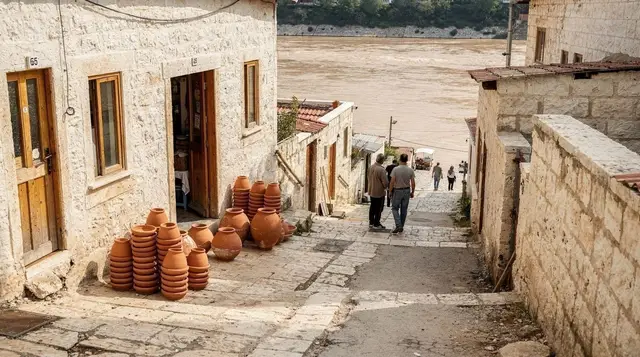
Mustafapaşa, formerly Sinasos, was a Greek Orthodox town until the population exchange of 1923, and its carved stone façades and empty churches carry that history without much explanation on site — worth reading up on beforehand. It’s a walking town: narrow lanes, courtyard doors, no ticketed sites to queue for. The Mustafapaşa and Sinasos guide has the background and a walking order.
Ortahisar feels more lived-in day to day — a working village built around its rock castle, with the fruit-storage caves that once kept citrus fresh for export still in occasional use. If the Meskendir walk above ends here, there’s no need to add it as a separate stop; if you’re driving or taking a dolmuş instead, the Ortahisar guide covers the castle climb and the caves.
What makes a village visit work is doing less. Sit in a café, follow a lane because it looks interesting, read the doorways and carved stone, and let the afternoon take as long as it takes. The villages are where the region’s daily life shows, and they are the part of the trip that organised itineraries compress the most. For food along the way, the Ürgüp eating guide and the guide to eating in Göreme point to places that suit a slow lunch or dinner.
The region is also a long-established wine area, and a slower afternoon is the natural time to fit in a cellar rather than rushing it between tour stops. Ürgüp and the area around Nevşehir carry most of the region’s caves, growing Emir, Kalecik Karası, Öküzgözü and Boğazkere among other local grapes.
a full-day Cappadocia tour that includes a wine tasting stop folds a cellar visit into a day that also covers a village and a viewpoint, which suits travellers who’d rather not plan the wine leg separately.
What to do with time left over
A third day tends to run shorter than the first two if the walk finishes by early afternoon, and that’s deliberate — it leaves room for one more stop without overfilling the day. Two options work well depending on what’s already been covered.
Avanos is the default choice: about 15 minutes from Göreme, on the banks of the Kızılırmak, Turkey’s longest river, and known for red clay pottery worked since Hittite times. Most workshops let visitors try the wheel, and it’s a low-commitment stop — an hour is enough if pottery isn’t the main draw, longer if it is. The Avanos walking guide lays out a route through the workshop district.
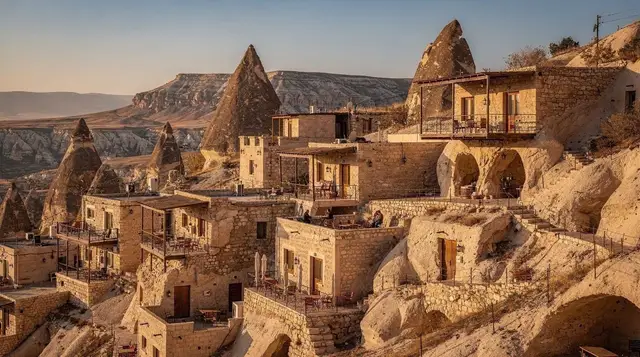
A site the second day’s tour didn’t reach is the other option. Red Tour itineraries typically cover the open-air museum, Paşabağ, Zelve and Devrent Valley, but not always all four depending on the operator, and Green Tour itineraries focus south on the underground cities and Ihlara. If one of those got dropped, this is the natural day to pick it up rather than leaving it out entirely — Paşabağ, with its double- and triple-capped fairy chimneys, is a short, self-contained stop that needs no more than 30 to 45 minutes.
a Paşabağ Valley day tour from Göreme covers that stop with transport included if driving yourself isn’t appealing, and
a Cappadocia castle and valleys highlights tour from Göreme
is a useful fallback for the whole day if the plan above turns out to be more walking than the group wants — it covers Uçhisar Castle and a valley stretch on a set schedule instead.
Adjusting the day to weather and energy
The plan below is a frame, not a contract. Cappadocia’s weather changes through the day, and a morning that starts clear can turn hot or wet by afternoon. If rain arrives, swap the walk for the village visit and move the paths to another day; tuf is a poor surface in the wet, and the rainy day activities guide lists what works indoors. If the heat is the problem, keep the walk early and spend the middle of the day somewhere shaded. If you are visiting in a different season, the best time to visit guide explains what each part of the year does to a day outdoors.
Energy matters as much as weather. A balloon flight at dawn followed by a long walk is a lot for one day, so if you have booked a flight, make day three the lighter version: one village, one short stop, an early dinner. Nothing about the route is lost by shortening it, and the valleys will still be there tomorrow.
A sample day three
| Time | Activity | Notes |
|---|---|---|
| 8:00 – 8:30 | Breakfast, transfer to trailhead | Taxi or short walk from Göreme |
| 8:30 – 11:30 | Rose Valley to Red Valley walk (or Göreme–Ortahisar via Meskendir) | Closed shoes, 2 litres of water |
| 11:30 – 13:00 | Lunch in Ortahisar or back in Göreme | Depends on which walk was taken |
| 13:30 – 16:00 | Mustafapaşa or Ortahisar village visit | Pick one, not both |
| 16:00 – 17:30 | Optional: Avanos or a skipped day-two stop | Short dolmuş or taxi ride |
| Evening | Dinner, early night | Balloon flights, if not already done, need a pre-dawn start |
Treat the times as a rhythm rather than a deadline. The gaps between rows are deliberate: they are where you linger over a view, wait out a shower or simply sit with a tea. If the morning runs long, drop the optional last stop without a second thought. A third day that ends with energy to spare is better than one that ends in a rush, and the itinerary mistakes guide names overpacking as one of the most common errors.
Getting around on day three
Göreme, Uçhisar, Ortahisar, Avanos and Ürgüp are all linked by dolmuş, the shared minibus that runs frequently through the day and less often after dark. That covers most of what this page describes without needing a car. A taxi fills gaps where the dolmuş schedule doesn’t line up, and is the simplest way back from a valley walk that doesn’t end near a dolmuş stop. Anyone driving themselves should note that road signage between villages is inconsistent and that parking in Mustafapaşa’s centre is limited to a small square.
If a car is on your mind, the car rental guide and the guide to getting around without a car set out the trade-offs. For this particular day, the shared minibus and the occasional taxi are enough, and not having to park or navigate is part of what makes the day feel unhurried.
Making the day your own
Because nothing on day three is booked, it adapts easily to who is travelling. Couples may want the sunset angle and a long dinner; friends may prefer the longer walk and a cellar visit; anyone with a less steady stride can keep to the village and skip the valley altogether. The point of the day is choice, so build it around what you enjoyed most on the first two, and leave one hour unplanned.
Who this day suits
A third day earns its place for travellers who found the Red and Green Tours efficient but rushed — the common complaint is not enough time at any one stop, particularly the open-air museum’s Karanlık Kilise or a valley viewpoint the bus only paused at briefly. It suits people comfortable navigating on foot without a guide, and it suits anyone whose interest leans toward walking, wine or slower village browsing over ticking off sites. It suits less well a very short trip, where two days already feels tight, or travellers who prefer everything organised in advance — in which case the highlights tour above is a reasonable substitute for the whole day.
City sightseeing tours on GetYourGuide
Verified deep-linked GetYourGuide tours. Book through these links and we earn a small commission at no cost to you.
GetYourGuide does not provide a product photo for this activity — the image shows the meeting point, photographed by us.