Horse riding in Cappadocia for complete beginners
How long should a complete beginner ride a horse in Cappadocia?
Most stables build a first-timer's ride around 45 minutes to just over an hour in the saddle, well short of the one-and-a-half to two hours sold to confirmed riders. Expect a slow walk for most of it, a short trot on flat ground near the end, and genuine muscle soreness the next morning.
What a first-timer should actually expect in the saddle
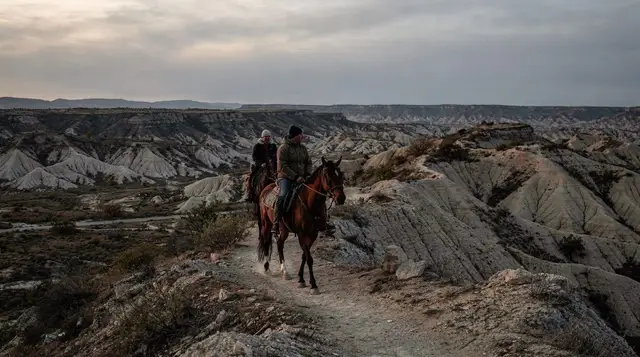
Cappadocia markets itself as horse country, and the valleys around Göreme genuinely suit riding better than most places in Turkey: soft tuf trails, wide valley floors, and centuries of local horsemanship behind the stables that operate here. But most of what gets sold and photographed — a rider silhouetted against Love Valley at sunset, cantering along a ridge — assumes someone who already knows how to sit a horse.
This page is for the visitor who does not. If you have never been on a horse before, the ride you should book, the length you should expect to manage, and the way your body will feel the next morning are all different from what a confident rider experiences, and almost nothing sold locally spells that out clearly before you pay.
For the general overview of operators, terrain and ride types, see the horse riding in Cappadocia guide. This page narrows in on one question: what does a genuine beginner need to know before getting on a horse for the first time here.
How long a beginner can really manage
Sunset and valley rides aimed at confident riders typically run one and a half to two hours, often covering several kilometres through Love Valley or Rose Valley with stretches of sustained trot and occasionally a canter on open ground. That is not what a first-time rider should sign up for, and reputable stables that offer a dedicated beginner or introductory option will keep it shorter.
A realistic first session runs somewhere between 45 minutes and a little over an hour, most of it at a walk. The muscles used to grip and balance on a horse are not the muscles used for walking or standing, and they fatigue quickly in someone who has never used them this way. An hour in the saddle for a first-timer is roughly equivalent, in terms of strain on the inner thighs and lower back, to a much longer ride for someone with riding experience. Stables that keep a beginner in the saddle for the same duration as an experienced group are not doing a novice any favours, however impressive the itinerary looks on a booking page.
| Rider level | Typical ride length | Pace | What is covered |
|---|---|---|---|
| Complete beginner | 45 minutes to just over 1 hour | Mostly walk, short trot near the end | Mounting, steering, balance, a short flat stretch of trot |
| Some riding experience | 1 to 1.5 hours | Walk and sustained trot | Longer valley stretches, more varied terrain |
| Confident/experienced rider | 1.5 to 2 hours | Walk, trot, occasional canter | Full valley routes, sunset or sunrise timing, faster paces |
If you are choosing between a general sunset ride and something built for first-timers, ask directly when booking whether the group will include riders with no experience at all, and whether the pace is adjusted for that. A mixed group with one beginner and several confident riders tends to move at the confident riders’ pace, which is the wrong ride for someone starting from zero.
What you are actually taught before you set off
A beginner session does not begin on the horse. Expect ten to fifteen minutes on the ground first: how to approach the horse, how to hold the reins, where to put your feet in the stirrups, and how to sit — heels down, weight balanced rather than gripping with the knees, shoulders back rather than hunched forward. None of this is complicated, but it matters more than it sounds like it should once you are actually moving.
The walk comes first and takes up most of the ride. At a walk, the horse’s motion is slow and rolling, and this is where balance, rein contact and basic steering are practised. Most beginner rides are led — either the guide holds a lead rope attached to your horse, or the group moves in single file with a guide at the front setting the pace — rather than leaving a first-timer to steer independently through open terrain.
The trot is introduced only once the walk feels settled, usually on a short, flat, obstacle-free stretch near the end of the ride. A trot has a distinct up-and-down bounce that is far more physically demanding than a walk, and a beginner typically manages it in short bursts of a minute or two rather than sustained stretches. Nobody should expect to canter on a first ride, and any operator suggesting otherwise for a total novice is not describing a beginner-appropriate session.
The soreness that catches people off guard
This is the part almost nobody mentions when selling the ride, and it is worth being honest about before you book rather than after. Riding uses muscles that daily walking simply does not: the inner thighs and adductors that grip the saddle, the muscles around the knees and inner calves, and the lower back, which works constantly to keep you upright and absorb the horse’s motion.
For a first-time rider, this soreness is close to universal, and it rarely peaks on the day itself. Delayed muscle soreness typically sets in over the following 24 to 48 hours — you might feel fine that evening and then wake up the next morning finding stairs, sitting down, or getting out of a car noticeably uncomfortable. The inner thighs and the lower back tend to be the worst-affected areas; some riders also feel it behind the knees and in the hips.
None of this is a sign that anything went wrong, and it settles within a couple of days for almost everyone. But it is a genuine reason to think about timing. Scheduling a long hike through Red Valley or a full day on foot in the underground cities for the morning after a first horse ride is not the best sequencing — a gentler day, or one built around sitting for meals and short walks, suits the recovery better. If your Cappadocia trip is only two or three days long, it is worth deciding in advance whether the horse ride goes early or late in the stay; see the Cappadocia packing list for what else to plan around before you go.
What to bring, kept to the basics
The essentials for a first ride are ordinary and do not require special purchases. Closed-toe shoes with a reasonably flat, low heel work best — trainers are fine — since sandals and flip-flops leave your foot poorly placed in the stirrup and offer nothing between your ankle and the leather. Long trousers rather than shorts make a real difference too: bare skin against saddle and stirrup leather over even 45 minutes tends to chafe, particularly on the inner leg. Beyond those two points, equipment requirements vary by stable, so it is worth asking directly what is provided and what is expected of you when you book, rather than assuming a fixed standard applies everywhere.
Where beginner rides actually happen
Beginner sessions tend to stay on gentler, more open ground rather than the narrower, rockier stretches used for longer experienced rides. Love Valley’s wider sections and the flatter approaches near Uçhisar are commonly used for this reason — enough scenery to make the ride worthwhile, without technical terrain that demands a rider who already has independent balance and control.
If your ride is arranged through Göreme’s horseback ride at sunset or sunrise, ask at booking whether the timeslot you are choosing is grouped with beginners or with more experienced riders, since the two are not always kept separate by default.
How this differs from the sunset ride and the general guide
It is worth being specific about what this page is not. The sunset ride through Love Valley is built around timing the light and covering enough ground to make the golden-hour views worthwhile — it assumes a rider who can already walk and short-trot independently, and it is not the place to learn from zero.
The general horse riding guide covers the wider landscape of options: multi-day treks, operators, terrain types and how riding compares with other ways of covering the valleys. This page sits underneath both of those — it is specifically about the version of the experience built for someone who has genuinely never sat on a horse before, and the physical reality that follows.
If a first ride goes well and you want more, the step up is usually a slightly longer valley ride with more sustained trotting, rather than jumping straight to a multi-day trek, which assumes real riding fitness and stamina built up over more than one outing. For a sense of what stables in the region are known for beyond the tourist rides, the land of beautiful horses covers the deeper local relationship with horsemanship in central Anatolia.
Fitness, age and nervousness
You do not need to be athletic to manage a beginner ride — the pace is slow and the physical demand is more about balance and light muscular endurance than strength. That said, anyone with existing back, hip or knee problems should mention it to the stable before booking, since even a walk-paced ride puts sustained low-level strain on those joints in a way that differs from normal activity. People who are apprehensive around large animals generally do better with a guide who leads the horse directly rather than one who simply walks alongside, so it is a fair question to ask when booking.
Children can usually take part in shorter introductory sessions, often led directly by a handler rather than steering independently; for a broader look at what works with kids in the region, see Cappadocia with kids. As with adults, expect a shorter session and more hands-on guidance than an adult beginner ride, and check the stable’s own age and weight guidance directly, since this varies by operator and is not something to assume.
Setting expectations before you book
The single most useful thing a first-time rider can do is separate the ride they are booking from the ride shown in the marketing photograph. A confident rider cantering along a ridge at sunset is not what a beginner session looks like, and it should not be. A good first ride is short, mostly at a walk, led by a guide, and finishes with everyone still comfortable enough to want to try again — not exhausted, sore in the saddle, or nursing a fall. If an operator cannot describe how their beginner option differs from their standard ride in terms of length, pace and group composition, that is worth asking about directly before paying, rather than discovering the difference once you are already mounted.
For those who would rather see the valleys without getting in the saddle at all, walking remains the more forgiving option — see valleys on foot, quad or horseback for how the alternatives compare, and the best hikes in Cappadocia for routes that need no animal and no lesson at all.
If you decide riding is for you, browsing options built specifically around first-timers under horse riding in Cappadocia is a better starting point than a general search, and the same applies if you would rather compare it against camel riding, which uses a different gait and a different set of muscles again.
Frequently asked questions about a first horse ride in Cappadocia
How long should a complete beginner ride a horse in Cappadocia?
Most stables build a first-timer’s ride around 45 minutes to just over an hour in the saddle, well short of the one-and-a-half to two hours sold to confirmed riders. Expect a slow walk for most of it, a short trot on flat ground near the end, and genuine muscle soreness the next morning.
Will I actually be sore the next day after my first ride?
Yes, and it usually surprises people. The inner thighs, the backs of the knees and the lower back take the load in ways that walking never does. Soreness typically peaks around 24 to 48 hours after the ride, not immediately.
Do beginners trot on their first ride in Cappadocia?
Briefly, and only on a short flat stretch, usually near the end of the ride once the horse and rider have settled into a walk together. A full first session spent trotting is not how beginner rides are structured here.
What should I wear for a first horse ride in Cappadocia?
Closed-toe shoes with a low heel and long trousers are the basics; open sandals and shorts make stirrups and saddle contact uncomfortable. Beyond that, this guide does not set out fixed equipment rules, since kit varies by stable.
Is a beginner ride the same as the sunset horse ride in Cappadocia?
No. Sunset and valley rides generally assume a rider who is already comfortable at a walk and short trot, cover more ground, and move at a steadier pace than a first lesson allows for. A true beginner is better served starting with a short introductory ride first.
Can a nervous or unfit adult still try horse riding in Cappadocia?
Generally yes, since a beginner session is built around a slow walk with a guide alongside or leading the horse. Anyone with back, hip or knee problems, or significant apprehension around large animals, should raise it with the stable before booking rather than after mounting.
How sore is too sore, and does it happen to everyone?
Some tightness in the thighs and lower back after a first ride is normal and settles within a couple of days. It is not universal in severity, but almost nobody who has never ridden before walks away feeling nothing, so it is worth planning a lighter next day rather than a long hike.
If riding turns out not to be the fit you expected, the sunset or valley experience is still worth doing once you have some hours in the saddle behind you — see the sunset horse riding tour through Göreme’s valleys for that step up, or spend the day instead on a guided tour of the Göreme Open-Air Museum or the Red Tour with lunch and a guide, both of which need nothing more than a comfortable pair of shoes.
Horse riding experiences on GetYourGuide
Verified deep-linked GetYourGuide tours. Book through these links and we earn a small commission at no cost to you.
GetYourGuide does not provide a product photo for this activity — the image shows the meeting point, photographed by us.