Most pages on this site are about rock formations, cave churches and valleys you can walk in an afternoon. This one isn’t. Sultan Sazlığı is a wetland reserve of marsh and salt lake roughly an hour from Kayseri, and the reason to come is birds, not scenery in the Cappadocian sense. If that doesn’t interest you, this page will save you a long drive - read it before you book anything.
A wetland detour, not a Cappadocia landmark
Sultan Sazlığı sits well outside the belt of fairy chimneys and rock-cut valleys that define Göreme, Ürgüp and the rest of central Cappadocia. It’s a low, flat basin made up of two connected water bodies: a freshwater marsh fed by springs and streams around Sarıkaya, and a shallow salt lake known locally as Yay Gölü or Çöl Gölü further south. The combination of fresh and saline water in one basin, ringed by reed beds and open steppe, is what makes the site ecologically unusual - and it’s listed as a wetland of international importance under the Ramsar Convention.
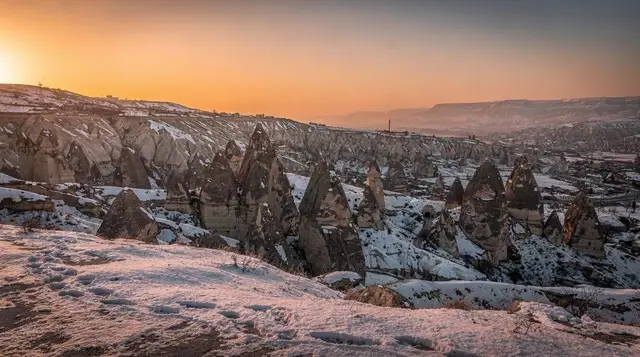
There is nothing here that resembles the rest of this website’s coverage. No cave churches, no underground passages, no eroded stone columns. It’s flat, open, often windy, and largely silent except for the birds themselves. That’s not a criticism - it’s simply a different kind of place, and it needs to be sold honestly as one.
The nearest sizeable town is Kayseri, and this page treats the marsh only in relation to it. Kayseri itself - its citadel, bazaar and museums - has its own coverage on Kayseri day trip; nothing about the city is repeated here.
Why the site depends entirely on timing
This is the single most important thing to understand before planning a visit: Sultan Sazlığı is a migration stopover and breeding wetland, not a permanent wildlife display. Its position on a north-south migration corridor between Africa, the Middle East and Europe means that in spring and again in autumn, large numbers of birds pass through or pause to feed - flamingos on the salt lake, cranes, herons, pelicans and a long list of smaller waders and waterfowl using the marsh edges.
Outside those migration windows, the picture changes considerably. In the dry heat of high summer, water levels in parts of the marsh can drop and bird activity concentrates in fewer, harder-to-reach pockets. In winter, cold and ice reduce numbers further and can make the access roads unpleasant. None of this is fixed to a calendar date - migration timing shifts from year to year with rainfall and temperature - so treat “spring” and “autumn” as the reliable windows rather than looking for a guaranteed week.
The practical consequence is that a visit here is a bet on timing in a way that Göreme’s rock-cut sights simply are not. A cave church looks the same in January and July. A wetland does not.
Who this is actually for
Sultan Sazlığı rewards a narrow but genuine audience: people with an existing interest in birds, wetland ecology or landscape photography who are travelling through the Kayseri side of the region during a migration window. For that traveller, this is a legitimate stop that most Cappadocia itineraries never mention.
For everyone else - travellers hoping for another version of Rose Valley or an underground city, or anyone on a first, short visit trying to see the region’s signature sights - the marsh is a poor use of a limited number of days. It sits closer in spirit to Mount Erciyes and the wider volcanic landscape than to anything in central Cappadocia, and it’s worth reading the guides page for the volcanoes that made Cappadocia if that broader geology is what actually interests you, rather than birds specifically.
If you’re building a first Cappadocia trip and wondering what genuinely counts as a same-day option from Göreme, the honest answer for several tempting-sounding places is “not really” - covered directly on what is not a day trip from Cappadocia. Sultan Sazlığı is a day trip, but a specialist one.
Getting there from Göreme
There’s no direct public transport link, and the marsh sits away from the dolmuş routes that connect Göreme, Ürgüp, Avanos and Nevşehir. Realistically there are two ways in.
Self-drive. The route runs via or around Kayseri, then south toward Yeşilhisar, adding up to roughly an hour and a half to an hour and three-quarters from Göreme depending on the exact road taken and traffic through Kayseri. If you’re driving yourself, it’s worth reading car rental in Cappadocia and driving in Cappadocia first - rural Turkish roads around the marsh are unmarked in places and mobile signal is patchy.
A guided day tour. This is the simpler option and the one most visitors actually use, since it removes the need to navigate unmarked wetland access roads and generally includes an English-speaking guide who knows where the birds currently are - which matters more here than at any fixed monument. a day tour from Cappadocia that pairs Sultan Sazlığı with a nearby waterfall stop is built specifically around this route, and it solves the single biggest problem with a self-drive visit: knowing which part of a large, changeable wetland to actually walk to.
For travellers who want the marsh folded into a wider look at the south of the region rather than as a single-purpose trip, a broader south Cappadocia day tour covers more ground in one outing, though birdwatching time at any one stop is necessarily shorter.
What you’ll actually see
Assuming reasonable timing, the marsh’s boardwalks and a small number of observation points give views over the reed beds and open water without needing to wade in. Flamingos are the headline species on the salt lake side, feeding in the shallows in loose groups; the freshwater marsh around Sarıkaya draws a wider mix, including herons, egrets, and - depending on the season - migrating cranes and pelicans passing through on their route between Africa and Europe.
None of this is staged or guaranteed the way a museum exhibit is. Birds move, water levels change, and a visit on the wrong week can mean a quiet marsh and a distant, hazy view of a few dozen birds rather than the dense concentrations the site is known for. Binoculars aren’t optional here - without them, most of what’s on the water reads as indistinct white and grey shapes rather than identifiable species.
The steppe surrounding the wetland is worth a look in its own right if birds are thin on a given day: it’s the same volcanic-plain landscape that runs toward Mount Erciyes, and on a clear day the mountain is visible from parts of the reserve.
How to spend your time at the marsh
Arrive with a plan for patience rather than a checklist. Birdwatching rewards slow looking: pick a viewpoint, scan the open water first, then the reed edges, then the sky. Many of the best sightings happen when you stop walking and let the marsh settle around you. Early and late in the day are generally the kinder hours for activity and for light, and a guide who has been out recently can point you to the stretch of shoreline where birds are gathering this week rather than last month.
If you photograph wildlife, a long lens makes the difference between a record shot and a picture worth keeping, and a steady hand or small support helps in the wind. Those who usually chase the balloons over Göreme will find a very different rhythm here; the balloon photography spots guide covers the opposite end of the region’s photographic range, and it is a useful contrast if you are deciding where to spend your limited mornings.
Keep your distance from nesting and feeding birds, stay on the boardwalks and marked paths, and keep your voice low. Disturbed flocks lift off and may not return for a while, which spoils the view for everyone else on the day.
Reading the weather before you commit
Because the visit depends on conditions, it pays to look at the forecast a day or two ahead. Strong wind makes the open plain tiring and scatters small birds into the reeds, while a clear, still day gives the best chance of long views across the water and of Erciyes standing on the horizon. If the forecast turns poor, the sensible move is to swap the day for something indoors or underground; rainy day activities in Cappadocia and when the weather turns in Cappadocia help you reshuffle without losing the whole day.
A tour operator can also move or cancel a departure if conditions are bad, which is another quiet advantage of booking a guided outing rather than committing to a long drive alone.
Where this fits in a wider trip
Think of Sultan Sazlığı as a seasoning, not a main course. A trip built around the valleys, the balloons and the underground cities already fills several days, and the marsh works best as a single, deliberate day for those who have the time. Our planning pages for how many days in Cappadocia and Cappadocia in three days show how much the core sights already take, so you can judge honestly whether a wetland day belongs in your plan.
If you would rather see the region without a fixed programme, seeing Cappadocia without a tour and a slow day in Cappadocia offer quieter ways to use a free day, and Cappadocia in autumn and Cappadocia in spring describe the two seasons when the marsh is most worth the journey. For those who like the idea of the south but not the long drive, Ihlara Valley and Derinkuyu are more conventional destinations in the same direction, and an underground-city outing such as a guided visit to the Derinkuyu underground city makes an easy alternative if the birds are not cooperating or the season is wrong.
Practicalities
Entry to the national park area involves a small fee, payable in cash - Turkish lira, since card readers this far from the main tourist circuit are unreliable. There is little in the way of food or facilities beyond a basic visitor point, so bring water and, if self-driving, plan to eat in Yeşilhisar or back toward Kayseri rather than at the reserve itself.
Shade is minimal along the boardwalks, and the open plain means wind and sun exposure can be considerable in both directions - cold and biting in early spring, hot and glaring by midsummer. Closed, sturdy shoes are worth it: marsh edges are soft, and the paths aren’t always dry.
| What to bring | Why |
|---|---|
| Binoculars | Most birds are on open water, well beyond reach of the naked eye |
| Cash (Turkish lira) | Entry fee and any village stops on the way |
| Sun protection | Boardwalks and hides offer almost no shade |
| Closed shoes | Marsh edges are soft and can be muddy after rain |
| A guide or local knowledge | Bird locations shift daily; a fixed viewpoint isn’t enough |
Season by season, honestly
| Season | What to expect |
|---|---|
| Spring migration | Strongest window: highest bird numbers, flamingos and passage migrants likely |
| High summer | Water levels can drop; birds concentrate in fewer spots, numbers thinner |
| Autumn migration | Second strong window, generally more reliable than summer but variable |
| Winter | Cold, sometimes icy access roads; lowest bird activity of the year |
If timing your trip around birds specifically, cross-check against the region’s general climate patterns on best time to visit Cappadocia, and the month-by-month breakdown at Cappadocia month by month - neither page is written for birdwatchers specifically, but both help calibrate expectations for heat, cold and crowding around the wider trip.
Pairing it with the rest of south Cappadocia
Because the drive out here is long enough to justify a full day, most visitors combine it with other south-region stops rather than treating it as an isolated errand. The Kapuzbaşı waterfalls and the Zamantı river sit in the same general direction and are the natural pairing on a self-drive day - it’s the same combination the marshes-and-waterfall tour is built around.
Travellers heading further south toward Niğde and Aksaray sometimes fold the marsh into a longer loop rather than a there-and-back trip from Göreme, though this stretches an already long day considerably and only makes sense with an early start and a car.
For a shorter, more typical south Cappadocia day that skips the marsh but covers the region’s better-known sights - Soğanlı, Kaymaklı and the underground cities - the Blue Tour covering Soğanlı and Kaymaklı is the standard option, and it’s worth reading about on the Soğanlı valley page if that’s a better fit for a first trip than a wetland detour.
If seven days feels like the right amount of time to fit in both the region’s core sights and a specialist stop like this one, Cappadocia in 7 days is a reasonable starting point for structuring the rest of the trip around it.
A realistic way to decide
Ask yourself three questions. Do you already enjoy watching birds, or at least standing still in a quiet landscape for an hour? Will you be in the region during spring or autumn? Do you have a spare day that is not already promised to the valleys, the museums or a balloon morning? If the answer to all three is yes, the marsh is a rewarding and uncrowded change of pace. If any answer is no, you will probably be happier spending the day on the better-known sights, and nothing about that choice is a missed opportunity.
For travellers who stay on the Kayseri side, Kayseri and Mount Erciyes offer more to see in the same general area, and Yeşilhisar is the nearest place to stop for a meal and a rest before or after the reserve. Whatever you decide, go with modest expectations about the birds and generous ones about the quiet: that combination is what makes a day here feel worthwhile.
Booking a tour to Sultan Sazlığı
Independent access is possible, but a guided day tour removes the two real obstacles: finding your way through unmarked wetland roads, and knowing where on a large, shifting site the birds currently are on any given day. the Sultan Marshes and waterfall day tour from Cappadocia is the most direct option for this specific site, typically running as a full-day trip with an English-speaking guide.
For a wider view of the south before committing to the birdwatching-specific route, comparing it against the general south Cappadocia day tour is worth doing - the latter covers more sites but spends less dedicated time at the marsh itself.