Cappadocia and Konya in 4 days
Why add Konya to a Cappadocia trip
Most Cappadocia itineraries stay inside a tight radius around Göreme, and for good reason: the valleys, underground cities and balloon launch sites are all within an hour of each other. This one breaks that pattern on purpose. It pushes about 3 hours south-east to Konya, the city of Mevlana and the whirling dervishes, and gives it a proper night rather than treating it as a long day trip bolted onto a Cappadocia stay.
That trade-off has a cost: this route does not visit Ürgüp or Avanos, both of which sit outside this plan entirely. If you want the full spread of Cappadocia towns, a straight 3-day or 4-day Cappadocia-only itinerary covers more ground. This one is for travellers who specifically want Konya included, and who accept a narrower first two days in exchange.
The two Cappadocia days here are deliberately condensed: Derinkuyu underground city and Ihlara Valley, both reachable without adding a full extra town to the loop. On day 3, the drive to Konya breaks at Sultanhanı, a 13th-century Seljuk caravanserai that sits directly on the historic trade route between the two regions. Day 4 belongs entirely to Konya, a city with a different rhythm and a different kind of significance from the troglodyte landscape you’ll have just left.
Trip overview
| Day | Base | Focus |
|---|---|---|
| 1 | Göreme | Arrival, optional sunrise balloon flight, Derinkuyu underground city |
| 2 | Göreme | Full day at Ihlara Valley, Belisırma, Selime |
| 3 | Konya | Drive via Sultanhanı Caravanserai, afternoon in Konya |
| 4 | Konya → onward | Mevlana Museum, dervish ceremony, return or fly onward |
Day 1: Göreme and Derinkuyu
If your flight timing allows it, book the first available morning for a balloon flight — flights get cancelled for wind on several days a month, more often in spring and winter, so the first morning of the stay is the one with a realistic second chance if it’s called off. Hotel pickup runs about 1 to 1.5 hours before sunrise, and the flight itself lasts 45 minutes to 1.5 hours depending on the package. Prices vary a lot by season and basket size, typically in the 150 to 250 EUR range for a standard shared basket, more for a reduced-capacity one.
book a Göreme sunrise balloon flightAfter landing, spend the late morning easing into Göreme itself before the afternoon’s underground city. Derinkuyu is the deepest of the region’s underground cities open to the public, descending roughly 85 metres across 8 open levels — ventilation shafts, stables, storage cellars, a chapel, and the round stone doors that were rolled across corridors to seal them off. It was only opened to visitors in 1969. The narrow stairs and low passages mean it isn’t a fast visit; budget 1 to 1.5 hours and expect to queue behind school groups at midday.
join an underground cities tour covering DerinkuyuIf you’d rather see the quieter alternative, Kaymaklı has only 4 open levels but wider rooms and lower ceilings throughout, meaning more time spent stooped. Our comparison of the two is worth a look before you decide, though this itinerary is built around Derinkuyu specifically.
Day 2: Ihlara Valley
This is the long day. Ihlara Valley is a 14km canyon cut by the Melendiz river, with around 4km of it walkable between the main staircase — close to 380 steps down — and the hamlet of Belisırma, where lunch is usually served streamside by small family-run places. Along the way are around a hundred rock-cut churches with surviving frescoes, though only a handful are easy to spot without a guide pointing them out.
take a guided Ihlara Canyon tour that also covers SelimeAt the valley’s far end sits Selime, a monastery carved into the cliff face and often nicknamed “the cathedral” for its scale. Most organised tours include it as the last stop before heading back. Given the walking, the steps and the near-total lack of shade in the canyon, wear closed shoes and carry at least 2 litres of water per person, more in summer. Treat this as a half-day-plus commitment once transport is factored in — it isn’t a quick add-on to another stop.
Given that day 1 and day 2 are intentionally focused rather than broad, resist the urge to also fit in Uçhisar or Pigeon Valley here; there simply isn’t time if you want to reach Konya properly rested on day 3. Read more on pacing in how many days in Cappadocia if you’re tempted to compress further.
If the canyon walk sounds like too much, you can shorten it: start at the main staircase, walk as far as feels comfortable towards Belisırma, and let your driver or guide meet you there. The frescoed churches are the reason to come, so it is better to see a few of them unhurried than to tick off the whole length with tired legs. For more on the churches themselves, see our cave churches and frescoes guide, and for trail conditions read hiking safety in the valleys.
Day 3: On to Konya via Sultanhanı
Leave Göreme in the morning for the roughly 3-hour drive or bus journey to Konya, which passes through Aksaray province. Break the trip at Sultanhanı, home to the largest Seljuk-era caravanserai in Turkey, completed in 1229. It’s a fortress-like stone complex that once sheltered merchant caravans and their animals overnight on the trade route linking Cappadocia and Konya — the same route you’re following now, centuries later. Twenty to thirty minutes is enough to see the main courtyard and covered hall.
By self-drive or private transfer, factor Sultanhanı directly into the route; by public bus, note that most services run Nevşehir or Aksaray to Konya without a stop there, so a private transfer or rental car makes this detour far more practical than public transport does. See driving in Cappadocia and car rental in Cappadocia if you’re weighing that option.
Arrive in Konya by mid-afternoon and use the remaining daylight to get oriented — Konya’s old centre is walkable and considerably flatter than anything in Cappadocia. This is also a good moment to reset expectations: Konya is a large, religiously conservative city built around the legacy of Mevlana (Rumi), not a scenic-valley destination, and it rewards a slower, more formal pace than the tour-bus rhythm of Göreme.
Dinner is a good place to feel the change of region. Konya has its own cooking, quite different from the cave-restaurant menus of Göreme, so ask your hotel for a local place rather than defaulting to the first tourist-facing option. Our Cappadocian food guide gives a sense of what regional cooking looks like in this part of Turkey, and much of it carries over.
Day 4: Konya, then onward
Spend the morning at the Mevlana Museum, the mausoleum of the 13th-century poet and mystic Mevlana (Rumi), whose teachings founded the whirling dervish (Mevlevi) order. The museum complex includes the tomb itself, a dervish lodge, and displays of manuscripts and ceremonial objects — plan on 1.5 to 2 hours, more if you want a guided context for the religious history rather than just the building.
arrange a private Konya Sufi-history tourIf your schedule allows an extra evening, a Sema (whirling dervish) ceremony is worth attending here rather than at one of the staged tourist versions sometimes sold in Göreme — Konya is where the practice is rooted, and performances here tend to carry more of the original religious framing rather than being packaged purely as a show.
For the return leg, most travellers backtrack to Cappadocia by bus or car, arriving in time for an evening flight out of Nevşehir or Kayseri airport the following day. If your onward plans point elsewhere in Turkey, Konya’s own airport has domestic connections worth checking before you book, since routes and frequency shift between seasons.
If you would rather not navigate the old centre alone, a local guide makes the museum and the surrounding streets easier to read.
a private walking tour of Konya with a local guideBefore you commit to this route
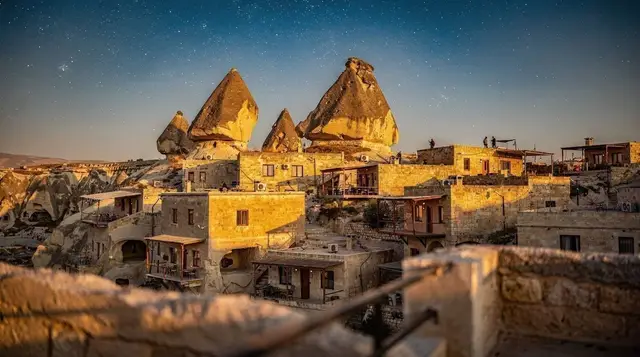
Be honest about what you want from the trip. If fairy chimneys, balloon-filled skies and cave hotels are the main draw, this plan gives you only a taste of them, because two of its four days go to Derinkuyu, Ihlara and the road. If Turkish history and religious culture interest you as much as the scenery, the contrast between Göreme and Konya is exactly the point. Our Konya day trip guide lays out the alternative of visiting from Cappadocia in a single long day, and the guide to what is not a day trip explains why we prefer the overnight.
Plan your clothing around both halves of the route. Göreme is relaxed, while Konya expects modest dress, especially at the Mevlana Museum, so pack light layers that cover shoulders and knees. Our packing list covers the rest. Travelling in a quieter season also helps, since both the underground cities and the museum are calmer outside peak months; see best time to visit Cappadocia before fixing dates.
Budget and logistics summary
| Item | Approximate range |
|---|---|
| Balloon flight (day 1, optional) | 150–250 EUR standard basket, more for reduced capacity |
| Ihlara/Derinkuyu guided day tour | Varies by operator and inclusions |
| Sultanhanı entry | Modest, cash-friendly |
| Mevlana Museum entry | Modest |
| Konya accommodation (1 night) | Mid-range hotel, city-centre |
| Transport Cappadocia–Konya | Bus, private transfer or self-drive |
Carry cash (Turkish lira) for the caravanserai, small Konya eateries and any dolmuş or local transport — cards cover hotels and larger restaurants but not everything on this route.
FAQs about combining Cappadocia and Konya
Is Konya a day trip from Cappadocia?
Not comfortably. Konya is around 3 hours each way from Göreme, so a there-and-back day leaves almost no time in the city. This itinerary builds in one night in Konya instead of trying to squeeze it into a single day.
Do I need a car for this route?
No. Organised day tours cover Derinkuyu and Ihlara, and intercity buses run between Nevşehir/Aksaray and Konya. A car gives more flexibility around Sultanhanı but isn’t required.
Why stop at Sultanhanı on the way to Konya?
Sultanhanı holds the largest Seljuk caravanserai in Turkey, built in 1229 on the old trade route between Cappadocia and Konya. It sits directly on the road, so it costs little extra time and makes the historical link between the two regions tangible.
Does this itinerary cover Ürgüp or Avanos?
No. To fit Konya in without rushing, the Cappadocia side of this trip is deliberately narrowed to Derinkuyu and Ihlara Valley. Ürgüp and Avanos are better covered on a standard 3 or 4-day Cappadocia-only itinerary.
What’s different about Konya compared to Göreme?
Konya is a large, conservative Turkish city built around the shrine of Mevlana (Rumi) and the Mevlevi Sufi order, not around fairy chimneys or cave hotels. Dress modestly, expect a slower and more formal pace, and don’t expect the troglodyte scenery to continue.
Can I fly out of Konya instead of going back to Cappadocia?
Konya has its own airport with domestic connections, which some travellers use to avoid backtracking. Check current routes before booking, since schedules on this route change between seasons.
How much walking does this itinerary involve?
The heaviest day is Ihlara Valley, with several kilometres along the canyon floor and around 380 steps down at the main entrance. Derinkuyu involves stooped walking through narrow passages. Konya itself is flat, easy walking between the main sites.
Best day trips from Cappadocia on GetYourGuide
Verified deep-linked GetYourGuide tours. Book through these links and we earn a small commission at no cost to you.
GetYourGuide does not provide a product photo for this activity — the image shows the meeting point, photographed by us.