Where Zemi Valley sits, and why it looks different
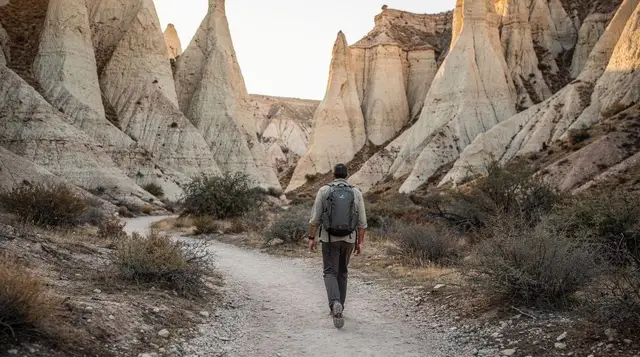
Most of the valleys around Göreme are studies in bare rock: pale tuff, pink and red mineral streaks, the odd fairy chimney standing alone in dust. Zemi Valley is the exception. A stream runs along its floor, fed by irrigation channels that local families have maintained for generations, and that water supports poplar trees, small orchards and vegetable plots wedged between the cliffs. Walk in from Göreme and the change is immediate — the path drops from open, sun-baked ground into a corridor of green.
The valley connects the edge of Göreme with Çavuşin and, via a longer route, up toward Uçhisar. It sits close to Rose Valley and Red Valley, and the three are often walked in combination, since paths cross between them at several points. Zemi is the connector that makes the whole loop pleasant rather than punishing, because it is the one stretch where you are not fully exposed.
This is not a site with a headline monument. There are no major rock-cut churches here to rival the Göreme Open Air Museum, and no ticket booth. The valley’s appeal is entirely about landscape and relief — a green, shaded contrast to the region’s dominant palette, not a historical stop. Treat it that way and it earns its place on an itinerary; treat it as a must-see monument and you will be disappointed.
The green contrast, and what actually creates it
The orchards and gardens in Zemi Valley exist because of irrigation, not because the valley naturally holds more water than its neighbours. Local growers channel water along the valley floor to keep fruit trees, vines and vegetable patches alive through a dry summer. That distinction matters for anyone planning a visit: the greenery is a managed, seasonal feature, not a permanent geological trait like the tuff formations themselves.
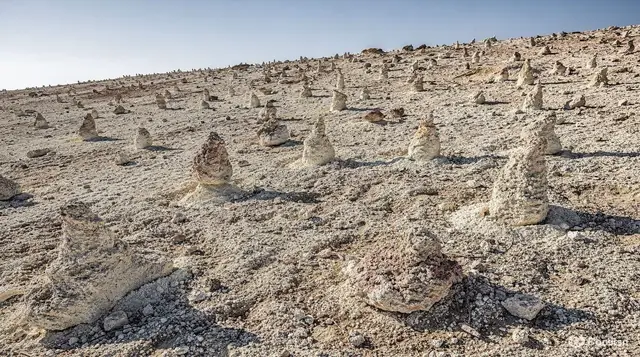
Compared with Love Valley, where slender fairy chimneys rise from open, mineral ground with almost no vegetation, or Red Valley’s exposed ridge walks with their famous sunset colours, Zemi reads as domestic and lived-in. You pass working plots, low stone walls, the odd irrigation channel crossing the path. It is quieter in tone as well as in visitor numbers — most day-trippers heading through this stretch of valleys are drawn to the more photogenic rock formations of Rose and Red, and pass through Zemi as connective tissue rather than a destination in its own right.
That relative obscurity is part of the appeal. Zemi does not appear on the standard Red, Green or Blue tour routes sold in Göreme, so anyone walking it is doing so independently or as part of a private hike, which keeps the path noticeably calmer than the museum sites and headline valleys.
Shade, terrain and what to expect underfoot
The path through Zemi Valley is broadly similar underfoot to the rest of the region: compacted tuff and dirt, dusty and firm in dry weather, slick after rain. What differs is the tree cover. Poplars and fruit trees along the stream throw genuine shade over sections of the walk, which is a real advantage in a region where hiking routes are otherwise almost entirely exposed to direct sun.
That shade is not continuous. Expect alternating stretches — open ground between orchard plots, then a shaded run along the stream, then open ground again. It is a welcome break rather than a fully covered walk, and it should not be mistaken for a shaded trail end to end. Sturdy, closed shoes are still the right call: tree roots, uneven stone and the odd irrigation channel crossing the path are easy to catch a foot on, more so than on the open ridgelines nearby.
Distances are modest. A direct walk through the valley between Göreme and Çavuşin takes roughly 45 minutes to an hour at an easy pace; allow closer to two hours if combined with a loop through Rose Valley, or longer again if you continue on toward Uçhisar. Carry water regardless of the shade — the irrigation channels are for the orchards, not for drinking, and there is nowhere to refill along the path.
A seasonal warning worth taking seriously
The single biggest mistake in planning a Zemi Valley visit is assuming the greenery looks the same year-round. It does not. The orchards depend on active irrigation through the growing season, and by late summer — August into September — the vegetation is visibly thinner and drier than it is in spring. Leaves start to turn and drop through autumn, and by winter the trees are bare and the valley reverts to something much closer to its rocky neighbours, minus any real shade.
| Season | What to expect in Zemi Valley |
|---|---|
| April–June | Fullest, greenest walk of the year; orchards in leaf, stream running |
| July–August | Greenery still present but drier and dustier; shade thins as the season wears on |
| September–October | Noticeably less lush than spring; still walkable and cooler than exposed valleys |
| November–March | Bare trees, little to no shade; the valley looks closer to Red or Rose Valley in this state |
If the reason you want to walk Zemi is specifically the green contrast, plan for spring or early summer. If you are visiting in winter and expecting the same photographs you have seen online, adjust expectations — you will find a quiet valley walk, not the lush corridor pictured in most guides.
Getting there from Göreme
Zemi Valley starts a short walk from central Göreme, heading in the direction of Çavuşin. There is no dolmuş stop inside the valley itself and no vehicle access along the walking path, so this is a route covered on foot. From the centre of Göreme, the trailhead is roughly a 10 to 20 minute walk depending on where you start, making it one of the more accessible valley walks in the area — no transfer, no tour booking required.
Most visitors combine Zemi with one or both of its neighbours. A common route runs from Göreme through Zemi and into Rose Valley, exiting near Çavuşin, or continues further to loop back via Red Valley. None of these paths are signposted to museum standard — junctions can be unclear, and paths occasionally split without leading anywhere useful. Downloading an offline map before setting out is worth the five minutes it takes, since mobile signal drops in the lower stretches of most valleys here, Zemi included.
For a longer day combining several valleys and a guided route through the wider national park, a structured hike is the simpler option:
a full-day guided hike through the national park’s valley network covers ground independent walkers might otherwise miss, and takes the map-reading uncertainty out of the equation.
What to see and do along the way
There is no single landmark to aim for in Zemi Valley — the point is the walk itself. A few things worth watching for:
- The orchards and gardens — small, actively worked plots between the cliffs, often visible from the path rather than fenced off. This is someone’s livelihood, not a display, so stick to the marked route rather than wandering into planted ground.
- Irrigation channels — simple stone and earth channels carrying water along the valley floor, the mechanism behind the greenery. A few cross the path directly.
- Fairy chimneys at the valley edges — Zemi is not free of the region’s signature rock formations, it simply sits them alongside greenery rather than bare ground, which makes for a different kind of photograph than the stark shots typical of Love Valley walks or Red Valley at sunset.
- The transition points — where Zemi meets Rose Valley or the approach to Çavuşin, the landscape shifts back to open rock within a few minutes’ walk, which is a good way to see the contrast in person rather than take it on faith.
None of this requires a ticket or an official entrance. There is no visitor centre, no marked opening hours, and no fee for walking the path — a genuine difference from the Göreme Open Air Museum a short distance away.
Combining Zemi with the rest of the valley network
Zemi rarely works as a stand-alone destination for a full day; it is better treated as one leg of a longer valley walk. A typical combination:
| Route | Approximate time | Character |
|---|---|---|
| Göreme → Zemi → Çavuşin | 45–60 minutes | Shortest option, green corridor into the old village |
| Göreme → Zemi → Rose Valley → Çavuşin | 2–2.5 hours | Mixes shaded orchard walking with open rock and colour |
| Göreme → Zemi → Rose Valley → Red Valley loop | 3.5–4.5 hours | Full valley day, shade at the start, exposed ridgelines later |
For anyone planning several valley walks over more than one day rather than cramming them into a single afternoon, a slower-paced itinerary spreads the walking out and leaves room for the underground cities or Ihlara Valley on separate days — see the best hikes in Cappadocia guide for how the valleys fit together, and hiking safety in the valleys before setting out on any unmarked stretch.
Travellers building a short trip around walking specifically, rather than balloon flights and underground cities, are better served by a dedicated hiking-focused schedule — see the 4-day hiking itinerary for a version that treats Zemi as one stop among several rather than the main event.
Watching Cappadocia from above first
Zemi Valley’s green stripe against the surrounding tuff is genuinely more legible from the air than from inside it — one of the clearer reasons to see the region by balloon before walking it on foot. A sunrise flight over this stretch of valleys shows the pattern of irrigated green against bare rock in a way that is hard to piece together on the ground:
a sunrise hot air balloon flight over the Göreme valleysFor those who would rather watch than fly — a fair choice given how often flights are weather-dependent — a ground-based option covers the same sunrise spectacle without the altitude:
a guided balloon-watching tour timed to the morning launchPractical notes
Zemi Valley has no facilities of its own — no toilets, no café, no shop. Carry water and any snacks before setting out; the nearest places to eat or refill are back in Göreme or in Çavuşin at the far end of the valley. There is no cost to walk the path and no opening hours to plan around, though walking in full daylight is sensible given the uneven ground and the lack of lighting.
Phone signal is patchy in the lower, tree-covered sections, which is worth knowing if you are relying on a map app rather than an offline download. The path is not lit, gated or patrolled, so plan to be out before dusk — dusk itself is a good time to be higher up in Red Valley for the colour, not down in Zemi navigating tree roots in fading light.
Dogs are occasionally present along valley paths in this area, generally strays rather than aggressive animals, but it is worth being aware of if travelling with children or anyone nervous around dogs.
Zemi Valley questions answered
Is Zemi Valley worth visiting if I only have one day in Cappadocia?
Probably not as a stand-alone stop. With a single day, priorities are usually the Göreme Open Air Museum, a balloon flight if the weather allows it, and one open valley walk such as Rose or Red. Zemi fits better as a short connecting leg between those, walked in passing rather than sought out deliberately — see Cappadocia in one day for how a tight schedule usually breaks down.
How does Zemi Valley compare to Love Valley or Red Valley?
Zemi is greener, shadier and quieter, but it lacks the dramatic rock formations that make Love Valley and Red Valley photogenic. Love Valley’s tall, isolated fairy chimneys and Red Valley’s colour at sunset are the region’s signature images; Zemi’s appeal is contrast and relief from the sun, not a standout landmark of its own.
Can I walk Zemi Valley without a guide?
Yes. The path is unmarked in places and junctions can be unclear, but it does not require technical skill or a guide to walk. An offline map is the main precaution worth taking, along with water and sturdy shoes. Anyone who prefers a structured route with local knowledge built in can join a guided hike covering this and neighbouring valleys instead.
Is Zemi Valley shaded the whole way?
No. Shade comes from orchard trees along stretches of the path near the stream, alternating with open ground between plots. It offers noticeably more relief from direct sun than fully exposed walks like Love Valley, but it is not a continuously covered route.
When does Zemi Valley look its greenest?
April through June, when the orchards are in full leaf and the irrigation is actively running. By late summer the vegetation thins and dries out, and through winter the trees are bare, leaving a much starker landscape closer to the region’s other valleys.
Does Zemi Valley have an entrance fee?
No. There is no ticket booth, gate or fee for walking through Zemi Valley, unlike the Göreme Open Air Museum or the underground cities. It is an open path through a working agricultural landscape.
How long does it take to walk through Zemi Valley?
A direct walk between Göreme and Çavuşin through Zemi takes roughly 45 minutes to an hour. Combined with Rose Valley it stretches to around two to two and a half hours, and a fuller loop taking in Red Valley as well runs closer to four hours.
Is Zemi Valley suitable for children?
The terrain is generally gentler than the more exposed valley walks, and the shade helps on a hot day, but uneven ground, tree roots and occasional stream crossings still call for supervision. It is a reasonable choice for families wanting a shorter, cooler walk rather than a full ridge hike.