A valley most itineraries never mention
Erdemli Valley sits in the south of the Cappadocia region, close to the small town of Yeşilhisar, which is worth knowing as a landmark on the map rather than as a destination in itself here. This part of Cappadocia — the country around Soğanlı, Niğde and Kayseri — sits well south of Göreme, past the underground cities and past Ihlara, in the stretch of the region that the organised tours barely touch.
If you already know Cappadocia’s tour system, this matters. The Red, Green and Blue tours sold from every agency in Göreme cover a fixed set of stops, and Erdemli Valley is not one of them, even on the Blue Tour, which is the one that goes furthest south. There is no operator running day trips here, no fixed itinerary, and — as far as we can confirm — no ticket booth, no marked trailhead and no official signage pointing walkers into the valley from the road.
That is not a hidden gem being kept off the tourist trail on purpose; it is simply a valley that has never been built out for visitors the way Ihlara or Göreme’s open-air museum have been. Treat it as exactly that: a quiet, under-documented rock-cut valley, not a secret major site that everyone else is missing.
This page exists for a specific kind of visitor: someone who has already spent a day in Ihlara Valley, already walked the churches of Soğanlı, has a rental car, and wants one more valley to explore on their own terms rather than a repeat of a site they have already seen. If that is not you — if you are relying on dolmuş or booked tours to get around — this is honestly not a realistic stop, and you are better served by the valleys around Göreme itself, which are close together and easy to reach without a car.
Getting there: this is a self-drive destination
There is no practical way to reach Erdemli Valley without your own transport. It sits south of the main Cappadocia loop, off the routes that dolmuş minibuses run between Göreme, Ürgüp, Avanos and Nevşehir, and off the fixed stops of the Red, Green and Blue tours. A taxi from Göreme would mean a long return fare with an uncertain wait, and there is no shuttle or public bus that serves the area.
In practice that means a rental car (see our notes on hiring a car in Cappadocia and on driving conditions in the region if this will be your first time driving here) is the only realistic way in. Roads in this part of the region are mostly quiet rural routes rather than dual carriageway, and mobile signal can be patchy once you are off the main roads, so download offline maps before you set out and don’t rely on real-time navigation to find the valley entrance. Ask locally in Yeşilhisar if you are unsure of the approach — a rock-cut valley like this is usually known to residents even where it has no signage for visitors.
Budget the return trip from Göreme at around an hour to an hour and fifteen minutes each way, in the same range as driving to Soğanlı or Niğde, though we’d treat that as an estimate rather than a fixed figure until you’ve checked current road conditions and your own route. Combined with walking time in the valley, that makes Erdemli a natural stop to fold into a longer day around the south of the region rather than a there-and-back trip on its own.
What the valley actually looks like
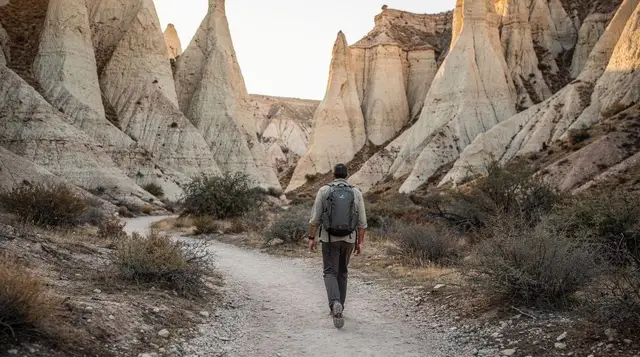
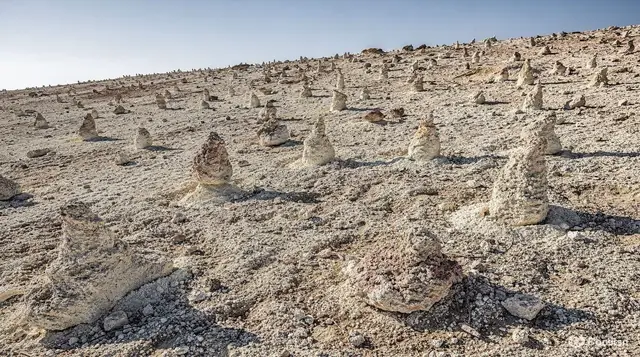
Erdemli Valley shares the same geology as the rest of Cappadocia: soft volcanic tuff, laid down by eruptions from Erciyes and Hasan Dağı and then cut by water and wind over millions of years into cliffs, gullies and rock faces riddled with man-made openings. As in the better-known valleys, that softness is what let people carve chambers directly into the rock here — for storage, for shelter, for churches — over centuries, using nothing more than hand tools.
Beyond that general picture, we’re deliberately not going to describe specific chambers, named churches or fresco cycles for Erdemli Valley in this guide. Unlike Soğanlı or the Göreme open-air museum, where individual churches are documented, dated and named, Erdemli is not a site with a settled, publicly available record of what’s inside it. If you visit and find rock-cut rooms, storage niches or chapel-like spaces, treat that as part of the same regional pattern rather than assume it matches any specific description you may have read elsewhere — including this one.
What you can expect with more confidence is the valley itself: a cut in the tuff plateau, walls of soft rock in the same pale, layered colours as the rest of the region, and the quiet that comes from a site that gets a handful of visitors a week rather than hundreds a day. Bring a torch if you plan to look into any openings — carved interiors in Cappadocia are almost always unlit.
Walking it: paths, time and what to expect underfoot
Assume there is no maintained trail. Valleys like this one are walked on informal paths worn by occasional foot traffic and by shepherds moving animals, not laid out and marked for tourists the way the main hiking valleys near Göreme increasingly are. That means route-finding is on you: carry a downloaded map, note your entry point clearly, and don’t assume a path that looks promising will lead anywhere useful — in Cappadocia’s valleys, tracks routinely split, fade out, or dead-end at a rockfall.
The walking itself follows the same rules as any other valley cut into tuff: dry, dusty ground that turns slick and unstable after rain, very little shade for most of the day, and loose scree in places. Two to three hours is a reasonable estimate for a walk here without a fixed circuit to follow, but that depends entirely on how far you go and how much time you spend exploring side-cuts rather than moving through.
For general guidance on walking Cappadocia’s valleys safely — footwear, water, heat and what to do if a path runs out — see our hiking safety guide and our roundup of the region’s best hikes, both written for valleys that, like this one, aren’t signposted end to end.
Mobile signal should not be relied on once you’re down in the valley itself, so let someone know your rough plan before you set off, and turn back rather than push on if a path becomes unclear or unstable.
What we don’t know, and won’t invent
To be direct about the limits of this page: we have not confirmed a ticket office, an official entrance, waymarked trails, or opening hours for Erdemli Valley, and we’re not going to invent any of those to make the site sound more developed than it is. If that infrastructure exists or changes, treat any signage or ticket arrangement you find on the ground as the current truth rather than anything written here.
What that also means practically: don’t expect a car park, a café, toilets, or anyone selling water. Come prepared as you would for any unmarked walk in this region — full water bottles, cash for fuel, and no assumption that facilities will appear once you arrive.
How it compares to Ihlara and Soğanlı
If you’re deciding whether Erdemli Valley is worth the detour, the honest comparison is with the two valleys most visitors will already have done by the time they’re considering it.
| Ihlara Valley | Soğanlı | Erdemli Valley | |
|---|---|---|---|
| Access | Paved road, main staircase, well used | Paved road, small visitor area | Unmarked, self-drive only |
| Typical crowd | Busy at midday in season | Light, occasional tour groups | Very light to empty |
| Marked path | Yes, along the canyon floor | Yes, short circuits | No confirmed marked trail |
| Known churches/frescoes | Yes, well documented | Yes, several named churches | Not documented for this guide |
| Time needed | Half a day | 1–2 hours | 2–3 hours, variable |
| Reachable without a car | Yes, via organised tour | Yes, via the Blue Tour | No |
The short version: Ihlara and Soğanlı are set up, to different degrees, for visitors — paths, some signage, and in Ihlara’s case real crowds in high season. Erdemli is not set up for anyone. It’s a fair next step only if what you actually want is quiet over infrastructure.
Combining Erdemli with a south Cappadocia day
Because it sits off any fixed circuit, Erdemli Valley works best folded into a longer, self-driven day around the south of the region rather than visited alone. A workable loop from Göreme might take in Soğanlı and its rock-cut churches, continue south toward Niğde and the Gümüşler area, and use Erdemli, near Yeşilhisar, as a quiet stop somewhere in between — timing depends heavily on how long you spend walking each site, so build in slack rather than a tight schedule.
For a fuller comparison of what a day in this part of the region can realistically cover, our guide to a day trip toward Aksaray and Güzelyurt covers similar ground further west, and our notes on the Soğanlı valley guide are the closest match in tone to what you’ll find at Erdemli — quiet, church-scattered, and light on facilities.
If you’d rather not self-drive the whole loop, a guided option that covers the wider south Cappadocia area can be a reasonable substitute for everything except Erdemli itself, which no tour currently reaches. The South Cappadocia Tour covers several of the region’s quieter southern sites in a single organised day, and the Blue Tour taking in Soğanlı and Kaymaklı is the closest a booked tour gets to this part of the map.
Neither substitutes for the valley itself, but both are sensible ways to see the surrounding area if you decide against renting a car for seeing Cappadocia without a tour.
For travellers who want Gümüşler’s monastery and a food-focused day added to the same part of the region, the Gümüşler history, food and culture tour covers nearby ground, and those specifically looking for a walking-focused day rather than a sightseeing loop might compare it with the full-day hiking tour of the national park, which stays closer to Göreme but gives a sense of what a guided walking day in the region looks like if self-driving to Erdemli isn’t for you.
What to bring
- A full car of fuel — services thin out south of the main tourist towns.
- At least two litres of water per person; there is nowhere to buy more once you’re off the main road.
- Closed, sturdy footwear; tuff paths are dusty and loose underfoot.
- A downloaded offline map, since mobile signal can drop out in the valley.
- A torch, in case you come across unlit rock-cut openings.
- Cash in Turkish lira for fuel and any small local purchases — cards are unreliable this far off the main circuit. For a general sense of what a day in this part of the region costs, see our guide to what a Cappadocia trip costs.
Erdemli Valley: frequently asked questions
Is Erdemli Valley signposted from the main road?
We have not been able to confirm official signage or a marked trailhead for Erdemli Valley. Don’t rely on road signs to find it — check locally in Yeşilhisar and use an offline map, and be ready to ask directions if you can’t locate the entrance.
Do I need a guide to visit Erdemli Valley?
No guide currently runs trips specifically to Erdemli Valley, so a guide isn’t an option even if you wanted one. Visiting means going independently, with your own navigation and your own judgement about which paths look safe to walk.
Can I reach Erdemli Valley by dolmuş or an organised tour?
No. It isn’t served by the dolmuş network that connects Göreme, Ürgüp, Avanos and Nevşehir, and it isn’t a stop on the Red, Green or Blue tours, including the Blue Tour, which goes furthest south of the three. A rental car is the only practical way in.
Is there an entrance fee for Erdemli Valley?
We have no confirmed information about an entrance fee, ticket office or opening hours. Budget your day assuming there may be no facilities of any kind, and treat anything you find on-site as current information rather than anything stated here.
How does Erdemli Valley compare to Soğanlı and Ihlara?
It’s quieter and considerably less developed than both. Ihlara has a paved staircase entrance and a marked canyon-floor path; Soğanlı has a small visitor area and several named, documented churches. Erdemli has neither the infrastructure nor the documentation — it suits visitors who have already seen those two and specifically want a quieter, less-developed valley rather than a bigger sight.
What should I bring for a walk in Erdemli Valley?
Sturdy closed shoes, at least two litres of water per person, a downloaded offline map, a torch, and cash — there are no shops, cafés or fuel stations you can count on near the valley itself.
Is Erdemli Valley suitable for children or visitors with limited mobility?
Not comfortably. With unmarked paths, loose tuff underfoot and no facilities, it suits capable, independent walkers rather than young children or anyone who needs level, maintained ground. Families wanting a rock-cut valley with more structure are better off at Soğanlı or Ihlara.
Is Erdemli Valley an underrated must-see site?
No — and we’d rather be direct about that than oversell it. It’s a quiet, little-documented valley worth an add-on stop for self-drive visitors who have already covered the region’s main rock-cut sites and specifically want somewhere quieter, not a major attraction that’s been overlooked.