Hattusa: the Hittite capital day trip from Cappadocia
Is Hattusa worth visiting from Cappadocia?
Hattusa is worth it if you have a genuine interest in Hittite or ancient Near Eastern history, since it is a UNESCO World Heritage capital with monumental gates and a rock sanctuary. It is not visually striking the way the Goreme valleys are, the site is very spread out, and the round trip from Goreme takes roughly five hours, so it needs a dedicated full day rather than a half-day add-on.
Hattusa was the capital of the Hittite Empire, a Bronze Age power that rivalled Egypt in the second millennium BC. It sits roughly 2 hours 30 minutes north-east of Göreme by road, well beyond the cluster of villages, valleys and underground cities that make up most Cappadocia itineraries. That distance is the first thing to plan around: this is not a stop you tack onto another destination, it is a full day on its own.
Why Hattusa needs a full day, not a half-day
The round trip from Göreme is around five hours of driving before you factor in any time on site. Add 2 to 3 hours to see the main areas of Hattusa properly, plus another 20 to 30 minutes at the nearby rock sanctuary of Yazılıkaya, and a realistic day runs from an early departure to a late-afternoon return.
There is no way to compress this into a half-day trip alongside somewhere else nearby, because nothing else of comparable interest sits on the same road. Compare this with the shorter, better-known trips covered in what counts as a genuine day trip from Cappadocia: Hattusa is at the outer edge of what is reasonable to do in a single day, not a stretch beyond it, but it is firmly a full-day commitment.
Most visitors go one of two ways: an organised tour that handles the driving and provides a guide who can explain the layout and history on site, or a self-drive rental car for those comfortable with several hours behind the wheel on Turkish highways. There is no meaningful public transport option connecting Göreme to Hattusa, so travellers without a car or a booked tour are effectively excluded from visiting.
| Option | Time from Göreme | What it includes |
|---|---|---|
| Organised day tour | ~2h30 each way | Transport, guide, usually lunch, Yazılıkaya included |
| Self-drive rental car | ~2h30 each way | Full flexibility, no guiding unless arranged separately |
| Public transport | Not practical | No direct connection; not a realistic option |
Deciding between a tour and a rental car
The choice is mostly about what kind of day you want. A tour removes every decision: someone else drives, someone else knows where the road splits, and a guide fills the long ride with context about the Hittites before you arrive. That context matters more here than at most sites, because the ruins themselves say little to a visitor who does not already know who lived behind these walls. Arriving with the story already in your head turns a field of foundations into a city.
A rental car suits people who like setting their own pace, who want to linger at the reliefs or skip a section that leaves them cold. It also puts the whole burden of the long drive on you, so it only makes sense if you are comfortable with several hours at the wheel on both legs. Our notes on car rental in Cappadocia and driving in Cappadocia cover the practical side, and guided tour versus self-drive weighs the two approaches more broadly. If you would rather not drive but still want the freedom of your own schedule, a private transfer is worth considering; see getting around without a car.
What the site actually looks like
Hattusa is not a compact ruin you walk around in an hour. It covers a large area of hillside terrain, with the ancient city walls, gates and temple foundations spread across roughly 1.8 kilometres of the upper city alone, plus the separate lower city where the Great Temple stood. Points of interest are connected by a loop road rather than a short footpath network, and most visits move between them by car or tour minibus rather than on foot the whole way, in contrast to how you would walk between viewpoints in Rose Valley or Red Valley.
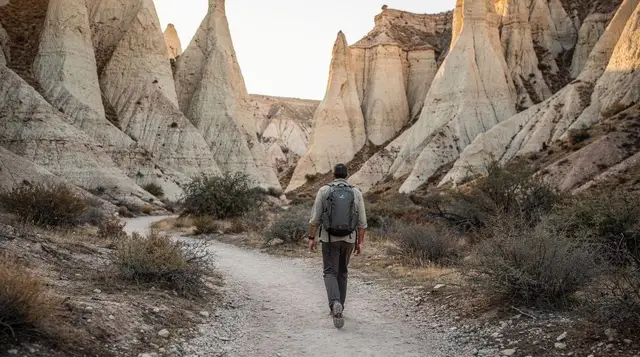
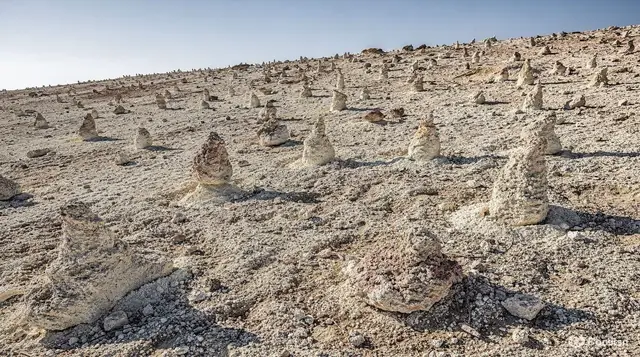
Set expectations before you go: Hattusa is largely foundations, wall lines, and worn stonework rather than intact structures. There are no roofed buildings to walk through, and much of what remains is at ground level or slightly raised. It rewards visitors with a genuine interest in Hittite history, ancient Near Eastern archaeology, or UNESCO World Heritage sites generally. It does not offer the visual payoff of Göreme’s cave churches or fairy chimney valleys, and travellers expecting that kind of spectacle are often disappointed. This is a site to visit for what it represents, not for how it photographs.
The Lion Gate
The Lion Gate is one of the best-preserved of Hattusa’s monumental gateways, named for the pair of carved lion heads flanking the entrance. It sits on the western side of the upper city walls and is one of the more frequently photographed points on site, though even here the appeal is in the craftsmanship and age of the carving rather than any dramatic scale.
The King’s Gate
The King’s Gate lies on the opposite side of the city from the Lion Gate and carries a relief figure long identified locally as a king, though scholars now generally read it as a Hittite war god. The original relief has been moved to a museum for preservation, with a replica in place at the gate itself. Like the Lion Gate, it marks a defensive gateway through the massive city walls that once enclosed Hattusa.
The city walls and lower city
Sections of Hattusa’s walls, some of the most substantial fortifications of the Bronze Age Near East, are still traceable along the hillside, including a reconstructed stretch that gives a sense of their original scale. In the lower city, the foundations of the Great Temple mark what was the city’s main religious complex, along with storage buildings that once held large ceramic jars.
Reading the ruins as you walk
A few habits make the site easier to understand. Look at the ground plan before the stones: the lines of the walls show where the city was defended, and the position of each gate tells you which approach it guarded. Notice how the city climbs the slope rather than sitting on flat ground, which explains why the upper walls feel so far from the lower city. And pay attention to the quality of the masonry at the gates compared with the rougher stretches between them, since the builders clearly spent their effort where visitors, enemies and processions would pass.
If you have a guide, ask them to point out where the roofed buildings would have stood. Much of the city was built with stone foundations carrying upper walls of other materials, which is why so little rises above ground level today. That single fact answers the question most disappointed visitors ask, which is where the rest of the city went.
Yazılıkaya, the rock sanctuary nearby
A short drive from the main Hattusa site, Yazılıkaya is an open-air rock sanctuary carved with relief processions of Hittite gods and goddesses. It is the best surviving record of Hittite religious iconography and is usually visited as part of the same trip, adding 20 to 30 minutes on site plus a few minutes of driving. Like the rest of Hattusa, it is a site for its historical and religious significance rather than dramatic visual impact, though the carved reliefs are more distinctive at close range than most of the walls and gate foundations elsewhere on site.
How to pace the day
Because the drive takes up so much of the day, the shape of the trip decides whether it feels rewarding or exhausting. Leave early, so that the walking happens before the hottest part of the afternoon, and treat the ride out as time to rest, read about the Hittites or simply watch the Anatolian plateau change from the sheltered valleys of Cappadocia to wide, open country. Do not plan anything demanding for the evening of your return: most people arrive back in Göreme tired and content to eat and sleep.
It also helps to schedule the trip with some slack around it. Do not book a balloon flight for the morning after a long day on the road if you can avoid it; the early start and the tiredness do not mix well. Our guide to balloon sunrise timing by season and the notes in Cappadocia itinerary mistakes explain why back-to-back early starts are a common error. A calmer day before or after, such as a slow morning described in a slow day in Cappadocia, balances the effort.
Where Hattusa fits in a longer stay is a matter of how many days you have. On a short trip it competes with the headline sights; on a longer one it becomes a welcome change of register. See how many days in Cappadocia and the five-day itinerary for ways to place a long excursion without crowding out the valleys. For the shorter alternative that follows the same historical thread, the separate Hattusa day trip page and the Hattusa destination page give a second view of the same journey.
What to bring and what to expect
Bring your own water and something to eat, even on a tour, since the stops are limited and the loop between the gates takes time. Closed, comfortable shoes matter because the paths are uneven and the stone underfoot is worn. A light layer is sensible outside summer, as the plateau can feel cooler and windier than the sheltered valleys of Cappadocia; the notes in the packing list apply here too, and best time to visit Cappadocia helps you judge which season suits an outdoor day like this.
Photography is rewarding mainly in the quieter moments: the low light of early or late day softens the stone and gives the reliefs more depth than harsh midday sun. If you care about pictures more than about the history, remember what the earlier sections said about expectations, and consider whether the viewpoints around Göreme might serve you better.
Practical notes for the visit
The site has very little shade. Walking between the gates and the upper wall sections means exposure to full sun for long stretches, and there is no meaningful tree cover to rely on. In the summer months this makes a midday visit genuinely uncomfortable, and the same heat and sun-exposure precautions that apply to walking the Cappadocia valleys apply here: closed shoes, a hat, sun cream, and more water than feels necessary. There are basic facilities near the entrance but little else on site itself.
Because of the distances involved between points of interest, a tour or car with air conditioning is a real comfort factor here, not a luxury. Walking the full loop on foot in summer heat, without breaks between the gates, is not something most visitors attempt.
What else is on the way or nearby
Ankara sits roughly another hour beyond Hattusa, home to the Museum of Anatolian Civilizations, which holds many of the artefacts recovered from Hittite sites including Hattusa itself, and the Anıtkabir mausoleum. Combining Ankara with Hattusa in a single day from Göreme is not realistic given the driving distances already involved; treat them as separate trips if both interest you. See the Ankara day trip guide for what that involves on its own.
For travellers interested in earlier Anatolian history, Kültepe (Kanesh), an Assyrian trading colony that predates the Hittite period and lies much closer to Cappadocia near Kayseri, is a more austere but far more convenient alternative or complement. It will not have the scale of Hattusa’s gates and walls, but it sits within easier reach for a shorter trip.
Konya, with the Mevlâna Museum, is a separate direction from Göreme entirely and should not be paired with Hattusa on the same day. If ancient history across the region interests you more broadly, some tour operators run multi-day itineraries that link Hattusa with other Hittite-era sites; see the tours below for an example.
Booking a Hattusa trip from Cappadocia
Given the distance and the lack of public transport, most visitors book an organised trip. A guided day tour typically includes transport, a guide who can explain the layout and history at each stop, and usually lunch, along with a visit to Yazılıkaya. A full-day tour to the Hittite capital from Cappadocia covers the main gates, the city walls and the rock sanctuary in one organised trip.
For travellers who want to spend more time on composition and detail at each stop rather than moving through on a set schedule, a photo-focused tour of Hattusa with lunch and a guide allows for a slower pace built around photography.
Those with a deeper interest in Hittite archaeology across the wider region can consider a five-day tour of Hittite monuments with a specialist guide, which extends well beyond Hattusa itself to cover other sites from the same period.
Travellers planning to combine ancient history stops more broadly, including sites outside the immediate Hattusa area, may also want to look at a tour covering several of Cappadocia’s UNESCO World Heritage sites for context on how Hattusa fits alongside the region’s other listed sites.
Should you go?
Hattusa suits travellers with a real interest in ancient history, UNESCO sites, or the Hittites specifically. It does not suit travellers who want their day trip time in Cappadocia spent on dramatic scenery, since the site is austere, spread out and largely unshaded. If you have already covered the underground cities and the main valleys around Göreme and are looking for something historically substantial rather than visually dramatic, Hattusa fills that gap. If your remaining days are limited, closer options like Kültepe or the Ihlara Valley may be a better use of the time.
Hiking & nature tours on GetYourGuide
Verified deep-linked GetYourGuide tours. Book through these links and we earn a small commission at no cost to you.
GetYourGuide does not provide a product photo for this activity — the image shows the meeting point, photographed by us.